






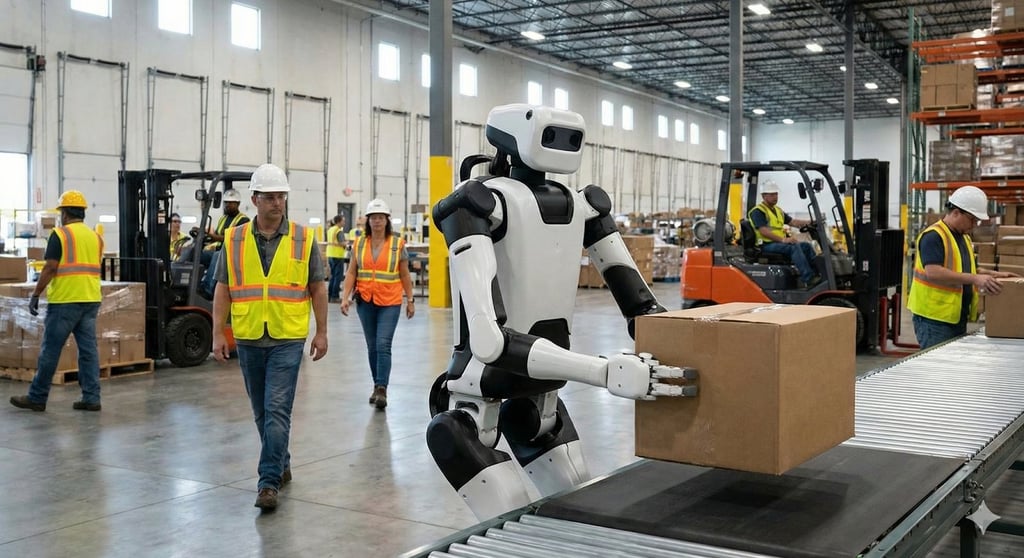


AI is a divisive subject. While supporters are eager to tout its benefits, opponents have a plethora of downsides to highlight, including the concern that AI-driven robots will soon replace human employees in the workplace.
However, an exact timeline for robots replacing humans hasn’t really been given… until now.
Rob Garlick, former head of innovation, technology, and future of work with Citi Global Insights, said the transition to a robot-led workforce could happen within a few decades.
He was recently quoted by CNBC as saying: “When you marry profitability up with the technology progress, we have the biggest trade in history coming, which is basically that artificial intelligence will be able to do more and more, better and better, cheaper and cheaper, and that will be able to substitute for people.”
What are AI robots like today?
Although AI-driven robots have come a long way in just a few years, they’re not quite ready to take over the workforce. Currently, the most popular AI robots include:
- Autonomous vehicles: Self-driving cars have been traversing US roadways for years with mixed results. However, they’ll only improve over time.
- Humanoid robots: Not only are these robots meant to mimic the general look of actual humans, but they’re meant to perform some of the same tasks — including heavy lifting, assembly, industrial automation, and more.
- Cleaning robots: Automated cleaning robots, like iRobot’s Roomba, are already at work in households across the globe.
While all of the above-mentioned robots can be integrated into nearly any workplace today, we’ll likely see an increased focus on humanoid robots over the next few years. Boston Dynamics is already using its Atlas robot in a Hyundai factory near Savannah, Georgia, and Tesla’s Optimus robot is expected to be available for purchase in 2027.
Calculating the human cost
A 2024 Citi report, which was led by Garlick, already did the math. Per the report, an AI-driven robot could pay for itself within a matter of weeks. A robot that costs $35,000, for example, could cover its own costs in about nine weeks if used to replace a human employee who makes $41 an hour.
But that also comes with the cost of a human job. It’s a price that some companies might not be willing to pay, especially for their more senior-level employees. For those looking to cut costs, however, the cost of implementing AI robots might be worth it — even if it puts some humans out of work.
Humans are already being replaced by AI robots in the workforce. This trend will only continue as technology improves, but if Garlick’s prediction is correct, we still have quite a bit of time before any large-scale takeover occurs.
Also read: Interest in humanoid robots is rising, with projects like Tesla Optimus and Boston Dynamics’ Atlas drawing attention.