






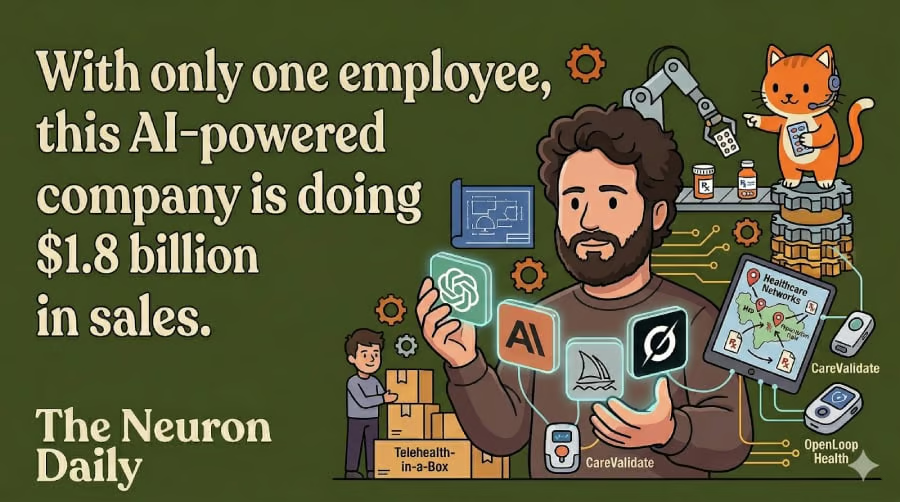


In September 2024, Matthew Gallagher launched a telehealth startup from his LA home with $20,000, a dozen AI tools, and zero employees. Eighteen months later, Medvi is on track to do $1.8 billion in sales this year.
His only hire? His younger brother.
Gallagher used AI to write the code, produce website copy, generate ad images and videos, handle customer service, and analyze business performance. He stitched together ChatGPT, Claude, Grok, Midjourney, Runway, and ElevenLabs to run what most companies would need an army of people to operate.
Here’s how it actually worked
- He used CareValidate and OpenLoop Health (two “telehealth-in-a-box” platforms) to handle the doctors, pharmacies, prescriptions, and shipping. That freed him up to focus entirely on the front end: branding, marketing, and the customer experience.
- He built AI agents to get his software systems to communicate automatically.
- He tested AI voice tools for customer calls. He even made an AI clone of his own voice to handle personal scheduling so he could stay focused on the business.
The initial website had AI-generated model photos and before-and-after images with AI-swapped faces. Some of the ads were, by his own admission, “AI slop.” He later cleaned it up as revenue grew, swapping in real customer photos, switching from LegalZoom to a law firm, and replacing AI accounting tools with an actual accounting firm.
The business model itself wasn’t revolutionary because Medvi is simply a middleman for GLP-1 weight-loss drugs, plugging into existing telehealth platforms for doctors, pharmacies, and shipping. What was new was how lean he ran it.
By the numbers
- $20,000 to launch the whole thing
- 300 customers in month one, 1,000 more in month two
- $401 million in revenue in 2025, its first full year
- 16.2% net profit margin (Hims & Hers, a public competitor with 2,400+ employees, hit 5.5%)
- 250,000 customers by the end of 2025
It wasn’t all smooth sailing. His customer service chatbot made up drug prices and hallucinated products that Medvi didn’t sell. A minor website update once broke checkout, and Gallagher sprinted home from a hike to fix it alone.
Sam Altman predicted this moment in 2024 that a one-person $1 billion business “would have been unimaginable without AI.” He told the NYT he thinks he won a bet with his CEO friends on timing, and wants to “meet the guy.”
Here’s our take
Gallagher launched with AI slop ads, LegalZoom, and AI accounting software.
It didn’t matter initially but upgraded all of it later once the money was there to do so. The lesson here isn’t “start perfect.” It’s that good enough gets you to the next level, and the next level funds the upgrade. What actually made the difference was his willingness to do it himself first by building it, breaking it, fixing it, and learning the AI tools well enough to make them work for him.
The combination of grit and AI fluency is the real unlock. The tools are available to anyone, and figuring it out is the part only you can bring. All it takes is an idea and the willingness to nurture it despite challenges and limitations.
Editor’s note: This content originally ran in the newsletter of our sister publication, The Neuron. To read more from The Neuron, sign up for its newsletter here.