








AI can now write blog posts, generate images, narrate videos, and publish at a remarkable speed. That’s how the internet ended up with AI-written travel guides that say nothing useful, bizarre YouTube videos about cats with soap-opera plotlines, and social media posts that sound informative but offer little substance.
This flood of low-quality content has a name: AI slop. The term has gained popularity as generative AI tools make content creation faster, cheaper, and easier to scale. While not all AI-generated material is low-quality, AI slop refers to output that prioritizes volume over value. As the term grew in popularity, people started asking what AI slop actually is and where they see it online.
What people mean by AI slop
“AI slop” refers to low-quality digital content mass-produced by generative AI tools. At first glance, it often appears polished or authoritative. However, upon closer inspection, it usually lacks original insight, reliable sourcing, or a clear purpose. Instead of informing or entertaining, this content often aims to farm views, rank high in search results, or generate advertising revenue.
The term “AI slop” started circulating in the early 2020s and became more widely recognized between 2022 and 2023 as generative AI tools became more accessible. It entered mainstream discourse in 2024, reflecting increasing frustration with the volume of low-value AI-generated material online.
In 2025, Merriam-Webster’s editors chose “slop” as the Word of the Year, cementing its cultural relevance. The dictionary defines slop as “digital content of low quality that is produced usually in quantity by means of artificial intelligence.” This definition resonated with many internet users who felt overwhelmed by content that looked finished but offered little substance.
How AI slop entered the mainstream
As the phrase gained popularity, major media outlets began using it to describe broader shifts in online content. According to The Guardian, more than 20% of the videos YouTube’s algorithm showed to new users were AI slop. The outlet cited the video editing company Kapwing, which surveyed 15,000 of the world’s most popular YouTube channels, including the top 100 in each country.
Kapwing found that 278 of those channels consisted entirely of AI slop. Together, they had amassed more than 63 billion views and 221 million subscribers, generating an estimated $117 million in annual revenue.
The Wall Street Journal warned readers that “AI slop is everywhere,” while acknowledging the odd appeal of some viral AI-generated animal videos. “Critics have accused both companies of contributing to a deluge of so-called AI slop swamping the internet and blurring lines between real and fake,” the publication noted.
Critics expressed concern that, despite built-in protections, the tools could be exploited to abuse users’ likeness and spread false information. Early viral content from Sora, including a deepfake of Sam Altman stealing a GPU from a store, illustrates these risks.
AI slop in the wild
AI slop shows up across platforms and formats, often following familiar patterns that make it easy to spot.
On YouTube and TikTok, AI-generated videos feature talking animals, melodramatic plotlines, and synthetic narration, frequently uploaded by channels publishing dozens of nearly identical clips each day.
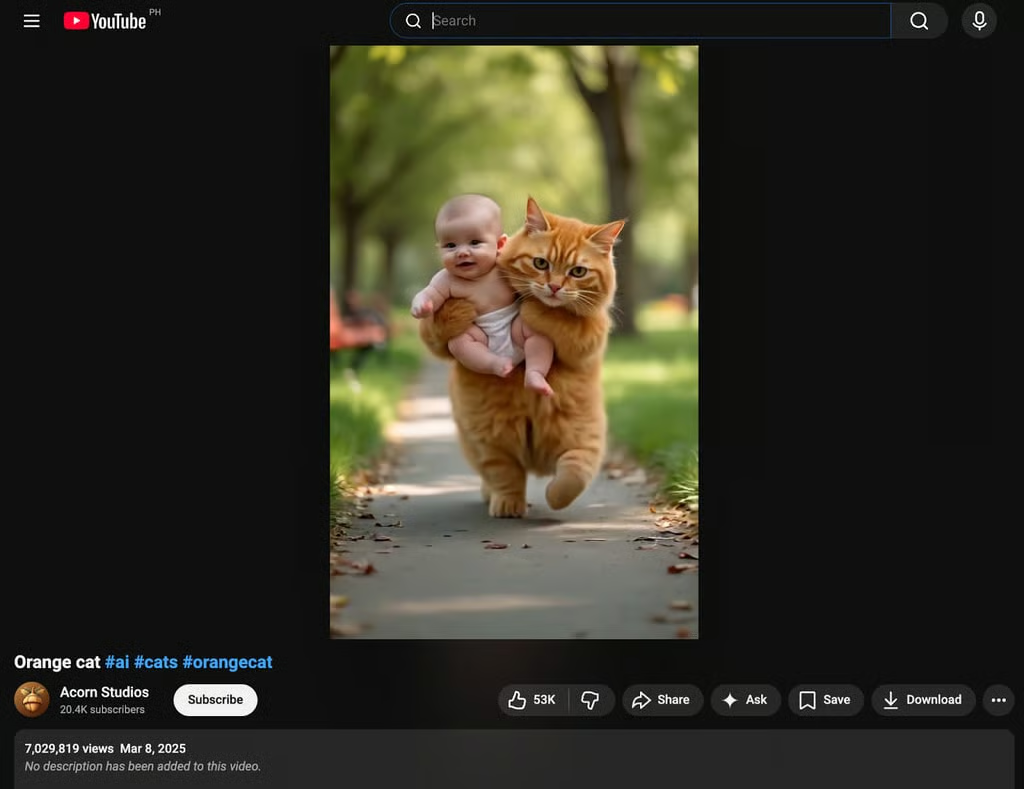
This AI-generated video from Acorn Studios, showing a cat taking care of a baby, has amassed over 7 million views on YouTube. Source: Acorn Studios
AI slop also appears in digital advertising, where AI-generated images show distorted hands, odd proportions, or nonsensical product settings. These ads usually look polished at first glance, but fall apart under close inspection.

KFC Singapore deliberately used AI’s finger glitch in this campaign, turning the technology’s quirk into a playful brand moment amid a sea of unintentional ‘AI slop’ online. Source: Marketing-Interactive
Beyond public platforms, AI slop has made its way into online bookstores and workplaces. Cheaply produced AI-written books with generic covers crowd digital storefronts, while automatically generated reports and summaries inside organizations, sometimes called “workslop”, sound professional while offering little real insight.

Generative AI tools make book cover designs easy, but flood the market with generic, mass-produced designs. Source: OpenArt
Why AI slop matters
AI slop has become more than just a cultural punchline. Media researchers and platform operators warn that it can erode trust in online information, crowd out higher-quality work, and make it harder for users to identify credible sources. In response, search engines and social platforms have adjusted moderation policies and ranking systems to reduce the visibility of low-value AI-generated content.
The lesson for organizations isn’t to avoid AI but to use it responsibly. The rise of AI slop shows why human oversight, quality standards, and careful planning matter. Without those guardrails, AI tools become just digital trash.
For a recent example of how low-quality AI content can escalate into real-world problems, see our coverage of the Grok AI deepfake controversy.