






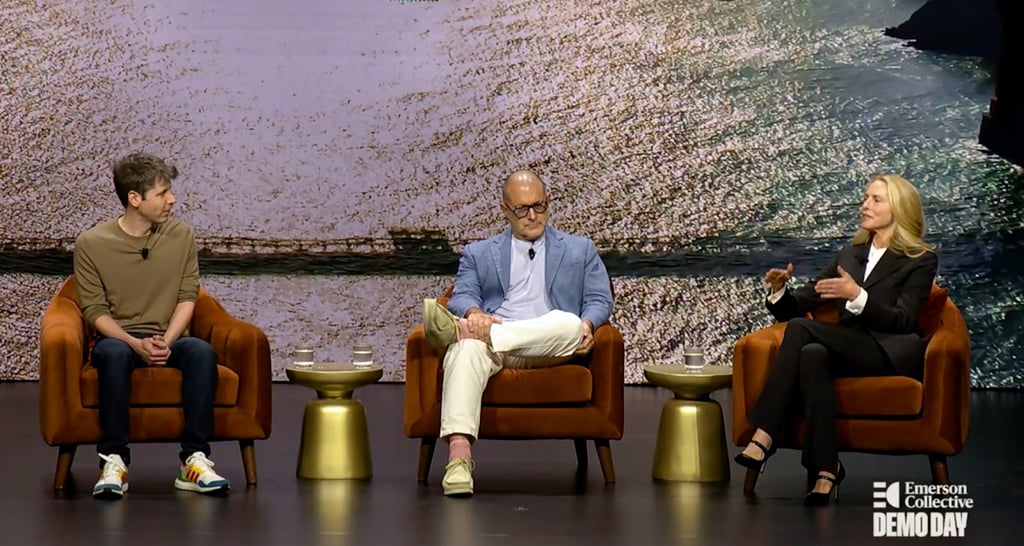


OpenAI is dropping hints about its upcoming, much-anticipated hardware device.
At the Emerson Collective’s Demo Day conversation, hosted by Laurene Powell Jobs, OpenAI CEO Sam Altman and legendary iPhone designer Jony Ive opened up about their unusual process of building a new kind of device, one they’re creating together under their company, IO.
Powell Jobs described how the collaboration began two years ago, saying the two men shared a deep sense of purpose. During the interview, she said the team built IO through “shared curiosity and their deeply held sense of purpose.”
Ive recalled how his early meetings with Altman were more rooted in ideas than in products. He said they started with “a tentative thesis… a thought about the nature of objects and our interface,” and not a hardware concept.
A long exploration before a single product sketch
Powell Jobs noted that the teams at LoveFrom, OpenAI, and IO didn’t begin with the question of what AI-native hardware should look like. Instead, they spent months exploring wide themes, from human-technology relationships to the nature of intelligence itself.
Ive defended that slow, uncertain process. “If you have a predetermined goal, that just leaves me feeling terribly disappointed and dead,” he said. He argued that curiosity, not certainty, is where original products come from.
Altman agreed, saying the combined teams entered the research with “this ridiculous new piece of technology… and we don’t know what that means.” But, he added, the world deserved “better stuff,” so they began searching for it together.
Device could arrive in less than two years
While neither man revealed the actual product, Altman did describe the emotional direction they’re aiming for. He said that using today’s devices often feels like “walking through Times Square in New York,” full of noise, distractions, and flashing demands for attention.
With AI, he believes it’s possible to build a device that instead feels like “sitting in the most beautiful cabin by a lake and in the mountains and… enjoying the peace and calm.”
Ive added that the goal is to create something simple and almost playful — something you “want to touch and you feel no intimidation and you want to use almost carelessly.” Altman jumped in and said he hopes people will look at the finished device and say, “That’s it?” because of its simplicity.
Powell Jobs pushed them on timing. When she asked whether the world might see the device within five years, Ive replied, “Much sooner than that.” When she asked if it could be two years, he confirmed, “I think even less than that.”
That’s the clearest indicator yet that IO’s first hardware product is already in advanced development.
To make this vision a reality, OpenAI has been quietly assembling a hardware super team. According to a report from MLQ.ai, the company has recruited over 40 engineers from Apple in recent months, including top executives from industrial design and hardware engineering.
This massive talent grab underscores just how serious OpenAI is about creating a device that blends its AI with world-class hardware design.
Elsewhere in speculative AI futures, Musk’s claim that human consciousness could live inside robots within 20 years raises bold possibilities and sobering ethical questions about who controls digital minds.