







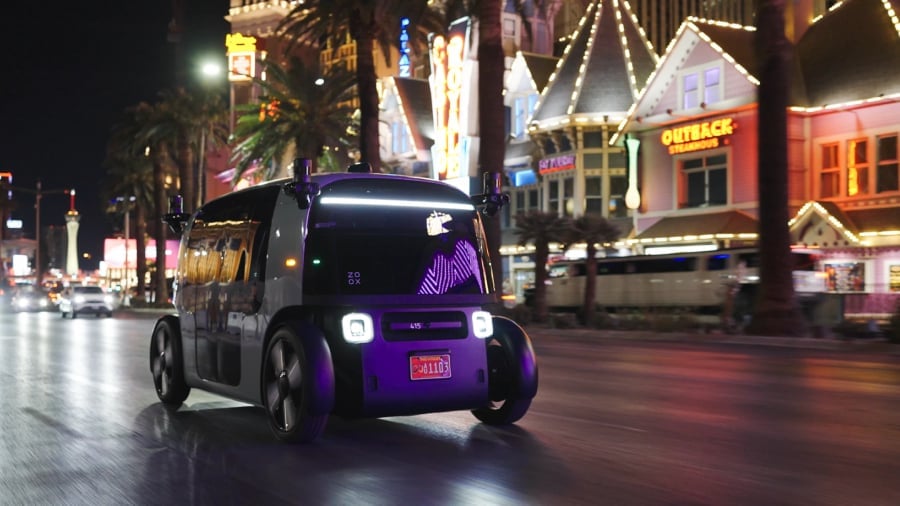
A new robotaxi contender has just entered the mix.
Amazon-owned Zoox has begun opening its self-driving robotaxis to the public in San Francisco, but only for those on its waitlist. The company announced Tuesday that people can now try the service through its Zoox Explorers program. Zoox says this early rider phase is designed to gather feedback before the service expands.
“We’re excited to announce that our Zoox Explorers program is officially live in San Francisco, and we’re inviting members of the public off our waitlist to be among the first to ride,” the company wrote.
CEO Aicha Evans emphasized the company’s long history in the city, saying, “Zoox has been testing our autonomous technology in San Francisco since 2017. It’s our home.” She added that San Francisco’s “amazing mobility ecosystem” makes it the right place for Zoox to continue scaling its purpose-built robotaxi experience.
Where riders can go and how it works
Riders from the waitlist can take point-to-point trips across SoMa, Mission, and the Design District, choosing a destination in the Zoox app. The system offers suggested points of interest, address entry, and even drop-a-pin navigation.
The company notes that rides are currently free. Zoox explained, “Rides in San Francisco are free to start, giving people the chance to experience this world first, first.”
While the current footprint is small compared to competitors like Waymo, the service is designed to function like a true robotaxi with no driver, no steering wheel, and no traditional layout. The vehicle will stop near the rider’s destination and, if needed, provide walking directions to get the rest of the way.
The launch also places Zoox directly against Waymo, which already runs a paid service in San Francisco and has become common across the city since its 2023 approval. It also operates in Los Angeles, Austin, Atlanta, and more, and is expanding into new cities, including Miami, Houston, and Orlando, in the coming year.
Waymo has logged millions of paid rides, while Zoox is still working toward its first paid permit.
Where Zoox stands on regulations
Zoox can currently offer free rides, thanks to a federal exemption that allows it to test its gondola-like vehicles on public roads. But charging money requires an additional commercial approval. According to Forbes, Zoox co-founder Jesse Levinson said the company is confident about progress.
“The next step is the commercial exemption, which allows us to charge a fare and release up to 2,500 vehicles a year under that,” Levinson told Forbes. California’s utilities commission must also clear the company before it can officially launch a paid service in San Francisco.
Zoox was founded in 2014, built its own robotaxi factory in Hayward, and has been refining its technology for years. It operates a 50-vehicle fleet split between San Francisco and Las Vegas, where it began offering public rides in September.
With Amazon behind it, Zoox hopes to scale quickly and eventually challenge Waymo and Elon Musk’s robotaxis head-on.
As Zoox opens free robotaxi rides in San Francisco, safety and resilience remain front and center for autonomous services, mirroring the latest concerns keeping cyber experts up at night.