






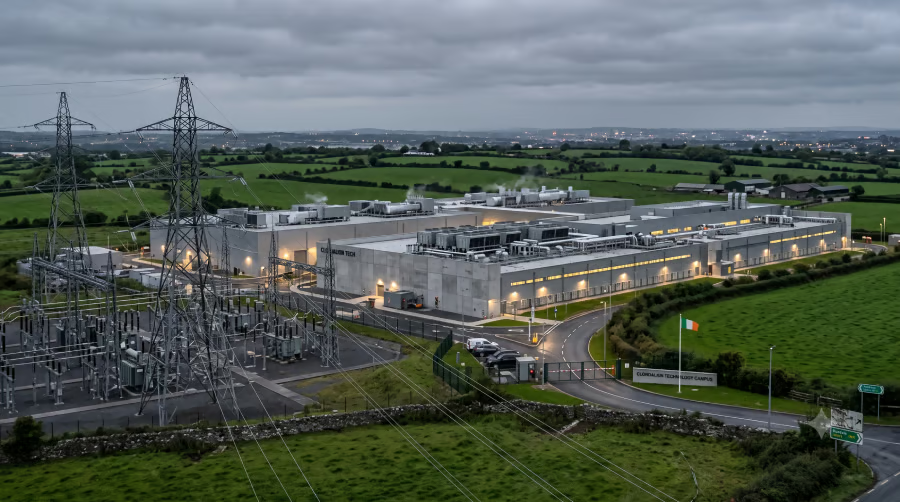


Ireland’s data centers consumed 7,663 gigawatt-hours of electricity in 2025, nearly as much as all homes in the country combined.
Figures released by Ireland’s Central Statistics Office show demand increased 10% from the previous year and now accounts for 23% of metered electricity consumption.
Growth at this pace is testing whether the country can build new energy supplies quickly enough to support its digital economy without passing higher costs or tighter grid constraints on households and businesses.
A decade of uninterrupted power growth
Electricity use by Irish data centers increased more than sixfold since 2015. According to the CSO, “Data centre consumption has grown every single year without exception.”
Electricity use among other homes and businesses rose only 2% in 2025. Demand from data centers kept climbing while restrictions limited most new grid connections around Dublin for nearly the entire year, The Register reported.
AI accounts for only part of the total. CSO data also includes facilities that run cloud services, streaming platforms, and financial systems, so the national figure cannot be attributed solely to AI.
New data centers must bring power support with them
Regulators replaced the Dublin-area restrictions with a new connection policy in December. Developers may still seek grid access, provided each facility helps supply the electricity system it expects to use.
Each project must provide enough generation or battery capacity to match its maximum draw from the grid. Operators must also make that capacity available to the electricity market when needed.
Companies have six years to cover at least 80% of their annual demand through additional renewable projects within the country. Proposals in areas with little spare grid capacity may face closer scrutiny.
According to the Commission for Regulation of Utilities, data centers could account for about 31% of national electricity demand by 2034.
Government backing remains strong because officials view the facilities as important to digital services and foreign investment. Public Expenditure Minister Jack Chambers called them “a central part of Ireland’s economic and digital future.”
What rising demand could mean for Irish customers
Households and small businesses could face higher bills if part of the cost of new power lines or generation capacity is passed on to electricity customers. How much operators will pay compared with other users remains uncertain.
A May report covered by RTÉ estimated that data center demand may have added an average of €360 to household electricity costs between 2015 and 2023. Researchers presented the amount as a market-wide estimate, not a separate charge on each bill.
Grid limits can also delay new connections. Housing developments, local businesses, and public services may wait longer in areas with little spare capacity. Whether the safeguards protect other users will depend on operators meeting their obligations before demand rises much further.
Also read: OpenAI and Google are facing scrutiny over whether Chinese tech giants accessed frontier AI models through Singaporean subsidiaries.