






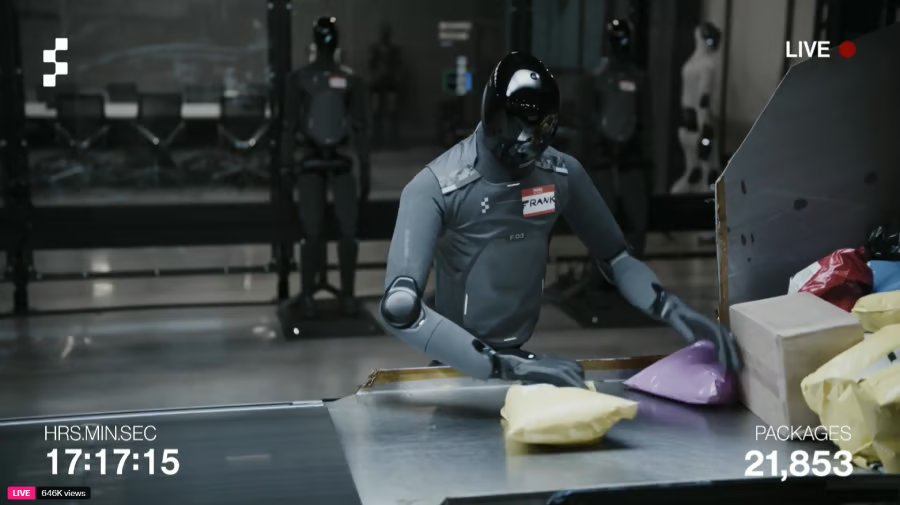


Figure’s robots clocked in for an eight-hour shift. They did not clock out.
In a livestream running on X and YouTube, Figure showed its Helix-powered humanoid robots taking on an autonomous warehouse-style shift. The run began as a full-shift demo, but by the time this story was written, the robots had already worked more than 17 hours and handled over 22,000 packages.
Sorting packages lacks the spectacle of a backflip or a boxing match, but it gets closer to what factories and warehouses actually need from humanoid robots: endurance, repetition, and fewer breakdowns when the task drags on.
Figure’s autonomy claim on display
The test gave viewers a rare real-time look at Figure’s robots working through a warehouse-style package loop.
Across the broadcast, the robots scanned barcodes, picked up boxes, turned them into position, and moved them through the workflow. In its X post, Figure said the robots were running “fully autonomous” on Helix 02 and working at “human performance levels.”
Figure CEO Brett Adcock also shared the demo on LinkedIn, reinforcing the company’s claim that Helix 02 was controlling the run. .
The robots swapped roles when batteries ran low, allowing the work to continue as individual units paused or changed assignments.
However, the demonstration still comes from Figure, not an independent audit. Until outside testing confirms the results, the run is best read as a company-run proof point rather than final proof of warehouse readiness.
Helix 02 is built for more than package work
The warehouse run is only one slice of what the humanoid robot can do.
Helix 02 uses the robot’s onboard sensors to control movement as one system. That whole-body approach helps the machine stay balanced while it reaches for objects, carries them, or adjusts during a task.
Figure has shown the robot in a full-sized kitchen. In one demo, it unloaded and reloaded a dishwasher over a continuous four-minute run with no resets or human intervention. It carried dishes across the room and placed them in cabinets before finishing the sequence with onboard sensors.
The system also handles more delicate work. Helix 02 can use tactile sensors and palm cameras for tasks such as unscrewing a bottle cap or pulling a pill from a medicine organizer. In another demo, it dispensed 5 ml from a syringe and picked metal parts out of a cluttered bin.
Package handling shows how long the robots can stay productive. The other demos show Helix 02 keeping control when objects are small, partly hidden, or difficult to grip.
What comes after 22,000 packages
Factories and warehouses remain the natural first stop for humanoid robots. The work is repetitive, physical, and easier to measure than a home demo or a one-off stunt.
A long run lets buyers see if the machines can operate safely and consistently after the novelty wears off.
Figure still has to prove that kind of performance outside its own demo. But the package count gives the company a useful benchmark in a crowded field that includes Tesla, Agility Robotics, and Apptronik. The next test is whether these robots can move from a controlled demo to the daily grind of real industrial work.
GENE-26.5 brings Genesis AI into the race to make humanoid robots more useful in real-world tasks.