








Your next Google search could end with a shopping cart instead of a list of links.
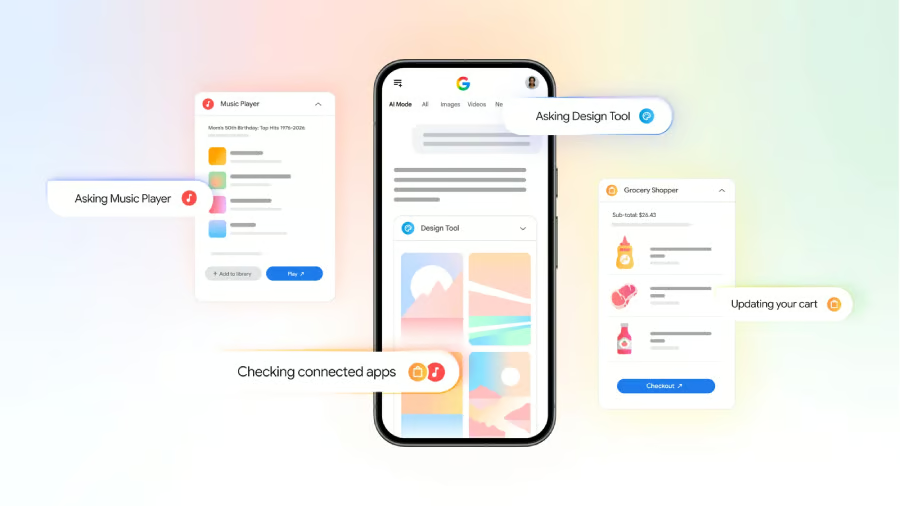
On July 16, Google announced that it is expanding Connected Apps in AI Mode for US users, allowing people to move from conversational search into services such as Instacart, Canva, and YouTube Music. The integrations can turn meal ideas into a shopping cart, design prompts into Canva projects, and music requests into saved playlists, although users still approve purchases and other consequential actions.
The update makes Search more useful, but it also gives Google greater control over what happens after a question is answered. For publishers and platforms that depend on search traffic, the path from discovery to action may increasingly run through Google rather than their own websites.
Doing, not just searching
According to the company, the update brings a feature previously confined to the standalone Gemini app directly into core Google Search.
The integration aims to eliminate friction in everyday digital tasks through a seamless handoff. For example, if you ask AI Mode to brainstorm a backyard barbecue menu, you can connect your Instacart account to instantly transfer the suggested ingredients into your shopping cart, leaving you just a few taps away from checking out.
The same logic applies to creative and entertainment requests. Designing a flyer can now trigger AI Mode to pull design concepts directly from Canva, while a request for a custom party soundtrack will generate a playlist and automatically save it to your YouTube Music library.
The invisible tollbooth: A new battleground for web traffic
For years, the search engine optimization (SEO) industry has obsessed over ranking on Google's first page. This update introduces a far more disruptive paradigm: The Invisible Tollbooth.
By allowing searchers to bypass websites entirely to execute actions through a select club of launch partners, Google is fundamentally altering web traffic distribution. Recipe blogs, music curators, and design databases will no longer just compete for search rankings; they now compete against a system that renders their very web pages invisible to the end user.
If Google’s AI fills your Instacart bag directly, you will never visit the cooking blog where the recipe originated. This creates a high-stakes, exclusive visibility ecosystem where being an approved Connected App matters more than traditional web ranking.
The tradeoffs
The feature is opt-in and requires linking accounts, which means handing Google's AI more access to personal data and third-party services.
It's also US-only for now, with no timeline for international rollout. And because AI Mode is still executing tasks rather than acting fully autonomously, users remain the ones approving purchases and edits — a middle ground that may reassure people not yet ready to trust AI with full control over their accounts.
The next test will be whether Google opens that layer to a broad ecosystem or reserves its most valuable actions for a small group of partners. That decision could determine whether AI Mode becomes a useful bridge to the web or another gate businesses must pass through to reach customers.
Related: Google’s expanding AI ambitions are also raising safety concerns, with a Common Sense Media report warning that AI Overviews and AI Mode pose an “unacceptable risk” to minors.