








Is anyone else feeling a bit of déjà vu? Google just dropped a similar offering to compete against Apple’s Private Cloud Compute.
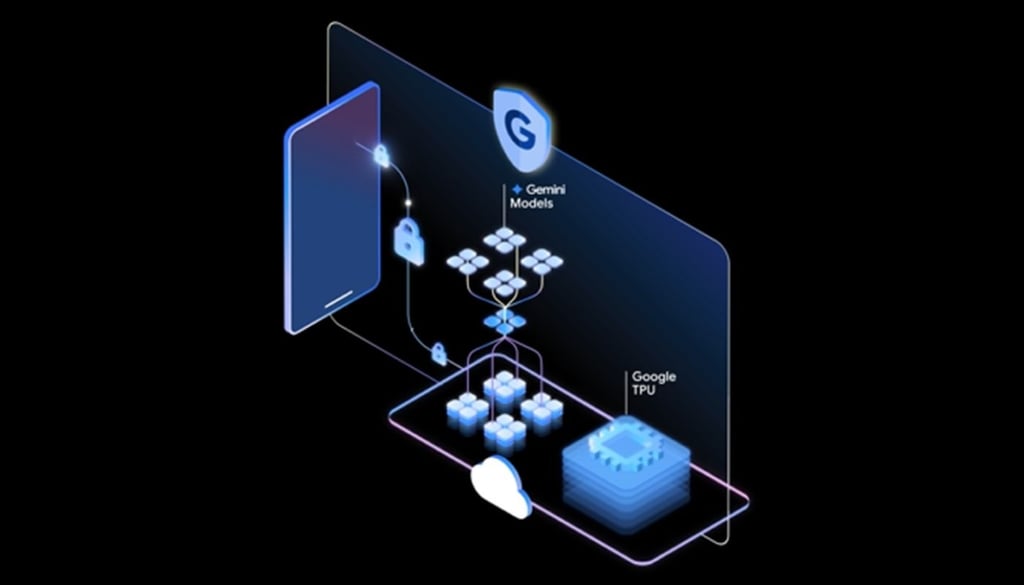
Google has announced Private AI Compute, a new cloud-based AI processing platform designed to deliver the full power of its Gemini models while preserving users’ privacy. The company says the system offers the “same security and privacy assurances you expect from on-device processing,” extending its dedication to privacy-enhancing technologies in the cloud.
According to Google’s blog post, Private AI Compute serves as a “secure, fortified space” where sensitive data can be processed within a protected environment. The platform relies on a multi-layered architecture built on Google’s custom Tensor Processing Units (TPUs) and Titanium Intelligence Enclaves (TIE), which involve specialized hardware designed to isolate and encrypt user data. It uses remote attestation and end-to-end encryption to connect users’ devices to these environments, ensuring that data remains private and inaccessible even to Google employees.
Unlocking cloud power without sacrificing privacy
Private AI Compute enables compatible AI-powered tools to access cloud-based processing for more advanced AI reasoning and language capabilities. Google says this approach bridges the gap between the privacy of on-device AI and the computational strength of the cloud, allowing for faster responses and more personalized experiences.
Security researchers and privacy advocates cite independent audits — including those by firms such as NCC Group — that suggest Private AI Compute effectively limits the exposure of user data to external parties. Still, they note that Google ultimately controls the infrastructure. Some experts have identified potential vulnerabilities in the underlying hardware, but many view Google’s openness and willingness to publish cryptographic digests as a positive step toward transparency.
A familiar approach regarding Apple’s Private Cloud Compute
Many have noted that Private AI Compute closely resembles Apple’s Private Cloud Compute. This feature also uses Trusted Execution Environments (TEEs) to process data securely in the cloud, and both services use confidential computing techniques to encrypt memory, isolate workloads, and prevent unauthorized access from both external parties and internal administrators.
Where Apple may have pioneered this privacy-first model, Google’s approach shows that the industry is shifting more broadly toward secure, verifiable AI computing. By integrating cryptographic verification and making its attestation data available for third-party audits, Google is working diligently to strengthen public trust and demonstrate that privacy and cloud-based AI can coexist.
Google will invest €5.5 billion to build new German data centers and green power projects.