






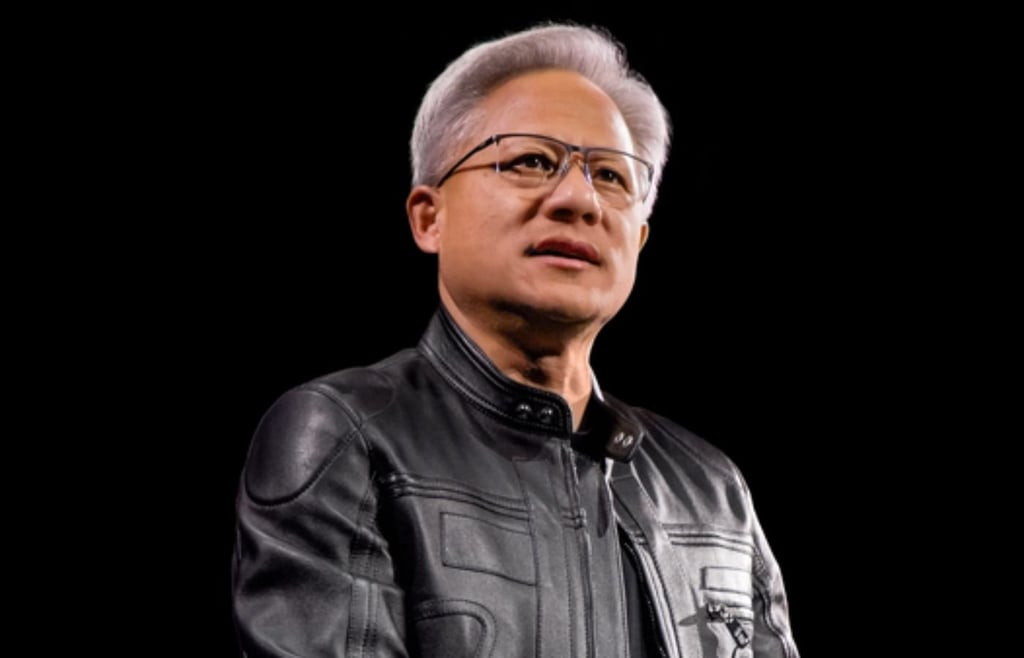


Nvidia CEO Jensen Huang has a clear message for his workforce: automate everything that can be automated with AI and do it now.
In a leaked all-hands meeting obtained by Business Insider, Huang reportedly blasted managers who told teams to scale back AI use, calling the idea “insane.” He urged employees to drive automation across every possible task, promising the technology would expand, not erase, their work.
The memo that started a movement
The leaked recording spread fast across internal channels, turning what began as a closed-door callout into an unofficial rallying cry. Within days, engineers were swapping tips on new AI tools and testing how deeply automation could fit into daily routines.
The message was unmistakable — there would be no waiting for permission. Teams doubled down on AI coding assistants like Cursor, automating code reviews, documentation, and testing routines. What might have been a one-off reprimand quickly morphed into a culture shift, an unspoken challenge to make AI indispensable in every corner of the company.
Automation without attrition
Hiring remains in full swing. Huang told employees Nvidia is still “about 10,000 short,” describing automation as a way to raise output and free people for higher-value work. Inside the company, that message translates to growth, not contraction.
Salesforce offers a similar picture. CEO Marc Benioff says AI now handles up to half of routine tasks in what he calls a “digital labor revolution.” Rather than trimming teams, companies are using automation to extend capacity and keep pace with demand.
The next corporate operating system is already running
Automation is moving from experiment to infrastructure across the tech industry.
For instance, Meta is planning to fully automate ad creation, with Mark Zuckerberg calling it a “redefinition” of the industry back in June. OpenAI is going even further, building automated systems that can one day conduct research. Sam Altman even said “AI CEOs are coming,” a sign that decision-making itself may soon be shared between humans and machines.
What started as test runs is now built into the core of how AI firms move — faster launches, leaner teams, and decisions that loop machines into the process.
Five trillion reasons to double down
Nvidia’s market value recently crossed the $5 trillion mark — the first company in history to do so. The milestone capped a year of breakneck expansion, with new offices, data center deals, and an unmatched lead in the chips that power nearly every major AI system.
For Huang, that surge is proof that pushing automation from the inside out is a growth engine.
The company’s influence now stretches far beyond its hardware. Every major tech player, from cloud providers to startups, depends on its platforms to train and deploy the next generation of models. That grip on the AI supply chain has turned Nvidia from a supplier into the industry’s pulse.
Huang’s outlook echoes a growing view among tech leaders, including Elon Musk, who say the next wave of AI will upend how people work and what we value as work itself.