






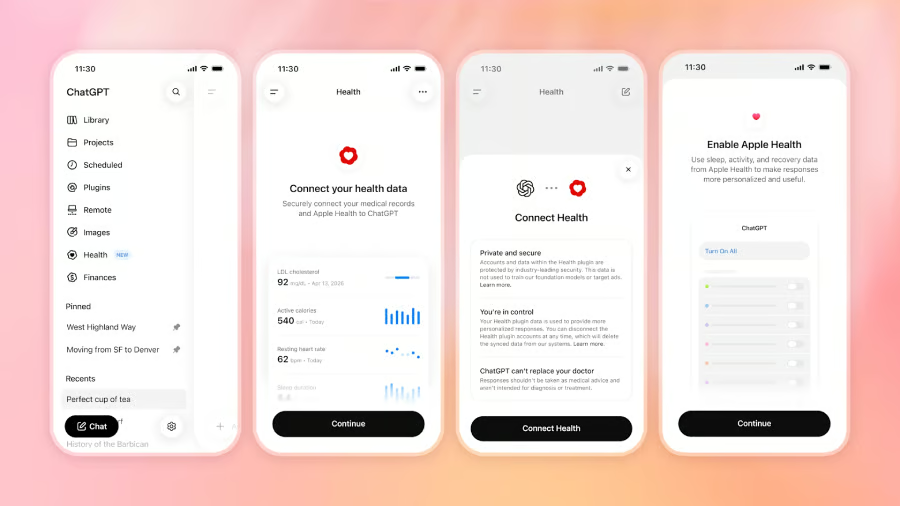


ChatGPT’s health features are moving out of their separate corner and into everyday conversations.
OpenAI is rolling out ChatGPT Health to all eligible U.S. adults on the web and iOS, expanding the feature beyond a standalone health experience and allowing ChatGPT to use connected medical information during everyday conversations.
Available to logged-in users across the Free, Go, Plus, and Pro plans, the update lets ChatGPT explain lab results, compare medical records, and answer health questions using data from supported providers and services. OpenAI says users now ask more than 300 million health-related questions each week, up from 230 million during the early testing period.
The update also lets users connect health information from Apple Health, supported US hospital systems, One Medical, Function Health, and other supported services so ChatGPT can provide answers based on their personal medical context.
Health data moves beyond a separate hub
The biggest change is that health information is no longer limited to a dedicated Health section.
Instead, users can allow ChatGPT to reference connected medical information throughout normal conversations when it is relevant. During testing, OpenAI found that more than 70% of health-related conversations happened outside the standalone health experience, prompting the company to integrate the feature directly into ChatGPT.
With permission, ChatGPT can consider information such as medications, lab results, recent visits, sleep, activity, and dietary restrictions while responding to broader requests. For example, it can factor allergies into meal planning or account for an injury when suggesting exercise or weekend activities.
OpenAI said users remain in control of when their health information is used and can approve access one response at a time or allow ongoing access.
Rollout comes amid growing legal scrutiny
The rollout also comes as OpenAI faces lawsuits alleging harmful medical advice from earlier versions of ChatGPT, underscoring the company's continued investment in improving safety and clinical evaluation.
In a lawsuit filed in Florida, a pastor sued the company, alleging ChatGPT gave dangerous medical recommendations that delayed treatment for a life-threatening pulmonary embolism. OpenAI is also facing another lawsuit tied to health-related advice from an earlier ChatGPT model.
Despite the legal challenges, the company says it has continued improving its health-focused AI models by working with hundreds of physicians to evaluate responses for accuracy, safety, communication, context awareness, and appropriate escalation when professional care may be needed.
Paid subscribers receive the feature through GPT-5.6 Sol, which OpenAI describes as its strongest health model to date, while free users access health capabilities powered by GPT-5.5 Instant.
The rollout reflects OpenAI's broader strategy of making ChatGPT a personalized assistant that can incorporate trusted user context across everyday tasks—including health, one of AI's fastest-growing consumer use cases.
Other News: Samsung has also launched the beta of its AI-powered Health Assistant, which uses Galaxy wearable data to deliver personalized wellness insights and recommendations for eligible U.S. users.