








OpenAI is betting that AI can help accelerate drug research.
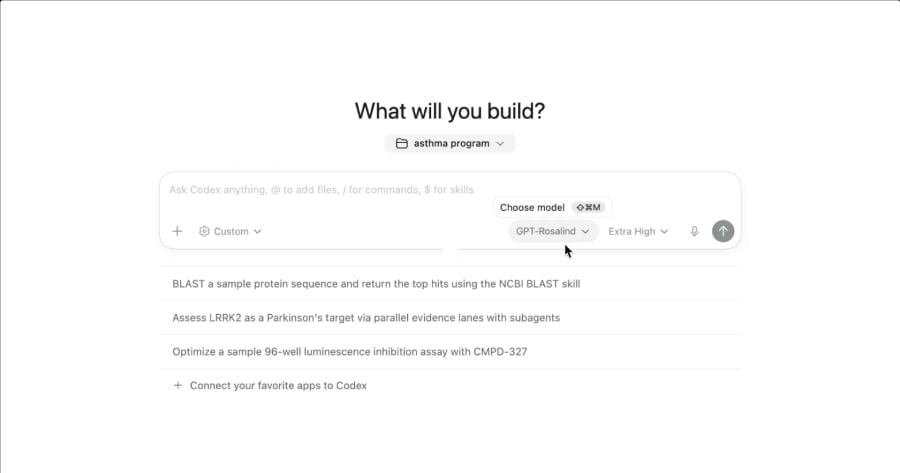
The ChatGPT maker has launched GPT-Rosalind, a new AI model designed for life sciences research across biology, drug discovery, and translational medicine. The company is introducing it as a tool for scientific work that is often difficult to navigate.
According to OpenAI, GPT-Rosalind is designed to help researchers complete scientific tasks more quickly while connecting them to research tools and data sources in the field. The model is only for specialized research settings, not for general consumer use.
The bottleneck before the breakthrough
The slowdown in drug discovery begins long before any treatment reaches patients. OpenAI said, “Progress in the life sciences is constrained not only by the difficulty of the underlying science, but by the complexity of the research workflows themselves.”
Researchers are often sorting through huge volumes of literature, specialized databases, experimental results, and shifting hypotheses to decide what is worth testing next. Those early decisions can take years to work through, even though they shape everything that follows.
From literature review to experiment planning
GPT-Rosalind is specifically for the work that happens between a research question and the next real decision. Its feature set breaks down into a few core jobs:
- Literature review and evidence synthesis
- Hypothesis generation
- Experimental planning
- Data analysis and interpretation
- Reasoning across life sciences topics
- Using research tools and databases
That gives the model a role much closer to the day-to-day flow of research, where reading, analysis, and next-step planning feed into one another.
Built to work with scientific tools
OpenAI is making GPT-Rosalind available in ChatGPT, Codex, and the API for qualified customers, with access built around existing research workflows.
A key part of the rollout is the new Life Sciences research plugin for Codex, which connects to more than 50 scientific tools and data sources. IT supports common research tasks across human genetics, functional genomics, protein structure, biochemistry, clinical evidence, and public study discovery.
That gives researchers a way to use the AI model alongside the databases, sequence tools, and discovery systems that already affect day-to-day scientific work.
Strong results, tighter access
According to OpenAI, GPT-Rosalind performed well on biology and chemistry benchmarks and beat GPT-5.4 on several research tasks. The model was tested with partners including Dyno Therapeutics, while Amgen, Moderna, Thermo Fisher Scientific, and Novo Nordisk are among the organizations named in the rollout.
GPT-Rosalind is not being widely opened up, though. Access is limited to qualified customers through OpenAI’s trusted-access program, which begins with Enterprise users in the US and includes requirements for governance, security, and oversight to limit biological misuse.
OpenAI has introduced GPT-5.4-Cyber as a restricted model for trusted security teams and researchers.