






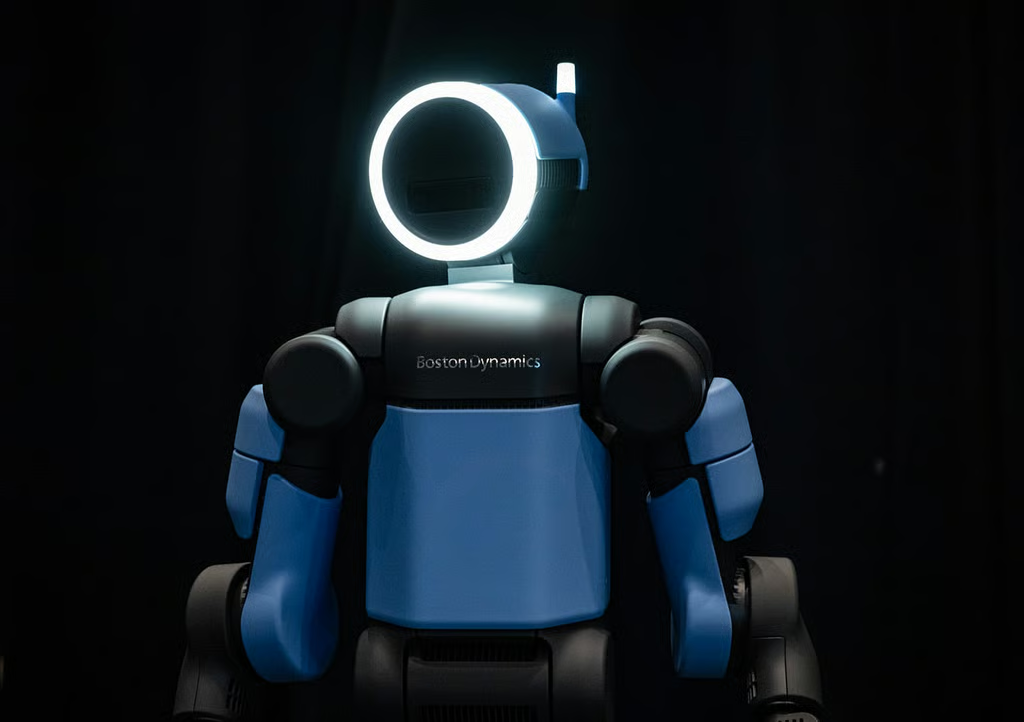


Humanoid robots are not taking Hyundai factory jobs in South Korea yet, but workers are already fighting for protection before they can.
Hyundai Motor employees staged a three-day partial strike after wage talks stalled. Alongside demands over pay and retirement, the union wants guarantees against job losses and lower income as the automaker prepares to use Atlas humanoids in factory work.
Should workers wait until humanoid robots arrive to negotiate protections, or secure them while deployment is still being planned?
Workers walk out after wage talks fail
Production workers stopped work for four hours each day from July 13 through July 15, with day and night shifts each ending two hours early.
Union negotiators are seeking:
- A monthly base-pay increase of 149,600 won, or about $100
- Performance pay equal to 30% of the company’s 2025 net profit
- An increase in the retirement age from 60 to 65
- Job and income guarantees tied to AI and factory automation
Management proposed an 89,000-won monthly raise, a performance bonus worth 350% of base pay, an additional 10 million won, and 15 company shares, but union leaders rejected the offer.
Automation has added a bigger issue to the company’s usual wage negotiations.
More than 34,000 of Hyundai’s roughly 40,000 union members authorized industrial action as negotiators sought guaranteed employment and working conditions related to AI, according to The Korea Times.
Atlas is headed to factories, but not yet in South Korea
Atlas was developed by Hyundai-owned Boston Dynamics and is scheduled to begin working at the group’s Georgia factory in 2028. The automaker says the humanoid will initially handle parts sequencing and other repetitive or hazardous work. No deployment date has been announced for South Korean plants.
A much larger rollout is planned. Hyundai Motor Group intends to deploy more than 25,000 Atlas robots across Hyundai and Kia facilities and to build an annual production capacity of 30,000 units by 2028. A detailed timeline and list of factories have not been released.
Union leaders fear large-scale deployment will reduce the number of people needed on production lines as Atlas robots take on more duties. Workers have warned of an “employment shock” and want protections agreed before humanoids become part of regular factory operations.
“Not a single robot” should enter workplaces without an agreement between labor and management, the union warned.
What workers should secure before humanoids arrive
Workers are right to take the risk seriously. Humanoids can repeat assigned tasks for long periods without fatigue, and employers do not pay them wages or overtime. Maintenance and supervision still cost money, but large deployments can reduce demand for human labor.
South Korean factory workers at Hyundai and employees in other robot-heavy workplaces should ask for details before deployment. Find out which tasks will move to machines and whether shifts or overtime will shrink. Ask whether retraining or reassignment will preserve current pay.
Put those commitments in writing through union agreements or workplace policies. Keep records once deployment begins, especially of schedule changes and overtime cuts. Workers have more leverage while humanoids are still being planned than once reduced hours and redesigned roles become the norm.
Mitsubishi’s Kyoto plant may become a production base for humanoid robots built to work alongside people.