








AI agents are getting closer to the money.
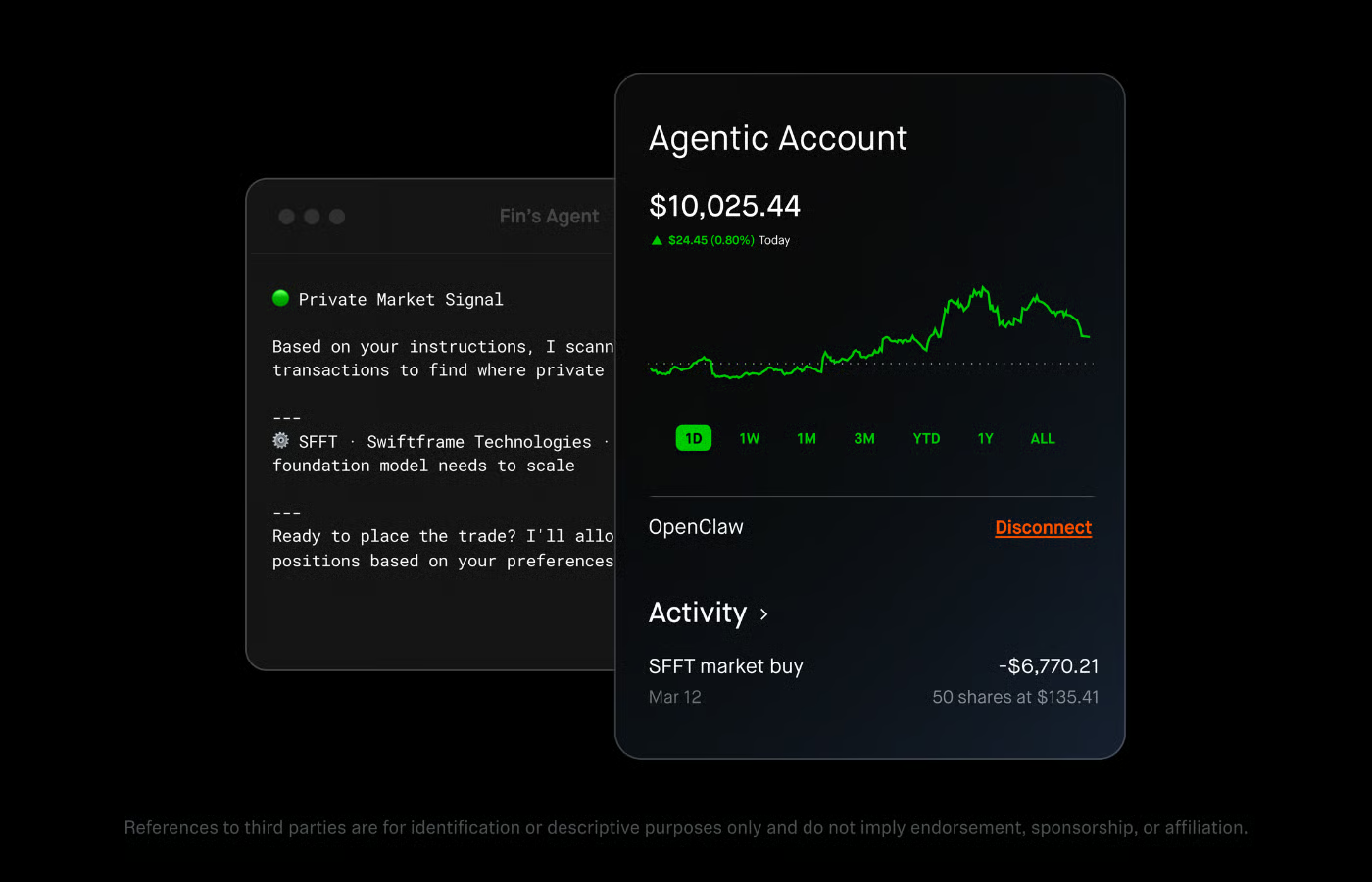
Robinhood has launched a beta version of its Agentic Trading system, allowing customers to connect external AI agents that can place stock trades within user-defined limits. The company is also introducing an Agentic Credit Card that lets AI agents make purchases under user-controlled spending rules.
“Our mission has always been to democratize finance for all, and now, that mission extends to AI agents,” said Vlad Tenev, CEO of Robinhood.
The company says users can plug in agents from platforms like Claude, Cursor, Codex, and others, then give them controlled access to either investing funds or a virtual credit card.
How AI trading will work
With Agentic Trading, users open a separate account dedicated only to their AI agent. That account is funded separately from the rest of the user’s portfolio, limiting exposure.
From there, the AI agent can analyze markets, rebalance portfolios, and execute trades based on instructions or strategies set by the user. Robinhood says users will receive real-time notifications and can view every trade as it happens inside the app.
The system is designed to support strategies such as portfolio rebalancing, sector-focused investing, and automated trading rules, such as mean-reversion strategies. It currently supports equities only, with options, crypto, futures, and other assets expected later.
Robinhood is also extending automation into everyday spending with its Agentic Credit Card.
Users can link an AI agent to a virtual version of their Robinhood Gold Card, set spending limits, and choose whether purchases require manual approval. The AI can then search for products, track prices, and complete purchases automatically.
Examples shared by Robinhood include agents making restaurant reservations, buying limited sneaker drops under a set price, or assembling shopping lists within a fixed budget.
Safety controls and warnings
Robinhood is placing heavy emphasis on guardrails as it introduces autonomous financial tools. The company says users can pause or disconnect agents at any time, and every action is logged in a real-time activity feed. Fraud detection systems can also review discrepancies between user instructions and agent actions during disputes.
However, Robinhood also warns that AI trading comes with serious risks. “Agentic trading involves significant risk, including the possible loss of your entire investment,” the company said in its disclosures.
The future of finance or a high-risk experiment?
Robinhood is positioning this as the beginning of “agentic finance,” in which AI systems don’t just advise users but also act on their behalf across investing and spending.
The company is starting cautiously in beta, but the direction is clear: more automation, more autonomy, and more AI-driven decision-making in personal finance.
Also read: xAI’s Grok Build brings a coding agent into developer terminals as software companies push AI tools beyond chat.