






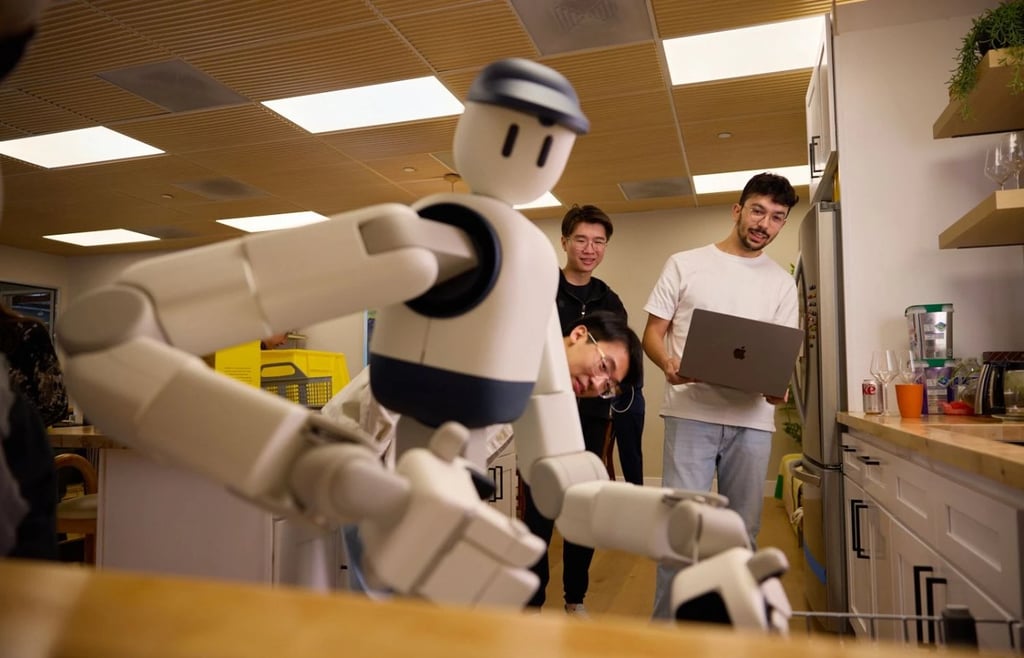


Memo may not wash away your problems, but it might finally wash your dishes.
A California robotics startup called Sunday has officially introduced Memo, a home robot built to handle everyday chores. The company, founded by Stanford-trained roboticists Tony Zhao and Cheng Chi, says Memo is designed to help families reclaim time spent on tasks like dishes, laundry, and tidying.
Sunday emerged from stealth with $35 million in backing from Benchmark and Conviction, positioning Memo as a practical robot designed for homes, not labs or factories.
The heart of Sunday’s approach is data from real households. The company gathered daily routine information from more than 500 homes using its patented Skill Capture Glove, which records how people move, clean, sort, and organize. This effort produced around 10 million episodes of genuine household routines, providing Memo with a massive training dataset.
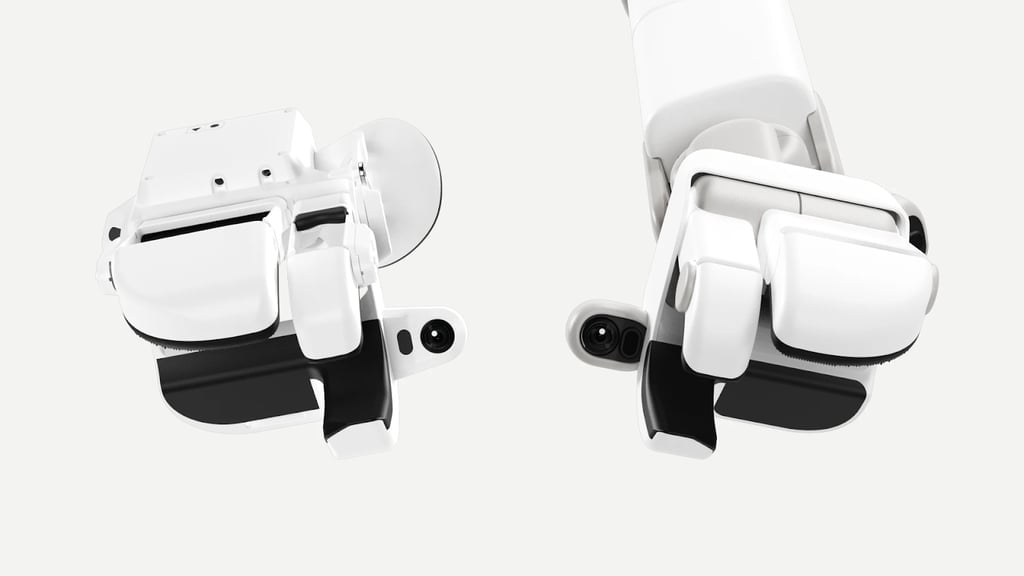
Skill Capture Glove (left) and Memo’s hand (right). Image: Sunday
That focus on data is central to the company’s vision.
“The problem has always been data. Most home robots start as adaptations of industrial machines, and those trained in labs rarely succeed in unpredictable, real-world environments,” Tony Zhao, co-founder and CEO of Sunday, said in the announcement. He added that the glove system captures thousands of hours of daily routines from families, helping Memo learn what people actually need.
Mastering the messy household
Thanks to its data-heavy training, Memo is designed to complete long, multi-step chores rather than simple one-off actions.
According to Sunday, Memo completed the Table-to-Dishwasher task, autonomously navigating over 130 feet and performing 33 unique interactions with 21 different objects, including delicate dinnerware.
The robot’s training on a diverse set of home layouts also allows for Zero-Shot Generalization. This means Memo can navigate and work in completely new environments, like an Airbnb it has never seen before, using a 3D map.
Memo’s capabilities also push the boundaries of dexterity, including folding socks (which requires delicate precision and adapting to how fabric deforms) and executing a flawless espresso pull by picking up a portafilter and locking it into the machine. According to Zhao, Memo broke zero wine glasses over more than 20 live demo sessions.
“The promise of AI robotics isn’t back-flipping or dancing demos, but robots that work in messy, real-world situations. To have those, we need real-world training data. We have about one-millionth of the data we need,” said Eric Vishria, General Partner at Benchmark.
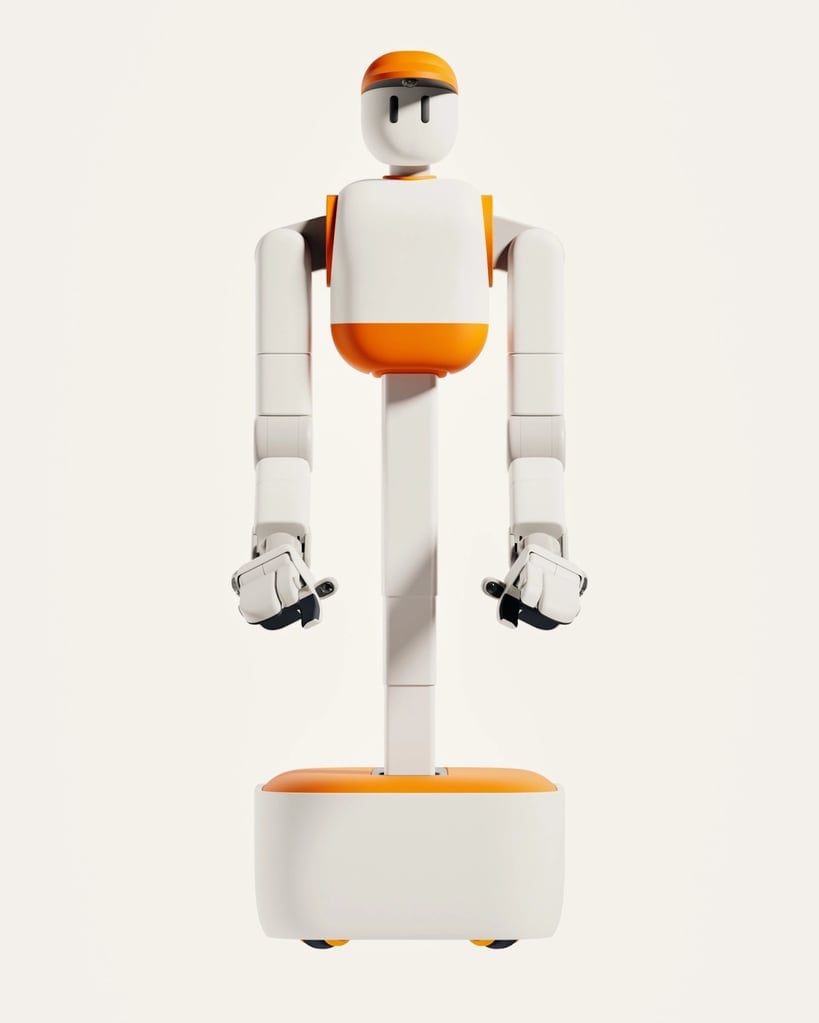
Memo doesn’t walk, it rolls. It uses a wheeled base instead of legs for better stability and balance. Image: Sunday
Memo’s design prioritizes stability and safety over a more complex bipedal form. Instead of legs, the robot features a rolling base and a telescoping central column, allowing it to move securely and adjust its reach from the floor up to 2.1 meters (6’10”). The robot’s exterior is clad in a soft, silicone-like material, giving it an approachable, non-industrial appearance that suits family living spaces.
Powered by ACT-1, a new robotics model
Memo is trained on a new foundation model called ACT-1, which Sunday describes as “zero robot data,” meaning it learned from human movements rather than robot demonstrations. The model has been shown to handle complex sequences, such as moving dishes from a table to a dishwasher, with dozens of actions in between.
When you can get one
You won’t see Memo in stores just yet. The company is taking a cautious, community-focused approach. Starting November 19th, 2025, families can apply for the “Founding Family Beta” program. In late 2026, fifty selected households will receive their own Memo to test and help shape its future development.
Elsewhere in large-scale AI infrastructure, recent analysis of OpenAI’s Stargate buildout describes how a planned 17-gigawatt data center network could reshape energy and cloud markets.