






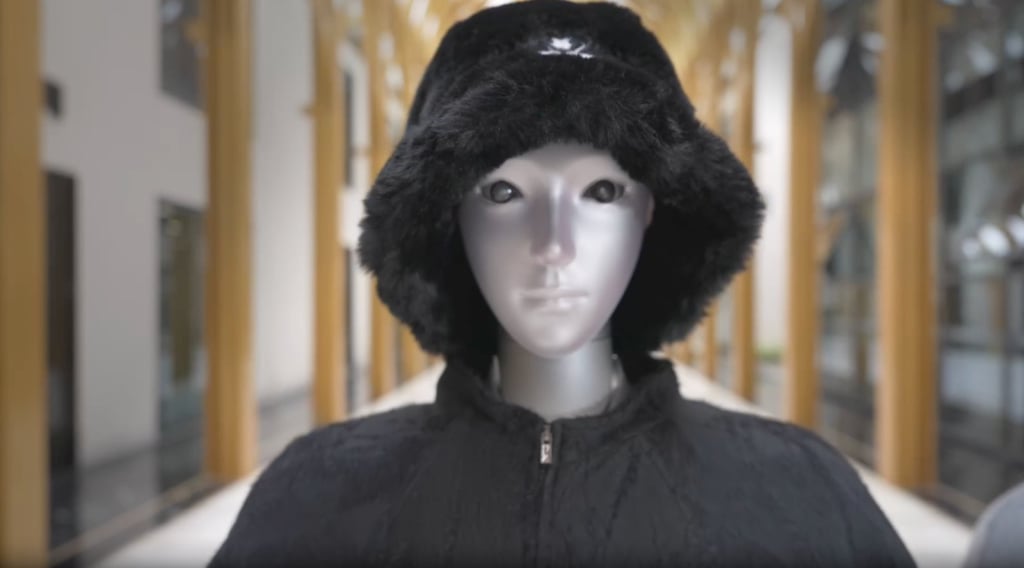


Unitree, China’s rising robotics powerhouse, has unveiled its latest creation: the Unitree H2, a full-sized humanoid that dances, performs kung fu, and struts like a runway model.
But what’s stealing the spotlight isn’t its flawless motion. It’s the face.
The H2 greets the world with a human-like head that looks both familiar and unsettling. Unlike previous Unitree models that featured sleek, faceless designs, this one has defined eyes, a nose, and lips, though it doesn’t blink or smile.
In the company’s promotional post titled “Unitree H2 Destiny Awakening,” Unitree described the robot as “born to serve everyone safely and friendly.”
According to Unitree’s official specifications, the H2 stands 182 centimeters tall and weighs about 70kg. It features 31 degrees of freedom — meaning 31 joints that allow precise movement across its body. Each leg can deliver up to 360 N·m of torque, and each arm joint can reach 120 N·m, giving it impressive balance and agility.
A promotional video shared by Unitree shows the robot spinning through ballet-inspired moves and delivering precise kickboxing punches. It even walks confidently alongside a human model, a clear demonstration of just how far the company’s motion-control algorithms have evolved.
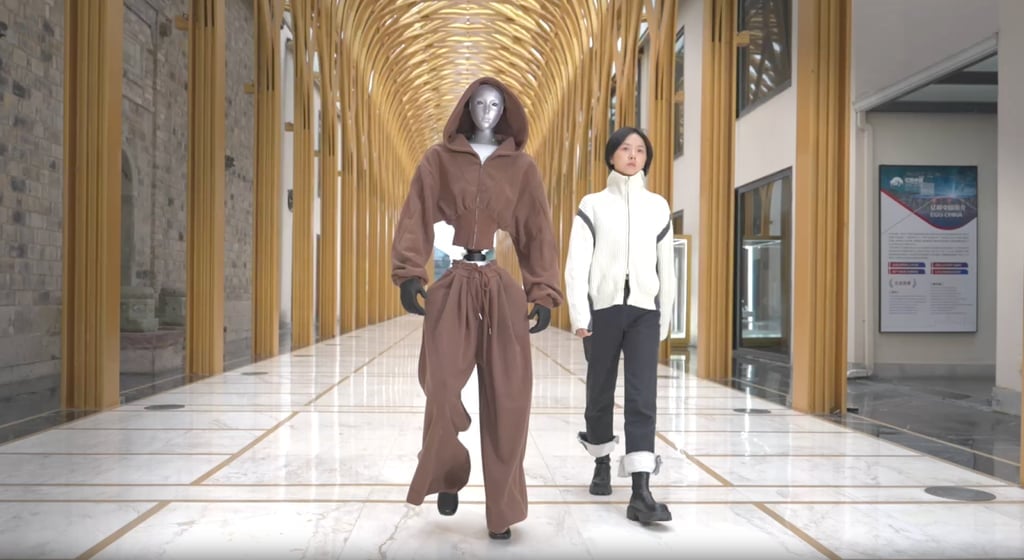
Image: Screenshot from YouTube/Unitree
The H2 runs on Intel Core i5 computing power and can scale up to Nvidia’s Jetson AGX Thor chip, offering a 2,070 TOPS (trillions of operations per second). Its onboard systems include dual-eye binocular cameras, Wi-Fi 6, Bluetooth 5.2, and voice interaction through a built-in microphone array and speaker.
The robot uses aircraft-grade aluminum, titanium alloy, and high-strength plastics, balancing strength and weight. Its life lasts about three hours per charge, powered by a 15Ah lithium battery. Unitree describes the H2 as a “graceful rebirth” of industrial design and motion control.
Unitree will offer two models: the H2 and the H2 EDU, the latter designed for research and educational purposes. Prices start at $29,900 before taxes and shipping.
The bigger picture for China’s robots
Unitree’s rapid rise mirrors China’s growing ambition in humanoid robotics. Founded in 2016, the Hangzhou-based company gained global attention with its agile quadruped robot, XDog, and later with humanoids such as the H1, G1, and R1.
At the 2025 World Humanoid Robot Games in Beijing, the H1 claimed four gold medals for its speed and stability. Now, with the H2, Unitree is venturing further into lifelike design and motion control, an area where Global Times says China is “accelerating its push toward large-scale commercialization.”
The firm’s CEO, Wang Xingxing, told People’s Daily in an interview cited by the Global Times earlier that while the company’s goal is to make robots capable of assisting humans, “mass adoption of the robots in homes or factories isn’t feasible due to technical limitations.” He added, “Step-by-step progress is good, fostering more understanding and tolerance for the industry.”
With companies like Unitree, Fourier, and UBTECH pushing forward, China is fast emerging as a major player in a field once dominated by the US and Japan.
Prefer wheels to bipeds? Check out the XPENG Robotaxis Launch for timelines, coverage areas, and what app integrations mean for real riders.