




While Cisco is well-known for its networking technologies, the company has increasingly become an adopter of and strong advocate for container technologies and the Kubernetes container orchestration system, in particular.
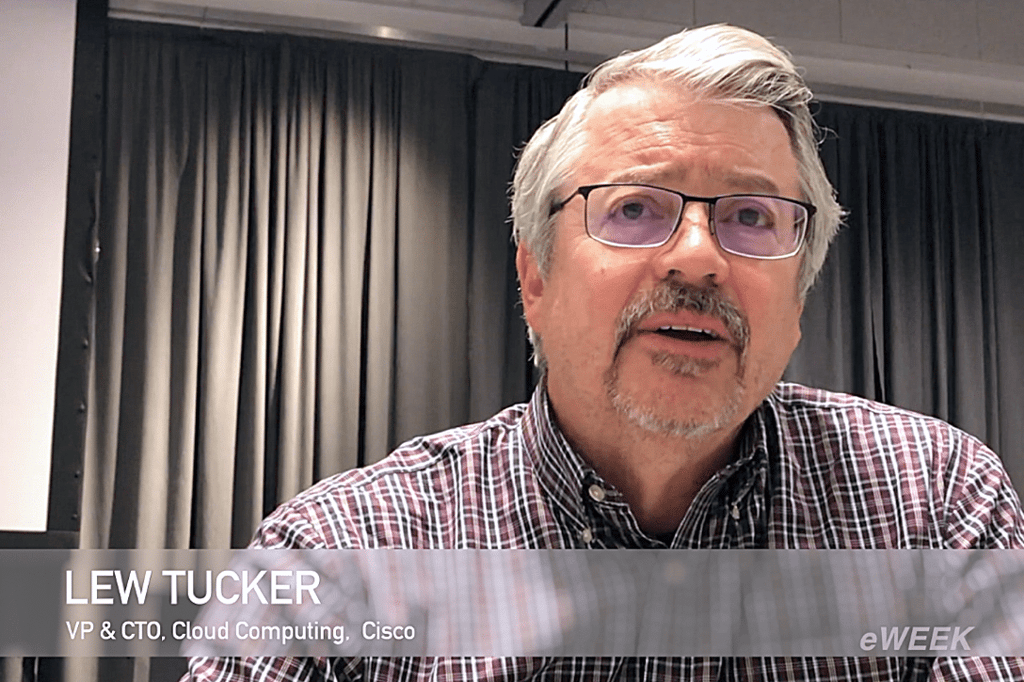
Helping to lead Cisco’s strategic direction for containers is the company’s CTO for cloud computing, Lew Tucker. In a video interview with eWEEK, Tucker details Cisco current product lineup for containers and provides insight into the future direction.
“Cisco Container Platform is a Kubernetes platform that we’re bringing out now on our UCS Hyperflex systems,” Tucker said. “That means a customer is able to immediately bring up Kubernetes in that environment and offer their users the same experience that someone has, for example, running Kubernetes on Google cloud or on Amazon.”
The Cisco Container Platform, which was first announced by Cisco on Feb. 1, runs on the Cisco’s Unified Computing System (UCS) server systems with Hyperflex. The Hyperflex 3.0 update was announced on Jan. 25, providing multicloud support options.
Beyond just providing Kubernetes, Cisco now also offers AppDynamics capabilities to help its customers monitor and manage applications running in containers. Tucker said AppDynamics can monitor applications running in both virtual machines and containers in a consistent approach. Additionally, the Cisco Cloud Center is now able to deploy applications to the public cloud either as virtual machines or as containers.
“Now we have Kubernetes and virtual machines being equal citizens on the platform,” he said.
Istio
Looking forward, Tucker is particularly interested in service mesh technology, which is currently being developed with the open-source Istio project that works with Kubernetes.
“In essence we’ve brought networking from the infrastructure up into the application layer, and that makes it accessible to developers,” Tucker said.
The service mesh is one element of a larger movement toward low-code development that also includes serverless deployment methodologies for making it easier for organizations to assemble applications without the need for writing new code.
“We are moving to the Lego-block model whereby the application developers are taking hardened, proven services and can easily integrate them into an entire system,” he said.
Watch the full video interview with Lew Tucker above.
Sean Michael Kerner is a senior editor at eWEEK and InternetNews.com. Follow him on Twitter @TechJournalist.