






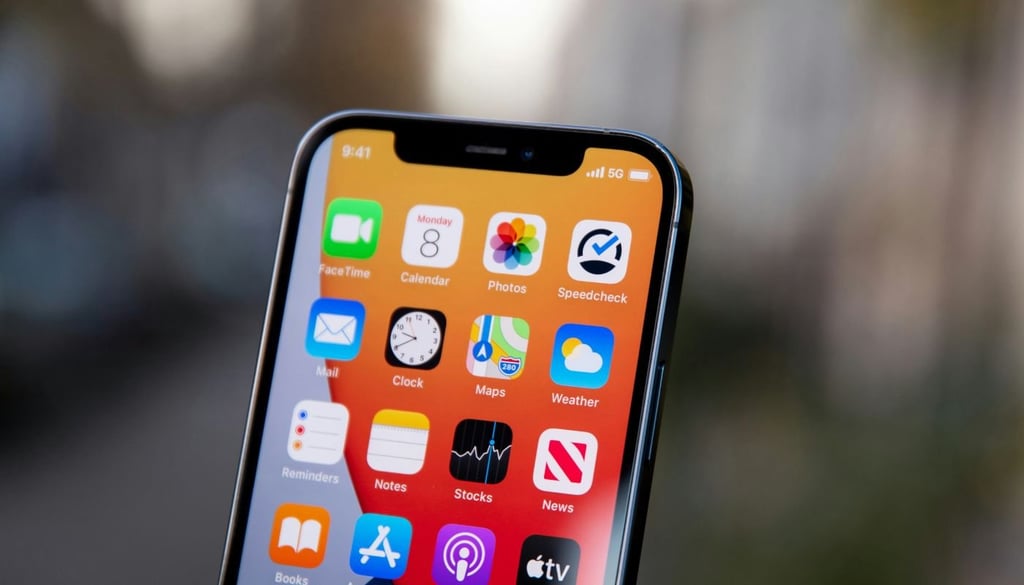


Apple flirted with letting AI reshuffle your iPhone apps. In the end, it was decided that muscle memory mattered more.
The tech giant briefly considered using AI to change how the iPhone Home Screen works, including dynamically rearranging apps based on user behavior. The proposal surfaced internally but was ultimately shut down by Apple’s software chief, Craig Federighi, according to The Information.
The idea was part of broader internal discussions about pushing AI deeper into Apple’s core software experience. People familiar with the matter told The Information that Federighi was uneasy about how unpredictable such a feature could feel to users.
Former Apple employees said Federighi believed the feature would confuse people who depend on muscle memory to find apps quickly. He was concerned that constantly shifting app positions would be more frustrating than helpful.
Federighi has long been cautious about AI systems that behave in ways Apple can’t fully control. Inside Apple, he is known for favoring software that behaves consistently rather than algorithms that dynamically change outcomes.
According to The Information, Federighi rejected the AI Home Screen proposal because he felt it “would disorient users,” especially those accustomed to fixed app locations.
This mindset has shaped Apple’s slower and more conservative approach to AI compared with rivals like Google, Microsoft, and Meta, which have spent aggressively on AI research, data centers, and talent and are more willing to experiment publicly.
A ‘penny-pinching’ path to AI
Apple’s caution also shows up in its research and development budget. While the rest of Silicon Valley is spending billions of dollars to build massive AI data centers, Apple is taking a noticeably more frugal approach.
Federighi, who took full control of Apple’s AI organization in December 2025, has a reputation for being meticulous with every cent. According to The Information, he is known as a “penny-pincher” who scrutinizes everything, “down to their budgets for bananas and other office snacks.”
This cautious culture is reflected in the numbers. For the 12 months ending in September 2025, Apple’s R&D spending represented just 8% of its revenue, according to data cited by The Information.
By comparison, Meta spent 28% of its revenue on R&D during the same period, while Amazon (15%), Alphabet (14%), and Microsoft (11%) spent significantly higher shares than Apple.
The Google deal: A ‘gut punch’ to internal teams
After promising a major, more conversational Siri upgrade, Apple faced repeated internal delays. Federighi came to believe Apple’s own AI models “weren’t ready for prime time,” people familiar with his thinking told The Information.
This led to a major strategic turn. Federighi pushed to use other companies’ more capable models, culminating in this month’s headline-grabbing deal with Google. Apple will use Google’s Gemini AI to power future upgrades, including the long-awaited new Siri.
The move was a blow to Apple’s internal AI team. As reported by The Information, when Federighi instructed teams to evaluate outside models, it was seen as a “gut punch” to the group building Apple’s foundation models. Several key members, including the team’s head, have since left for companies like Meta.
What’s next for Apple Intelligence?
Despite the Google deal, Apple’s internal AI work isn’t dead. The foundation models team will continue developing models meant to run directly on devices, according to The Information.
The immediate future of Apple’s AI, however, will lean on partners. Beyond the Gemini model, Apple is in discussions to use Google’s cloud infrastructure and chips to power a future Siri, a significant shift from its previous policy of running AI only on devices or its own secure servers.
For users, the most noticeable changes are coming soon. With the next iOS update, broader Apple Intelligence features are expected, anchored by a Siri chatbot powered by Google’s Gemini.
It appears that Apple’s Home Screen will remain unchanged, but nearly everything else in its AI playbook is being dynamically rearranged.
Also read: Google’s Gemini AI is adding visual reports and charts to its Deep Research tool.