






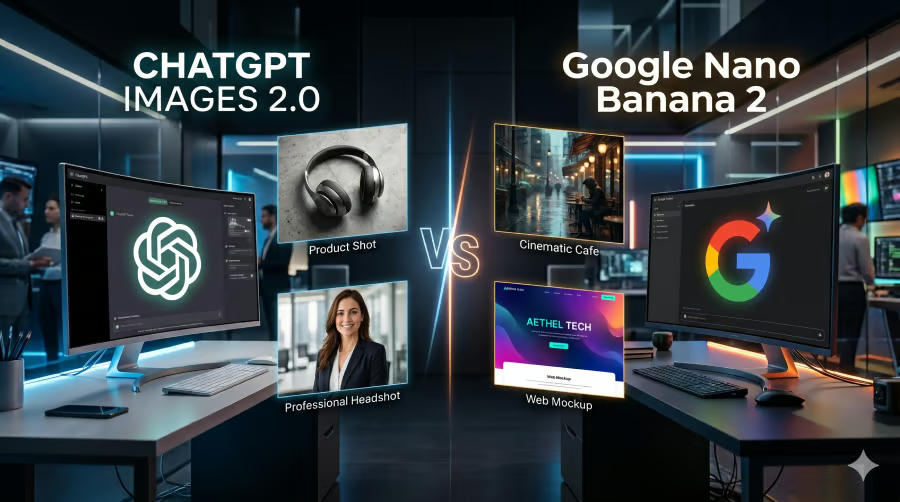


AI image models are getting good enough that “Which one is better?” is no longer a very useful question on its own. The better question is… better at what?
A model that nails a polished product photo might struggle with a professional headshot. One that creates a beautiful scene may still miss the exact layout, lighting, or text instructions in the prompt. So I tested ChatGPT Images 2.0 and Google’s Nano Banana 2 head-to-head using the same six prompts across practical, everyday image tasks.
I wasn’t only looking for the prettier image. I judged each result by how closely it followed the prompt, how realistic it looked, how well it handled details like lighting and texture, and whether the final image would actually be useful outside a demo.
Some rounds had a clear winner. Others were close enough that the better choice depended on the task. Here’s how the two models performed.
Website hero image
For the first test, I used a website hero-section prompt that asked the AI models to create a 16:9 desktop layout with headline copy, supporting text, a CTA button, brand colors, and a right-side illustration about productivity and automation. The point was to see whether each model could follow layout instructions while keeping the design usable for a business website.
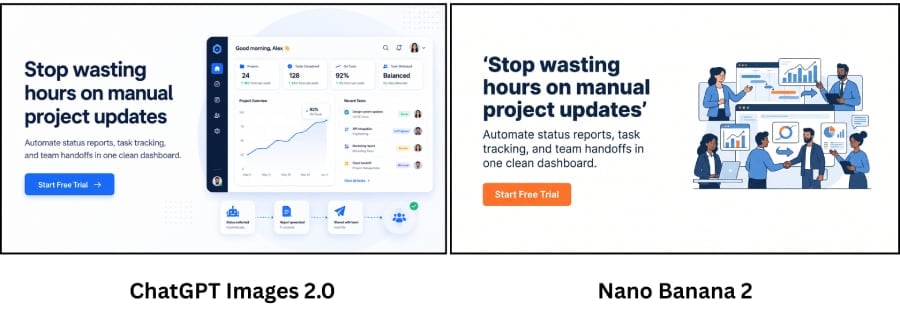
Verdict: Nano Banana 2 followed the prompt more faithfully. It kept the requested left-text, right-illustration hero layout, while ChatGPT Images 2.0 turned the prompt into a fuller landing page with navigation, dashboard visuals, and extra supporting elements. The ChatGPT output looked impressive, but Nano Banana 2 was the cleaner match for the original brief.
E-commerce product photo
Product photos are among the most practical tests for AI image tools because the output must look accurate and sellable. The setup used a pair of wireless headphones on a pure white background, with studio lighting, visible material texture, and a soft shadow underneath.
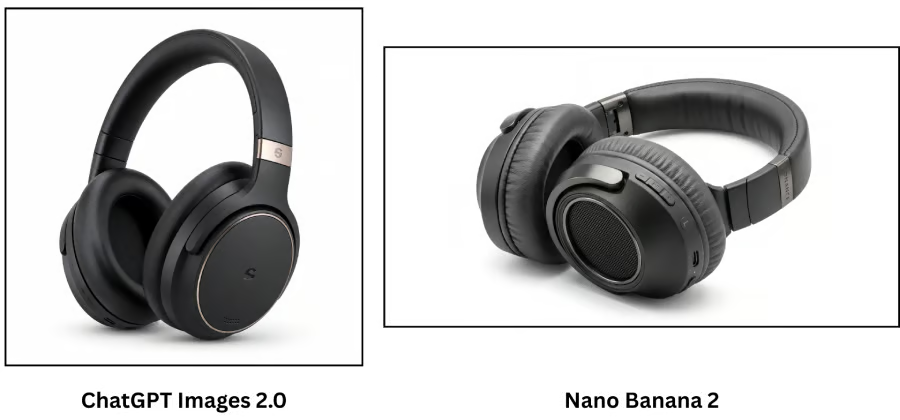
Verdict: For a straightforward e-commerce product shot, Google’s image model came closer to the brief. Its output had stronger material detail, more realistic texture, and a better angled presentation. The ChatGPT version also looked polished and premium, but it felt more like a sleek catalog render than the simple product-photo setup the prompt requested.
Professional headshot edit
Headshot edits are useful because the AI image model has to make the output look more professional without making the person look artificial. I started with this casual outdoor portrait below with everyday lighting and a simple pose:
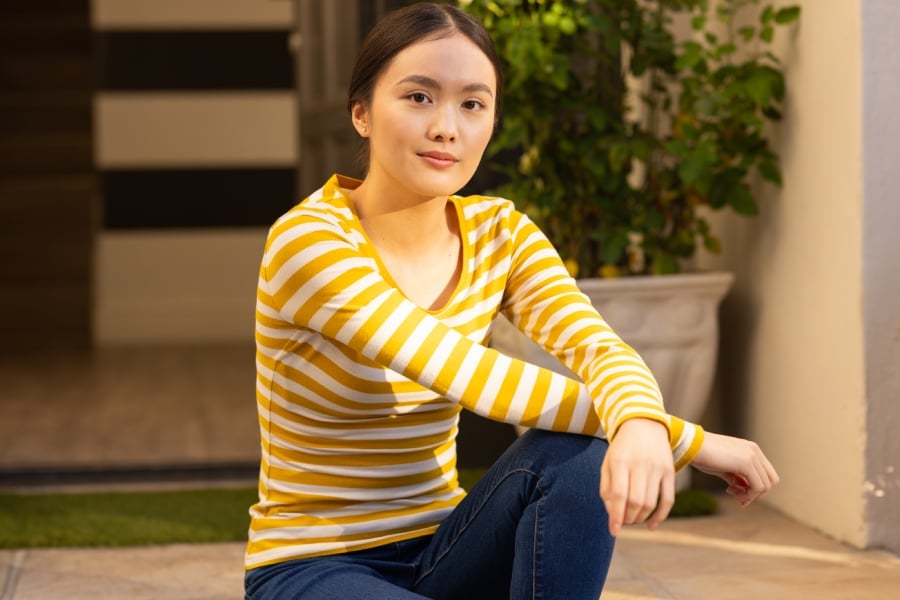
Both models were asked to replace the background with a studio-style backdrop, soften the lighting, reduce harsh shadows, and preserve the subject’s identity, expression, and facial details.
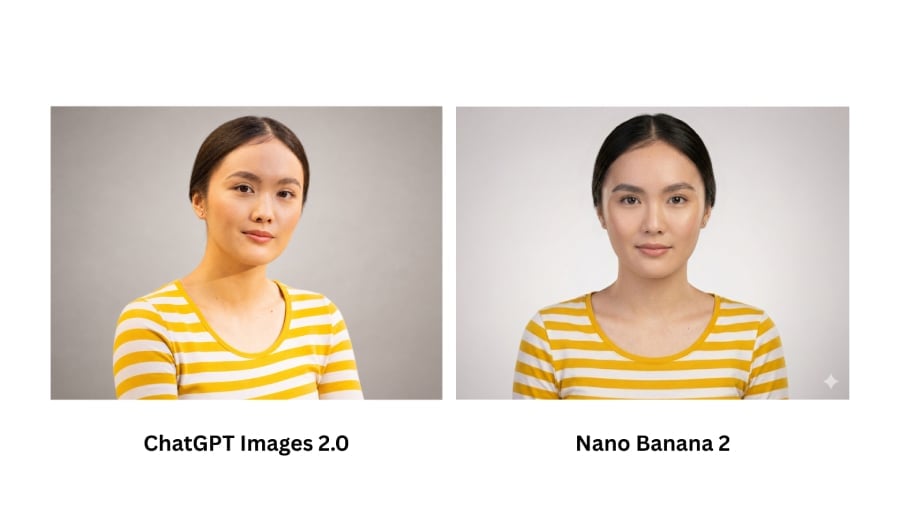
Verdict: Nano Banana 2 handled the headshot conversion with more restraint. The background was cleaner, the lighting looked softer and more studio-like, and the final image stayed closer to a standard corporate profile photo. ChatGPT’s version was still a strong portrait, but the angled pose and warmer lighting made it feel better suited to an editorial bio than a formal headshot.
Realistic background replacement
Background replacement quickly reveals whether an AI edit really holds together. A good result should not just swap the setting. It has to match the subject’s lighting, shadows, perspective, and depth so the final image still feels believable.
For this round, I used the indoor portrait below and asked both tools to place the subject in a modern office environment.
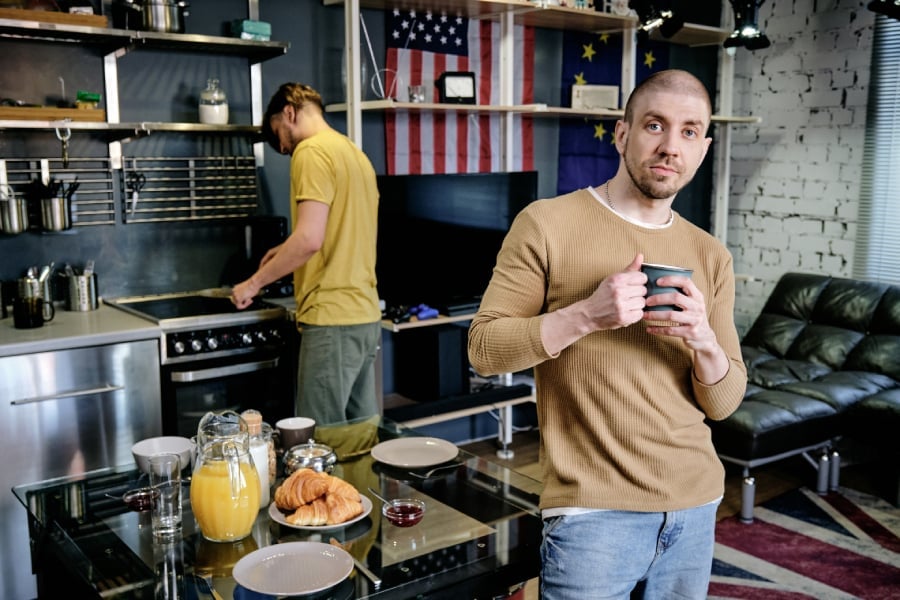
The prompt asked for soft daylight from the left, slight background blur, matched color temperature, and cohesive integration without changing the subject’s face, clothing, pose, or identity.
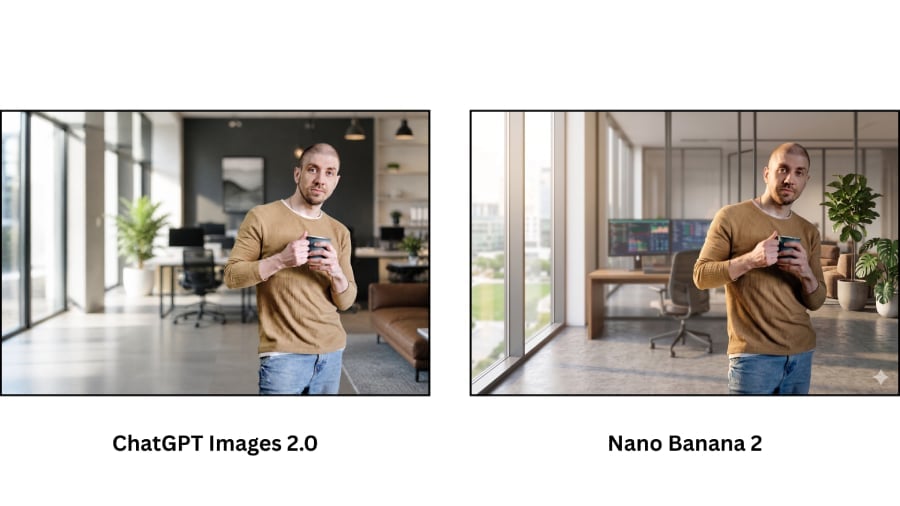
Verdict: This was close, but the ChatGPT result followed the prompt slightly better. Google’s model created a brighter office scene, while the ChatGPT version did a better job blending the subject into the new background with more natural lighting and depth.
Rainy café window scene
A rainy café window posed a more cinematic challenge for both models. The image needed to feel layered, with droplets on the glass, warm reflections inside, umbrellas moving outside, and a coffee cup anchoring the foreground.
The test was about atmosphere, depth, and photographic realism more than practical design. The details had to work together without turning the image into a cluttered mood board.
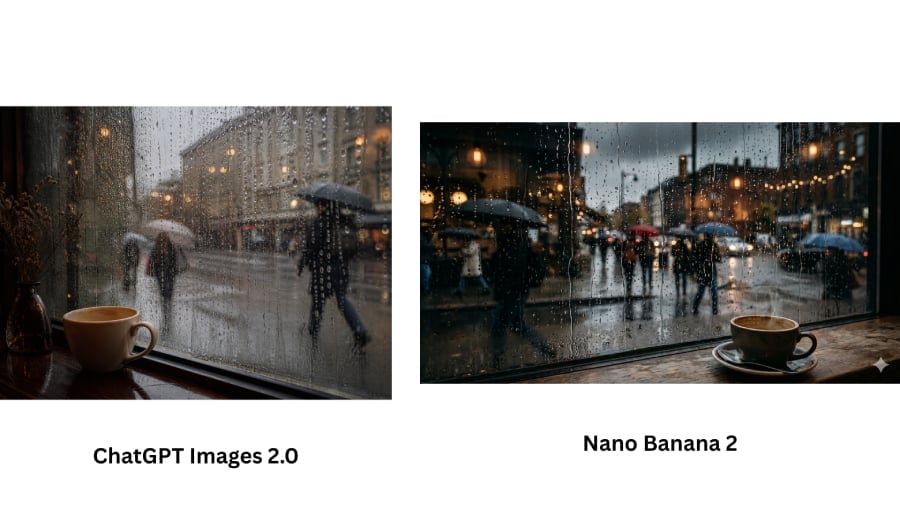
Verdict: Both images worked well, but Nano Banana 2 did a better job sticking to the brief. It better captured the cozy café-window setup, with the coffee cup reading as a clearer focal point and the rainy, reflective mood feeling more complete. ChatGPT Images 2.0 also delivered a convincing and atmospheric output, with detailed raindrops and a believable street scene, but it added extra elements that were not specifically requested.
Miniature city tilt-shift
A tilt-shift cityscape added a more technical photography test to the comparison. To work, the image needed a clear focus band through the middle, blur above and below, boosted color, and enough city detail to sell the illusion of a miniature model.
The challenge was balance. Too little blur, and the city still looks full-size. Too much, and the effect starts to look artificial instead of like a tiny diorama photographed from above.
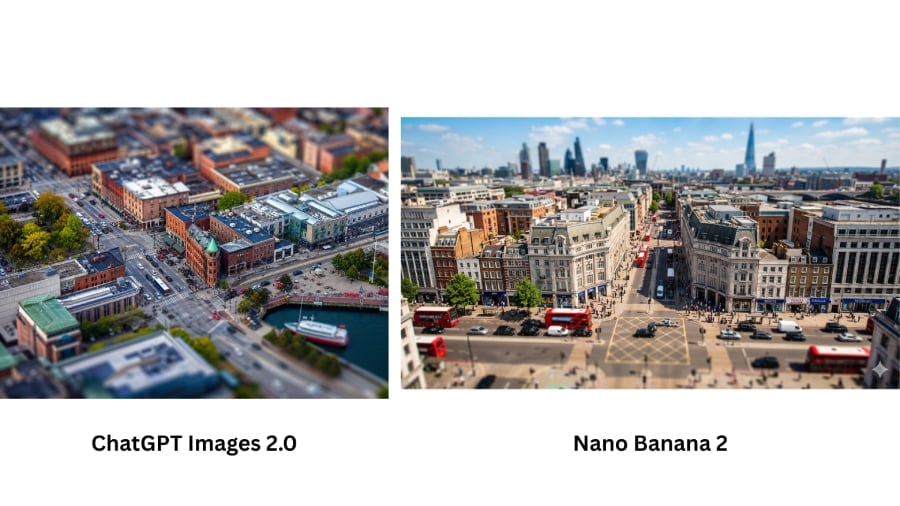
Verdict: ChatGPT Images 2.0 wins this test. The prompt asked for a cityscape that felt like a tiny diorama photographed from above, and the ChatGPT result delivered that miniature effect more convincingly. Its heavier blur, boosted color, and model-like treatment made the city feel smaller and more toy-like, while Nano Banana 2 produced a more realistic tilt-shift cityscape that did not push the miniature illusion as far.
Bottom line
There was no clean sweep. Google’s Nano Banana 2 performed better on structured, practical tasks where the prompt left less room for interpretation, including the hero section, product photo, and headshot.
ChatGPT Images 2.0 won the background replacement and tilt-shift tests, where natural blending, depth, and visual treatment mattered more. It also stayed competitive in the more atmospheric prompts.
After six tests, the split was clear. Nano Banana 2 had the edge on prompt precision, while ChatGPT Images 2.0 stood out when the image needed more visual depth or creative interpretation. Which is better depends on what you’re making.
Want better AI portraits and smarter image results in 2026? Start with these ChatGPT prompts for polished headshots, then use the Nano Banana 2 prompts to build more creative, refined visuals.