








Humanoid robots didn’t just appear at a Seoul fashion show. They walked the runway.
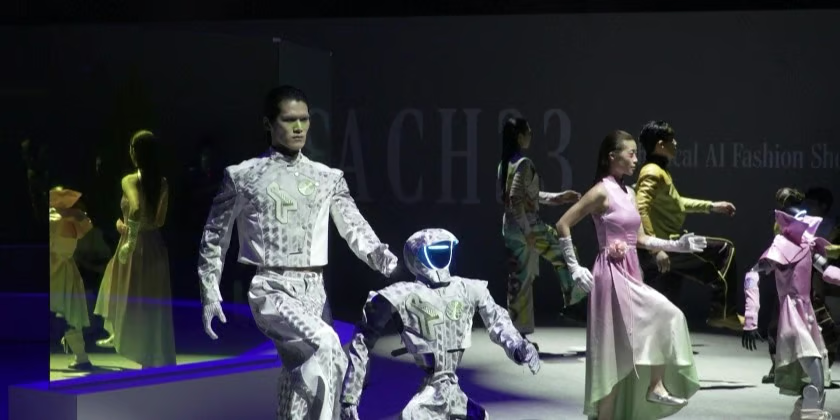
Galaxy Corporation hosted the “Mach33: Physical AI Fashion Show” at Galaxy Robot Park in Seoul, pairing humanoid robots with human models in coordinated designer outfits and choreographed performances. The event framed robots not only as machines, but as future participants in entertainment, fashion, and public life.
The runway spectacle points to a broader shift in robotics: humanoid machines are moving out of factories and labs and into spaces built for culture, branding, and audience reaction.
Fashion meets robotics
The runway featured a mix of avant-garde clothing tailored for both human and robot bodies.
Human models and their robot counterparts appeared in matching looks, moving in unison as part of the show’s central concept of “physical AI.” Some segments of the show reportedly included dramatic entrances, with robots initially concealed under heavy capes before being revealed in coordinated fashion alongside human models.
Organizers described the concept as a way to explore how robots might not only function as machines but also become part of cultural expression and entertainment. Galaxy Corporation, known for its work in entertainment and technology, framed the event as part of its broader vision for “enter-tech,” where robotics, artificial intelligence, and pop culture intersect, according to Interesting Engineering.
The company has signaled plans to expand into robot-centered entertainment experiences, including future performances and interactive shows.
Robots moving beyond industrial spaces
Traditionally, humanoid robots have been confined to factories, labs, or controlled tech demonstrations. But the Seoul fashion show reflects a growing shift toward placing robots in public-facing cultural spaces.
At the event, robots didn’t just walk the runway; they also performed dance routines and interactive performances, showing how robotics is increasingly presented as entertainment rather than industrial machinery.
Some reports also noted additional experimental segments, including interactive demonstrations in which robots engaged in controlled performance scenarios, such as choreographed movement and staged combat-style interactions.
South Korea already ranks among the world’s most robot-dense countries, with heavy investment in automation and AI-driven manufacturing. The country has been steadily expanding its robotics ecosystem through industry partnerships, research programs, and government-backed initiatives.
Events like the Seoul fashion show highlight how robotics is now moving beyond industrial use cases into lifestyle, entertainment, and creative industries.
However, experts still point out that while humanoid robots have improved in walking, balance, and coordinated movement, challenges remain in areas like autonomy, perception, and natural human interaction.
Also read: The showcase also arrives as China rapidly expands its humanoid robotics infrastructure, with new training facilities designed to accelerate the development of robots capable of operating in real-world environments and public spaces.