






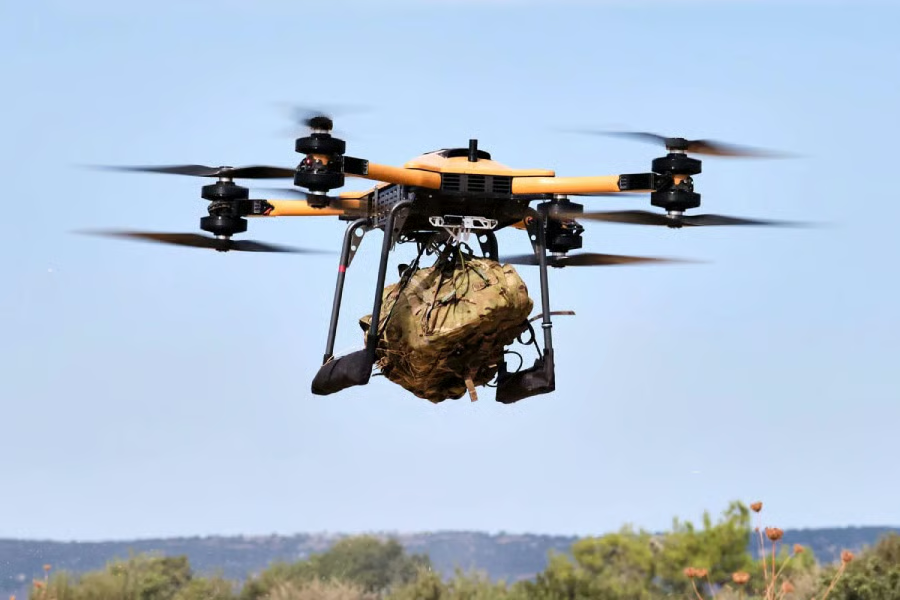


In what looks like his final major policy play before handing over the keys to Number 10, Prime Minister Keir Starmer has unveiled a massive £5 billion drone overhaul to gear up for the wars of tomorrow.
Prime Minister Keir Starmer announced more than £5 billion in funding for drones and autonomous military systems over the next four years as part of its new Defense Investment Plan, marking the country's largest-ever investment in uncrewed technology.
According to the UK government, the funding is designed to accelerate the adoption of drones across the Army, Royal Navy and Royal Air Force while supporting domestic defense companies, expanding production capacity and creating thousands of jobs.
The investment comes as military planners increasingly point to conflicts in Ukraine and the Middle East, where inexpensive drones have demonstrated their ability to destroy far more expensive military assets and rapidly alter battlefield tactics.
"This game-changing investment will strengthen our Armed Forces on land, at sea and in the air, ensuring our servicemen and women have the cutting-edge capabilities they need to deter evolving threats and keep the British people safe," Starmer said in a government statement.
What the money will fund
The Defense Investment Plan outlines drone programs across every branch of the military.
The British Army will receive additional first-person-view drones, interceptor drones, uncrewed ground vehicles and autonomous systems that can operate alongside Apache attack helicopters. The government also plans to field up to 24 autonomous armed drones under Project NYX by 2030 and replace the Watchkeeper surveillance system with new reconnaissance drones through Project Corvus.
For the Royal Navy, the plan expands its vision of a hybrid fleet combining crewed ships with autonomous surface and underwater vessels. The roadmap also includes Project Pantheon, which will explore jet-powered drones operating alongside F-35B fighter aircraft from aircraft carriers.
The Royal Air Force will invest in collaborative combat aircraft, autonomous aircraft designed to fly with crewed fighters, and introduce the Storm Shroud electronic warfare drone later this year. The package also funds Europe's largest drone testing facility, the Uncrewed Systems Centre in Swindon, alongside a new Uncrewed Systems Taskforce intended to speed development and deployment with industry partners.
The drone package forms part of a wider Defense Investment Plan unveiled by Starmer that includes roughly £15 billion in additional defense spending.
Why this matters
The announcement reflects a major shift in UK defense priorities. Rather than relying primarily on traditional platforms such as warships, tanks, and fighter jets, the government is placing autonomous systems alongside them as core military capabilities.
For British industry, the investment could create opportunities across drone manufacturing, artificial intelligence, sensors, software, propulsion, testing and logistics. It also signals stronger government support for companies developing defense technologies that can be produced and upgraded rapidly.
Analysis: Spending is only the first step
The £5 billion figure signals intent, but it does not automatically translate into battlefield capability.
Modern drone warfare is less about buying hardware in bulk and more about how quickly systems can be tested, modified, and redeployed once real-world conditions expose their weaknesses. That speed is often what separates effective forces from those still catching up.
The harder test for the UK will be whether its defense system can behave more like a fast-moving technology sector than a traditional procurement machine. That means shorter development cycles, tighter feedback between soldiers and engineers, and supply chains that can scale without delay.
Without that shift, even record funding risks arriving too slowly to keep pace with the threat it is meant to address.
Related reading: China is also advancing military AI with robot dogs, autonomous drones and smart transport systems built for future battlefields.