






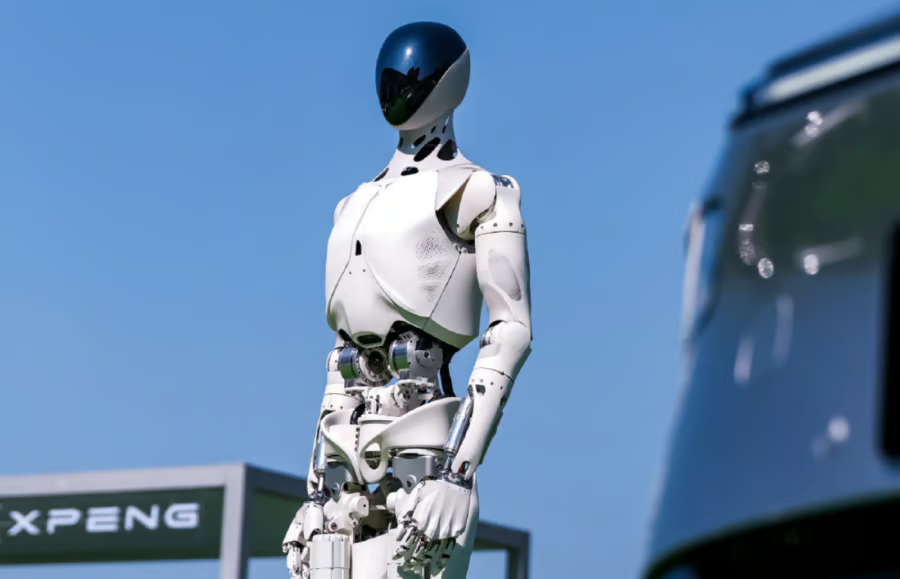


XPENG’s humanoid robot push now has the company’s top executive behind the wheel.
Chairman and CEO He Xiaopeng said he will personally lead XPENG Robotics as the company prepares IRON, its humanoid robot, for mass production and commercialization. The move signals how seriously XPENG takes robotics as it tries to expand beyond electric vehicles and compete in China’s increasingly crowded “physical AI” race.
The reshuffle also comes with pressure. XPENG is pursuing an aggressive robotics roadmap while its core EV business faces financial strain.
"The (robot) industry is becoming increasingly hot and competitive, and we have clearly seen the direction and timing of victory, but it still requires more arduous implementation and extremely high decision-making ability," He said in the letter reviewed by Reuters.
According to Reuters, He said the decision was made on "the eve of mass production and commercialisation" of XPENG's IRON humanoid robots, which were first unveiled last year.
The announcement also follows the departure of Shi Xiaoxin, a senior robotics executive involved in the IRON project. XPENG confirmed that Shi resigned from his position as senior director of robotics product planning but did not disclose further details.
Betting on physical AI
The leadership change highlights XPENG's growing focus beyond electric vehicles. XPENG is increasingly positioning itself as a “physical AI” company, expanding into humanoid robots, robotaxis, and even flying vehicles.
According to DigiTimes Asia, XPENG formally changed its corporate name from XPENG Motor to XPENG Group earlier this year, reflecting a broader technology strategy. Company executives have described robotics as one of the central pillars of that transformation.
He said the robotics division relies on expertise drawn from across the company, including artificial intelligence development, hardware engineering, manufacturing, supply chain operations, and international marketing.
"The robotics industry is becoming increasingly competitive," He wrote in the internal memo cited by DigiTimes Asia. "XPENG has a clear view of the direction and timing of success, but achieving it will require strong execution and exceptional decision-making."
Production timeline and scale ambitions
XPENG’s roadmap lays out an aggressive scale-up plan. The company aims to begin mass production of IRON by late 2026, initially targeting over 1,000 units per month before ramping up to around 50,000 units annually.
Pilot use in retail stores is expected in early 2027, followed by commercial deliveries in China and overseas later that year. Household deployments are targeted for 2028.
Financial pressure continues
Despite the ambitious roadmap, XPENG’s core business remains under strain. The company’s first-quarter results showed revenue fell 17.6% year-on-year, with net losses widening, reversing its brief return to profitability in late 2025, Reuters reported.
Still, industry forecasts remain optimistic. A Morgan Stanley estimate cited by DigiTimes Asia projects strong growth in China’s humanoid robot market, rising sharply through the end of the decade and beyond.
Also read: China’s UBTECH has opened preorders for U1 household humanoid robots as robotics companies test demand beyond factories and showrooms.