







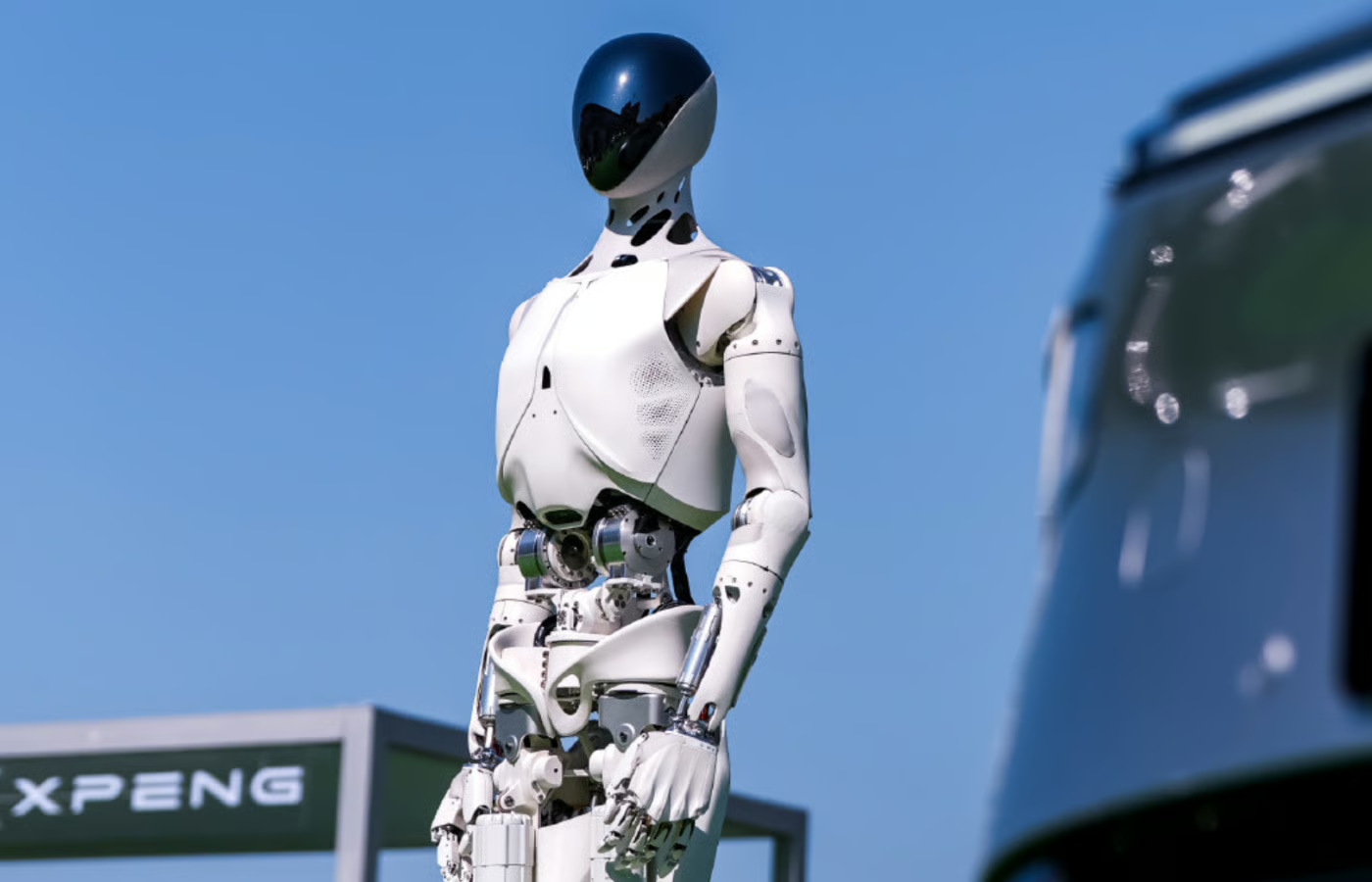
XPENG wants its next sales assistant to walk, talk, and run on its own AI stack.
The Chinese automaker and AI company is accelerating plans to mass-produce humanoid robots by the end of 2026, with its first commercial deployments expected in XPENG retail stores in early 2027, according to Gasgoo. The push positions XPENG as part of a growing wave of automakers trying to turn robotics from a futuristic demo into a public-facing business.
The question now is whether XPENG can make humanoid robots useful beyond the stage, showroom, and investor presentation.
XPENG’s robot roadmap takes shape
The Chinese automaker and AI company recently held a large-scale mobilization rally focused on robot manufacturing, gathering nearly 1,000 employees from departments spanning automotive engineering, powertrain systems, manufacturing, testing, and general AI, Gasgoo reported.
The event brought together several top executives, including XPENG Chairman He Xiaopeng, Vice President Gu Jie, and Robotics Center head Mi Licheng. The meeting marked a major internal milestone for the company’s robotics division as it accelerates plans to deploy humanoid robots commercially.
During the meeting, He Xiaopeng laid out an aggressive roadmap for the company’s humanoid robot program. XPENG aims to mass-produce humanoid robots by the end of 2026, with the first commercial deployment expected in the first quarter of 2027. The robots are set to appear inside XPENG retail stores, where they will act as shopping guides and sales assistants.
XPENG is prioritizing the development of its robots entirely in-house rather than relying on third-party suppliers for critical systems.
He said the company builds everything internally, including chips, operating systems, robotic joints, and dexterous robotic hands. He reportedly described XPENG as the only robotics company in China with a fully self-developed full-stack architecture.
The company believes the expensive upfront investment will eventually pay off through better performance, stronger integration, and more refined product design. XPENG’s current humanoid robot, called IRON, already reflects that strategy.
The robot stands roughly 1.73 meters tall and weighs around 70 kilograms. It features over 60 joints, has 200 degrees of freedom, dexterous hands, biomimetic muscle systems, and a humanoid spine. The machine also uses XPENG’s in-house Turing AI chips and the same AI vision technology deployed in the company’s smart vehicles.
Building the production backbone
XPENG is already laying the manufacturing foundation needed for large-scale robot production.
Earlier this year, the company broke ground on a humanoid robot manufacturing base in Guangzhou’s Tianhe District. The facility spans around 110,000 square meters and is designed to support the entire production pipeline, from research validation and pilot production to large-scale manufacturing.
The factory forms part of a partnership between XPENG and the Tianhe District government as the company expands beyond electric vehicles into what it calls physical AI.
XPENG has also reorganized its corporate structure to reflect that broader ambition, recently dropping “Motors” from its Chinese company name as it pushes deeper into robotics, autonomous driving, flying cars, and AI systems.
Also read: South Korea’s robot-based entertainment park puts humanoid machines onstage as robotics companies test public-facing roles.