






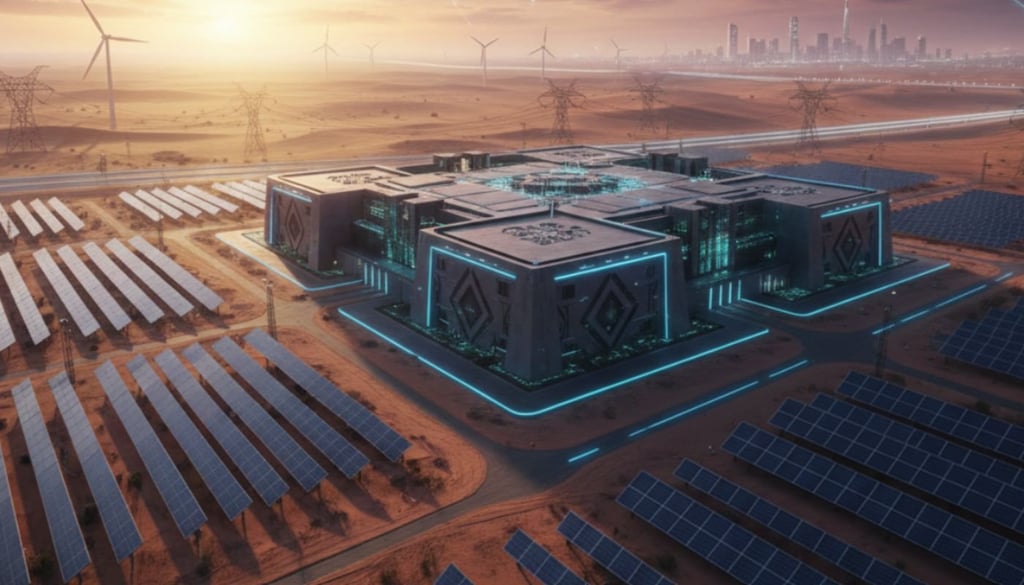


Elon Musk has turned to Saudi Arabia to expand xAI’s global presence, striking a major data center deal in the region.
The project, announced during Saudi Crown Prince Mohammed bin Salman’s formal visit to the US this week, will pair xAI with Humain, an AI government-backed Saudi company that launched earlier this year with support from the kingdom’s $1 trillion sovereign wealth fund.
Together, the two companies plan to build a 500-megawatt data center for xAI in Saudi Arabia, powered by Nvidia’s computing chips — making it the largest xAI data center outside the US. xAI also runs the Colossus 1 data center in Memphis, Tennessee, which produces 300 megawatts of computing power.
What’s at stake
Financial details of the deal have not been disclosed, but the partnership dovetails with Musk’s ambitions to raise xAI’s profile alongside competitors OpenAI, Google, and Anthropic, and with Crown Prince Mohammed’s push to make Saudi Arabia a top-tier AI hub.
This agreement also clears a longstanding obstacle that had delayed earlier shipments of chips to the kingdom. This week, the White House unveiled an AI Memorandum of Understanding between the US and Saudi Arabia, signaling a thaw in discussions over the kingdom’s access to advanced American chips needed to power large-scale AI systems in the Middle East.
As a result, Musk will now have the opportunity to expand the use of xAI’s Grok AI models in Saudi Arabia, while Crown Prince Mohammed gets closer to hitting Humain’s goal of powering 6% of the global AI workload by 2030. The company is charged with executing the kingdom’s AI buildout.
The project positions xAI alongside other major US AI firms that have established footholds in the Middle East through local partnerships. OpenAI has agreements in the United Arab Emirates, while Anthropic has drawn support from Qatar. xAI’s work with Humain adds another US player to that regional growth.
For Saudi Arabia, the agreement is part of a broader strategy to position the kingdom as an AI computing supplier to international firms by leveraging its large energy reserves, vast landholdings, and significant state-backed investment.
Saudi Arabia’s ambitions align with the region’s efforts to scale up computing capacity for modern AI development. As American firms seek locations that can support energy-intensive data centers, the Gulf has emerged as a primary destination. Saudi Arabia is positioning itself to capture a significant share of that expansion.
These commercial moves sit alongside political considerations that shape how and where AI infrastructure can advance.
Geopolitics in play
The political chess on display around this deal underscores the tangled path toward establishing a global AI infrastructure. The US remains guarded about giving access to advanced semiconductors, highlighted by the pause in shipments to Saudi Arabia earlier this year when the kingdom’s economic and technology ties to China came under scrutiny.
Against this backdrop, the agreement serves as a lever of international diplomacy for the US, where access to high-performance chips is tied to technology security rules that determine which countries can move forward with major AI projects.
With the xAI deal in the books, Humain has begun announcing additional partnerships as part of its plan to develop large-scale AI infrastructure by the end of the decade. Further steps in Humain’s buildout are already underway. That plan includes a joint venture with Cisco and AMD that aims to build up to 1 gigawatt of infrastructure by 2030.
As Saudi Arabia positions itself as an AI infrastructure hub, the AI race is reshaping global power and alliances, highlighting why data center deals and chip access are increasingly tied to geopolitical influence.