






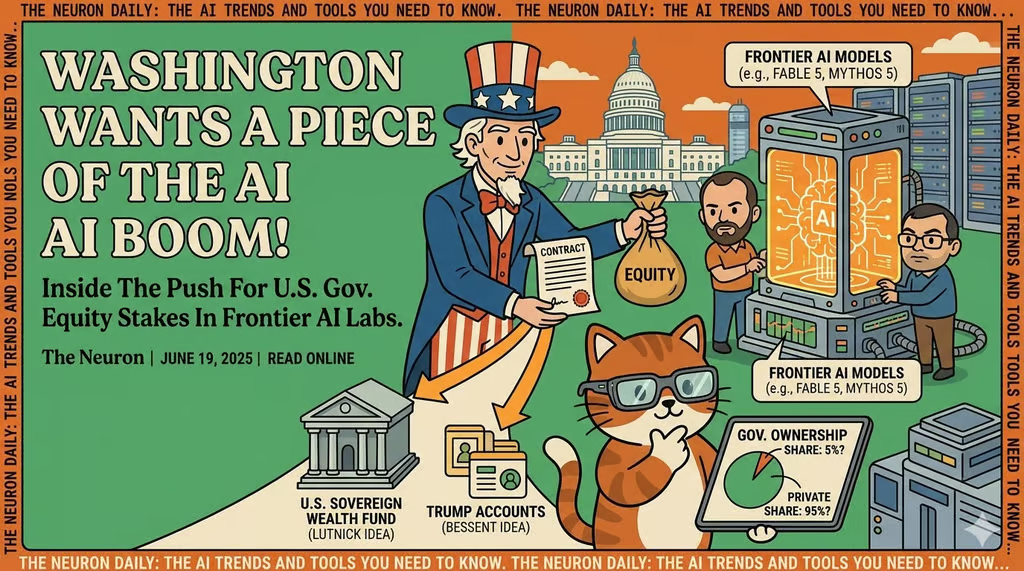


As Chubby from X just shared, we’ve got some Manhattan Project-level cringe going on at the G7 summit this week as the AI CEOs meet with Trump and other world leaders.
By the looks of it, current AI industry Main Character Anthropic CEO Dario Amodei is not exactly feeling like the the Belle of the Ball atm:
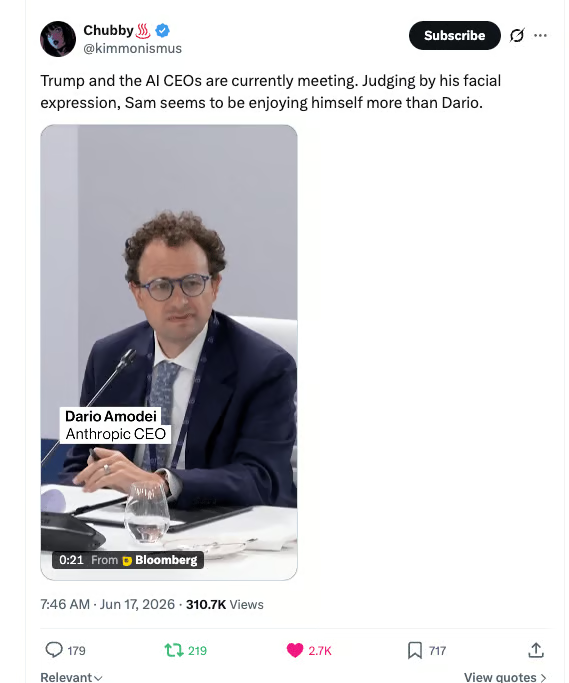
What’s going on here? Well, AI companies have spent the last few years asking Washington for rules.
Now, Washington may be asking for equity.
Semafor reported that senior Trump administration officials discussed possible government equity stakes in major AI companies before the recent export-control fight with Anthropic. One idea would seed "Trump Accounts" with AI equity. Another would route stakes into a sovereign wealth fund, which is basically a government investment fund.
Here's what happened
- Treasury Secretary Scott Bessent reportedly favored using AI equity to fund Trump Accounts.
- Commerce Secretary Howard Lutnick reportedly preferred a sovereign wealth fund structure. Bernie Sanders just proposed a law that would do just that: giving Americans direct ownership stakes in the country’s largest AI companies.
- No decision has been made.
- The talks came before the U.S. forced Anthropic to restrict access to Fable 5 and Mythos 5.
- At the G7, Anthropic's Dario Amodei and Google DeepMind's Demis Hassabis reportedly pushed for a U.S.-led coalition on AI rules, chips, model access, and safety risks.
Why this matters
Washington is moving from regulating AI companies to negotiating leverage over them.
That is a big shift. Export controls decide who can use the models. Standards coalitions decide whose rules travel globally. Equity stakes would raise a stranger question: if AI becomes a strategic national asset, should the public get a financial piece of the upside?
The industry will hate parts of this. Microsoft and Meta have reportedly shown little interest in government equity ideas, and Semafor noted the plan remains an extremely tough sell beyond OpenAI, which pitched a version last year.
Our take
Frontier AI is being treated less like software and more like strategic infrastructure. The government wants safety, leverage, and economic upside. The labs want global markets, talent, and freedom to move fast.
Users want one simpler thing: the AI tools they built around yesterday to still work tomorrow. The recent Fable debacle made that a very real concern.
TBH, all we’re seeing on social media, and also feeling deeply in our own hearts, is that we kinda miss Fable (the Claude model the gov just banned). It was low-key really good, so hopefully the US Gov and the frontier AI lads can get this whole mess about national sovereignty over top-tier AI models and who can use what sorted out.
- Best-case scenario? Fable 5 is put back online, without any net new power grabs or strict regulations limiting its use (but maybe we do put some limits on future model releases and slow down the cadence of the industry from what one OpenAI team member called out as new Mythos-class models “every month.” as that would just be unsustainable bro).
- Most importantly, open-source AI development remains untouched, as this little episode showed, it is more important than ever that we have access to open research and models you can run on your own servers, so the whole industry (and, in my opinion, all of humanity) can flourish with available intelligence on demand.
- Worst-case scenario? No one gets Fable, or even worse, the government claims ownership over it and restricts it so only they can access it, and on top of that, they pass some law banning open source model development.
If this happens, we’re stuck with the worst of all possible outcomes: choosing between “we can charge whatever we want because there’s no competition” pricing for AI on tap from the big labs, or cheaper, lesser intelligent AI from second-tier sources because we can’t access the latest frontier open models.
Editors note: This article originally appeared on our sister publication, The Neuron.