






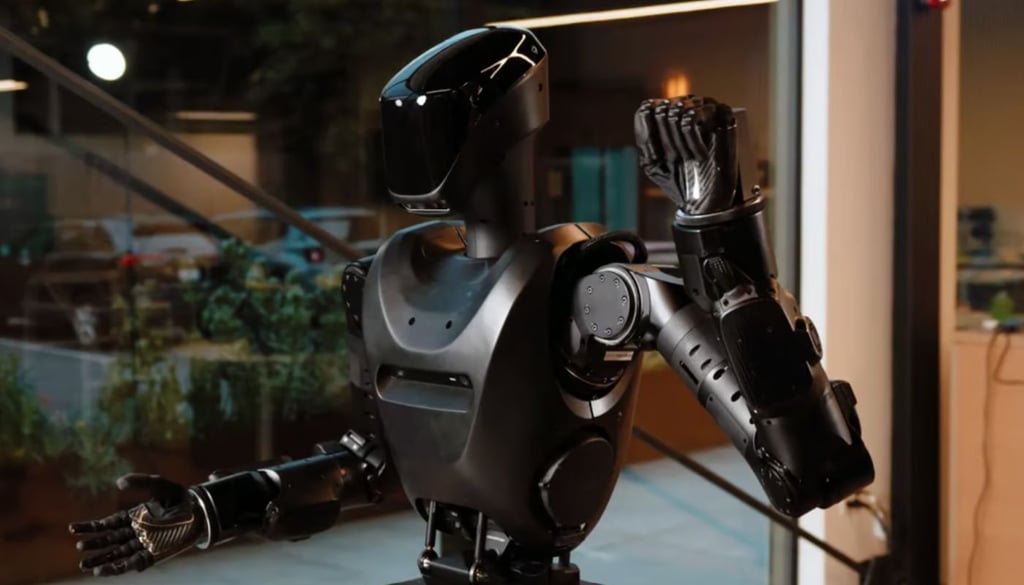


Humanoid robots built for military use have been delivered to Ukraine for testing.
A US robotics startup, Foundation, deployed two of its Phantom MK-1 humanoid robots to Ukraine in Feb. for battlefield testing. The machines were sent to conduct reconnaissance and help engineers evaluate how the technology performs under real combat conditions.
The San Francisco-based company unveiled the Phantom MK-1 in October 2025 as a humanoid robot designed specifically for military operations. Standing about 5 feet 9 inches tall and weighing roughly 175 to 180 pounds, the robot was built to operate in dangerous environments where sending human soldiers may be too risky.
The test deployment could represent the first known instance of a humanoid robot being evaluated on the front lines of the Russia–Ukraine war.
Mike LeBlanc, a combat veteran and co-founder of Foundation, said the company believes robotic systems could eventually handle some of the most dangerous roles in war.
“We think there’s a moral imperative to put these robots into war instead of soldiers,” LeBlanc told Time, as reported by Futurism.
The arrival of humanoid robots comes as Ukraine expands the use of robotic systems across the battlefield.
Ground robots, also known as unmanned ground vehicles (UGVs), are now carrying out thousands of missions every month. According to operational data compiled by Ukraine’s defense tech initiative Brave1 and reported by United24, robotic ground systems were used in more than 7,000 operations in Jan. 2026 alone.
Most of these missions are logistical. Robots deliver ammunition, weapons, food, and other supplies to frontline units, often traveling across dangerous terrain where traditional vehicles cannot safely operate.
Ground robots are also being used to evacuate wounded soldiers from combat zones and, in some cases, conduct combat operations when equipped with remote-controlled weapon systems.
The rapid growth is noteworthy. Ukraine had virtually no domestic companies producing ground combat robots before Russia’s full-scale invasion. Today, more than 200 companies manufacture robotic platforms, and hundreds of designs have been tested through the Brave1 program, according to United24.
Challenges and risks remain
Despite the promise, humanoid robots still face major limitations. They are heavy, expensive, require regular charging, and can lose balance or break down under harsh conditions.
There are also cybersecurity risks. Captured robots or hacked communications systems could potentially expose sensitive military data or allow adversaries to take control of robotic platforms. AI also remains imperfect, raising concerns about how automated systems interpret complex battlefield situations.
Even with these challenges, the deployment highlights how rapidly warfare is evolving.
Ukraine has already become a testing ground for drones, autonomous systems, and other emerging military technologies. The arrival of humanoid robots suggests the next phase of experimentation may now be underway, one where machines increasingly operate alongside human soldiers on the battlefield.
Foundation is already looking toward the Phantom Mk-2, expected to debut in April 2026. The new model promises to be waterproof, have better battery life, and carry loads up to 80 kg.
While the current units in Ukraine are limited to reconnaissance, Foundation’s long-term goal is to develop a machine that can use “any kind of weapon that a human can.” For now, however, the Pentagon and Foundation maintain that a “human-in-the-loop” must still authorize any lethal decisions.
Also read: Foundation is planning to expand production significantly, with a goal of manufacturing up to 50,000 units by 2027.