






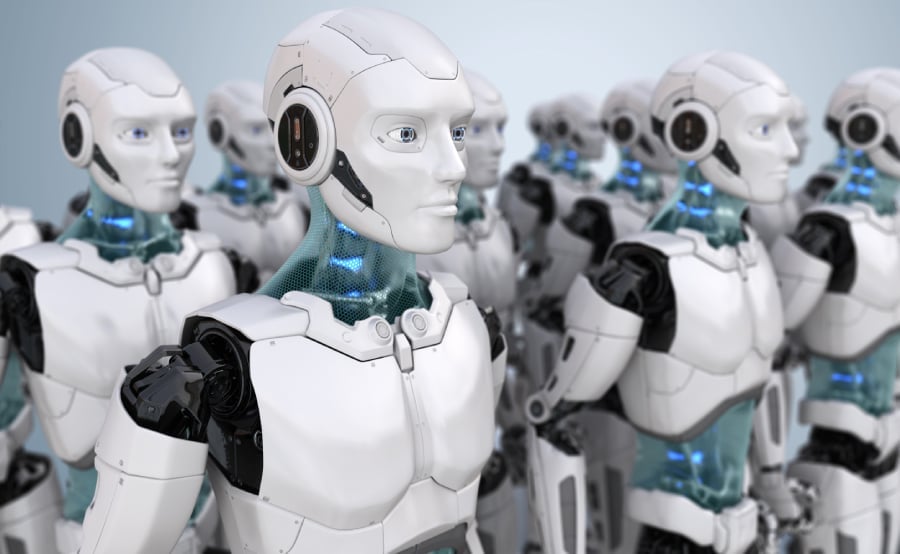


Humanoid robots might soon clock in alongside workers in Japan. Manufacturers are watching closely to see if those machines could eventually find customers beyond the country’s borders.
A coalition of universities, chipmakers, and robotics firms is building domestic models it hopes to mass-produce by 2027, starting with factory floors and disaster-response sites at home.
The production target comes as major Japanese companies and policymakers increase investment in robotics and artificial intelligence. Hitachi has announced plans to deploy AI-enabled humanoid robots in its own factories, while the government has approved a national plan to strengthen domestic AI development and physical AI integration.
Industry group targets 2027 production
Japan Forward reported that Waseda University, tmsuk, Murata Manufacturing, and others formed the Kyoto Humanoid Association in July 2025 to advance the development of humanoid robots.
Renesas Electronics and Sumitomo Heavy Industries later joined the initiative, contributing sensors, motors, and control microcontrollers. The group plans to complete a prototype by March 2026 and begin mass production in 2027.
Developers are building two distinct machines: a disaster response robot that will stand around 250 centimeters and lift more than 50 kilograms, and a human-sized research model designed for greater agility in spaces built for people.
Yoichi Takamoto, Chairman and Representative Director of tmsuk, said performance will depend on how well AI systems are trained using real-world data collected from a human perspective. ”It will come down to data,” Takamoto said.
“This is Japan’s last chance to build robots as a unified effort,” Takamoto added.
Japan Forward emphasized that the country’s working-age population is shrinking due to declining birth rates and an aging population. Stricter overtime regulations introduced in 2024 have intensified labor shortages in industries such as construction, increasing interest in machines that can supplement human workers.
Enterprise deployment and national AI policy
Separately, Nikkei Asia noted that Hitachi plans to deploy AI-enabled humanoid robots in its factories by the fiscal year ending March 2028. The company is developing in-house AI that will power the machines and may commercialize the robots if they prove effective in its own factories.
Globally, about 220 manufacturers are developing humanoid robots, according to the China Mobile Robot Industry Alliance and Japan’s Nomura Research Institute, as cited by Nikkei Asia.
“Chinese companies account for half of the number, while US firms make up 20%,” the report stated.
At the policy level, CDO Magazine highlighted that Japan approved its first comprehensive national plan for AI development and use. The strategy commits the country to “create reliable AI” by balancing technological innovation with risk management.
“The government said the goal is to make Japan one of the world’s most attractive environments for AI development and deployment,” CDO Magazine wrote.
The roadmap also calls for expanding staff at the Japan AI Safety Institute, promoting earlier AI education, and positioning humanoid robotics within a broader national technology strategy.
To see how global rivals are scaling production, read our coverage of China’s Unitree and its plan to ship 20,000 humanoid robots in 2026.