






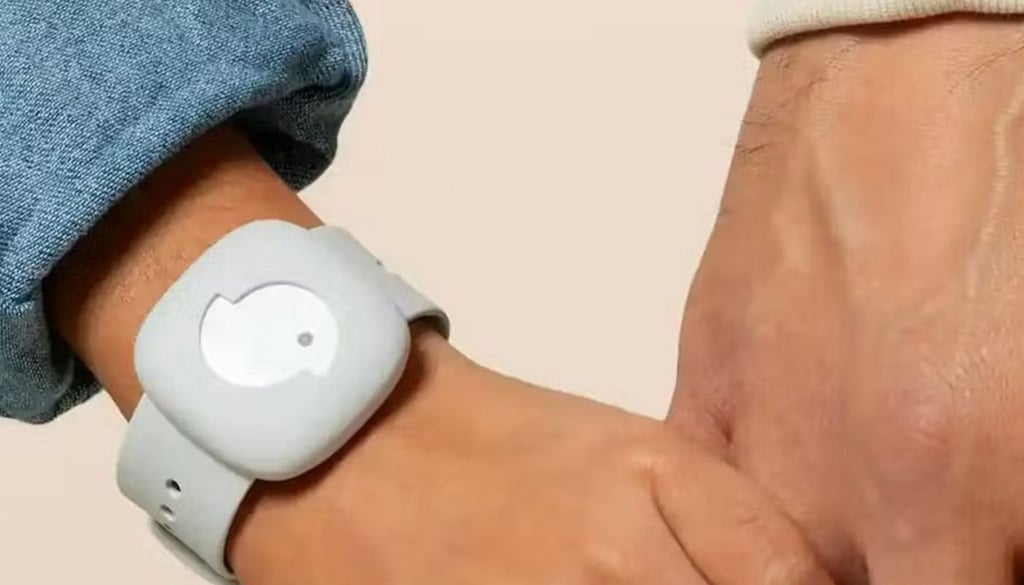


Parents can rejoice. A new wearable for kids that gives them a view into their child’s day is helping parents stay connected without caving to the digital world.
As more US schools ban smartphones, Littlebird “bridges the gap between a baby monitor and an iPhone,” founder Monica Plath said. “Parents don’t have an option besides AirTagging their kids, and AirTags were meant to find luggage, not for on-demand, real-time alerts.”
As AI increasingly permeates people’s lives, parents have grown more concerned about its impact on children.
Transition from a toddler tracker
The Seattle-based startup began as a “toddler tracker” wearable that relied on a standard cellular connection, so parents could see what their kids were doing when they were with a nanny or sitter. But over the past two years, Plath has redesigned the device on a multi-layered mesh network.
Littlebird may look like an Apple Watch, but it has no screen and cannot answer calls, send text messages, play music, or connect to the internet. Despite its name, Littlebird does not chirp at the kids wearing it, so it doesn’t create any distractions in the classroom. The only indication that it’s working is a light. Sensors in the device indicate when it’s being worn.
Plath characterized it as “quiet technology.”
How it works
According to Plath, Littlebird is the first third-party company to integrate Amazon Sidewalk, a private, long-range network that leverages millions of Echo and Ring devices already in use.
Plath embedded Bluetooth, Wi-Fi, and GPS into Sidewalk to create a device that can track a child over a two-mile range without a traditional data plan.
Gaining momentum
With interest from retailer giants Amazon and Walmart, Littlebird is a “frontier tech” contender, Plath said.
Littlebird shipped nearly 1,000 units in the first few days, and had $200,000 in sales on the first product release day last week, Plath said on LinkedIn.
Littlebird uses a membership-based pricing model similar to that used by high-end fitness wearable companies. There are three main tiers: a month-to-month plan for $25 (with a one-year commitment); a one-year membership for $250 paid upfront; and a two-year membership for $375. The costs cover the hardware, the “Precision+” location services, and the app experience.
Looking ahead, Plath said she is already thinking beyond the toddler-to-teenage years to people at the other end of the age spectrum. The startup has the potential to help keep an eye on elderly people with dementia, Plath said.
Also read: The FTC’s inquiry into kids’ exposure to AI chatbots is increasing pressure for stronger child safety standards.