






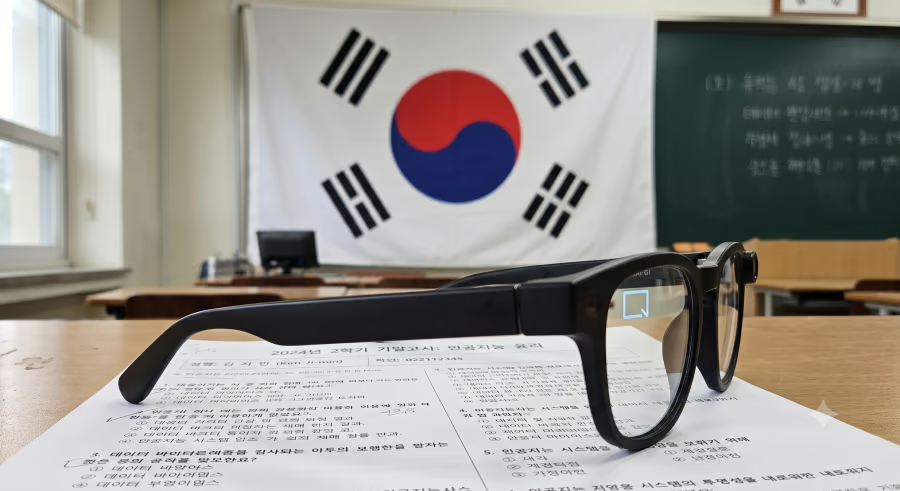


Smart glasses have reached South Korea’s exam rooms, and prosecutors are now involved.
South Korean authorities filed the country’s first criminal charge tied to cheating using AI-powered smart glasses after a man allegedly used the device during a fire protection facilities engineer exam in Gwangju. Authorities allege he connected the glasses to an AI application that generated answers during the test.
The case comes amid similar incidents in Seoul, Mokpo, and TOEIC testing, pushing South Korean officials to review prohibited-device rules and tougher penalties.
The incidents show how easily AI-enables smart glasses can blend into an exam room, creating a new security challenge for testing organizations across APAC.
Proctor spots unusual behavior during exam
The Gwangju District Prosecutors’ Office summarily indicted a man in his 40s on charges of violating South Korea’s National Technical Qualifications Act, according to The Korea Herald.
The man was taking the national certification exam in Gwangju on May 15 when a supervisor reportedly became suspicious.
Reports cited an unusual light reflected in the lenses and the test-taker repeatedly fixing his gaze in one direction, even when he was not solving questions.
Investigators said the suspect had developed an AI application that connected to the glasses.
“I developed an AI application that works with the smart glasses and wanted to see whether it could generate correct answers in a real exam,” he reportedly told investigators, according to Korea JoongAng Daily.
The Chosun Daily reported that the prosecutors requested a fine in a summary indictment. The procedure allows a court to issue a penalty based on a written review without holding a formal trial. The case can move to a full trial if the defendant or the court objects.
More cases push officials to tighten security
The Gwangju incident was not isolated.
The Korea Herald noted that two men in their 20s were booked after allegedly attempting to cheat with AI-powered smart glasses at national qualification exam sites in Seoul and Mokpo last May. Similar incidents also appeared in TOEIC testing, with two people caught in May and another in June.
The growing number of cases prompted officials from major national qualification exam agencies to hold an emergency meeting on July 10. They discussed explicitly adding AI smart glasses to lists of prohibited devices and increasing sanctions for people caught using them.
What the case means for exam security in APAC
South Korea’s response could influence how other APAC countries handle wearable AI in schools, universities, licensing programs, and professional certification exams.
Many testing rules already prohibit phones, cameras, and connected electronics. Smart glasses create a harder enforcement problem because microphones, cameras, displays, and AI assistants can be built into frames that resemble ordinary eyewear.
Testing organizations may need clearer policies, better proctor training, and updated screening procedures. They will also need to account for prescription eyewear, disability accommodations, and privacy concerns before adopting more intrusive checks.
The business impact extends beyond exam halls.
Employers, certification bodies, and training providers rely on test results to verify skills and qualifications. Weak controls could undermine trust in professional credentials, while overly broad restrictions could penalize legitimate users.
Korea’s first prosecution may discourage some attempts, but legal action alone will not solve the problem. As AI-powered smart glasses become more common, APAC testing systems will need security rules that adapt to the hardware.
See how Meta’s next AI glasses could raise similar privacy and security concerns by capturing audio and photos every few seconds.