






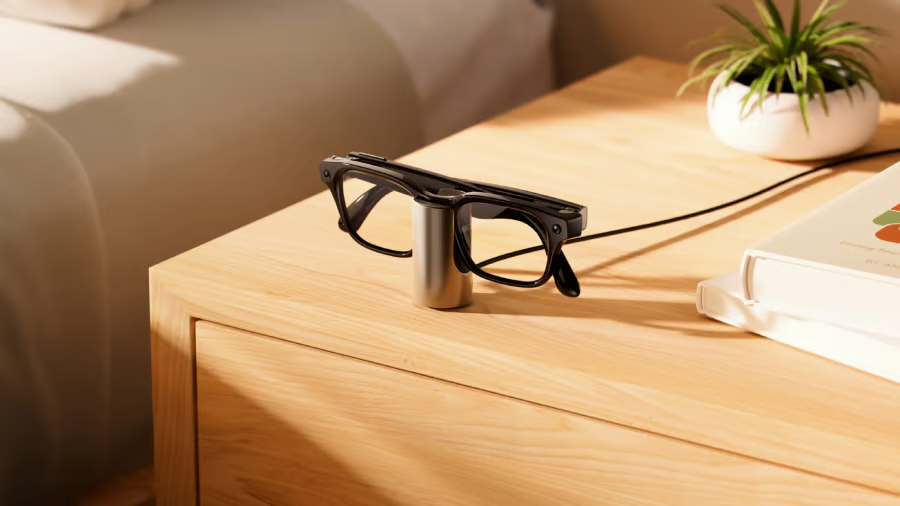


Meta is pushing smart glasses into cheaper territory as the AI hardware race gets crowded.
On Tuesday, the tech giant announced its first in-house line of smart glasses without Ray-Ban or Oakley branding. The Adventurer and Fury glasses start at $299, making them cheaper than last year’s second-generation models. Meta still sells some lower-priced first-generation glasses, but with fewer features.
Meta also announced a $399 pair of glasses called Starfire, designed in collaboration with Kylie Jenner.
In terms of design, Fury and Adventurer are both rectangular frames, with Fury featuring a slightly thicker design. Kylie Jenner’s Starfire glasses have a thinner, more oval shape.
While Meta designed and branded the glasses, they are still made in partnership with EssilorLuxottica, the holding company behind Ray-Ban and Oakley. The social media giant took a 3% stake in the eyewear manufacturer last year for about $3.5 billion, alongside a commitment to continue working with it on smart glasses designs.
The glasses will all have Meta Spark embedded, allowing the AI to interact with the wearer's surroundings and provide contextual information.
Getting ahead of competitor launches
The in-house designs come at a critical time for Meta, as it tries to increase market share and customer awareness before a wave of companies launch similar devices. Apple is the main competitor, reportedly aiming for a late 2026 or early 2027 launch of its own glasses. Unlike the Vision Pro, these will work much more like regular glasses, with the ability to take photos and videos and interact with Siri.
Google is also reportedly planning to re-enter the eyewear market with AI-powered glasses built around Gemini and the Android XR platform. Google made the first major foray into this market with Google Glass, a product that failed to catch on with the wider public and helped spark the first wave of anti-smart glasses backlash, with wearers derisively called “glassholes”.
Snap, the company behind Snapchat, went in a different direction with the launch of Specs last week. These glasses are aimed at a very different part of the market than Meta’s, offering a full augmented reality experience with a much higher $2,195 price tag.
Success in eyewear critical for Meta
Even though Meta still generates only a very small percentage of its revenue from smart glasses, despite selling 7 million units last year, the market remains critical for the company. It has shifted a large amount of its capital expenditure toward AI, with smart glasses seen as one of the key vehicles for consumer usage.
Meta is considered the market leader in the screen-free smart glasses category, and is aiming to expand that position by selling devices at very competitive prices compared to Apple, Samsung, and other potential competitors.
To this end, it has said it may launch another version of the glasses without a camera, focused entirely on audio experiences such as voice calls, media playback, and AI interactions.
Meta’s challenge now is turning that head start into a habit. If AI glasses become the next everyday computing device, the company wants consumers to already be looking through its lenses before Apple and Google arrive.
Also read: Samsung is preparing its own AI-powered smart glasses as the market for wearable AI devices grows more crowded.