








When a robot moves so naturally that people assume a guy is sweating inside a latex suit, you know you’ve crossed a threshold.
That’s precisely what happened when XPENG unveiled its humanoid robot, IRON, whose fluid, almost casual movements sparked online theories that a very flexible actor must be hiding inside.
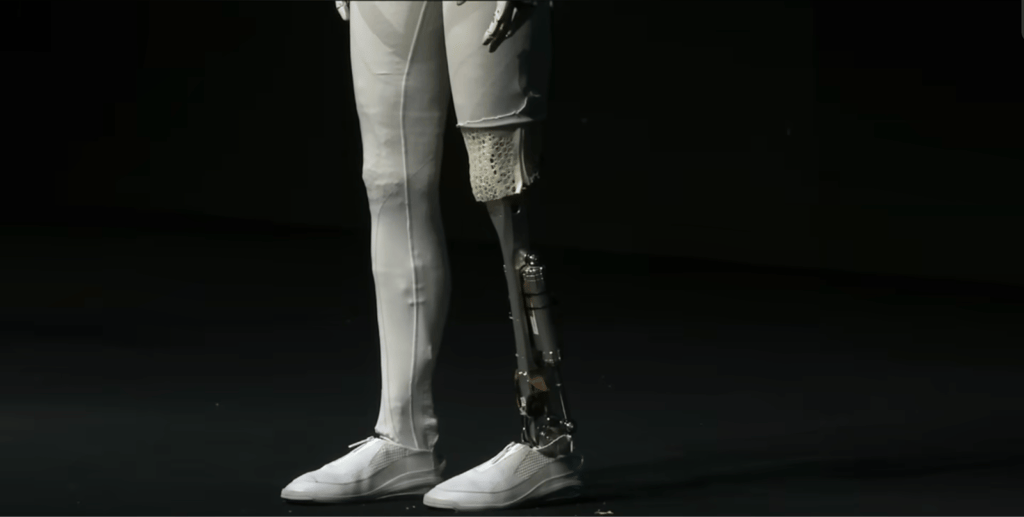
To put the rumors to rest, XPENG took a scalpel to its own creation and sliced open the robot’s leg live on the stage. Inside was nothing but actuators and circuitry. The moment underscored the company’s ambition as it pushes beyond electric vehicles (EVs) into a new era of human-scale physical AI.
How XPENG proved IRON is the real deal
XPENG is a leading Chinese smart EV company that designs, develops, manufactures, and markets intelligent EVs for a large and growing base of tech-savvy middle-class consumers.
According to New Atlas, XPENG demonstrated IRON at its AI Day event, where the robot walked and gestured so uncannily like a human that viewers questioned whether a machine could move that naturally. CEO He Xiaopeng said the robotics team “felt quite wronged” by claims that a human might be inside the suit.
A video of the demonstration showed IRON walking with a relaxed, human-like rhythm before an engineer steadied it and used a small blade to slice open a section of the robot’s leg. The footage captured the flexible, synthetic outer skin covering the leg, layered over the internal “bionic muscle” lattice structure and advanced actuators.
ISPR reported that IRON has 82 degrees of freedom, including 22 in each hand, allowing the robot to bend, pivot, and gesture at multiple points along its body.
IRON is also powered by three custom AI chips, which provide it with 2,250 trillion operations per second (TOPS) of computing power, making it one of the most powerful humanoid robots developed to date. As ISPR said, “for comparison, Intel’s Core Ultra 200V series processor, fitted into some of the best laptops, can achieve just 120 TOPS.”
Commercial ambitions and what comes next
Carscoops noted that Xiaopeng believes producing humanoid robots like IRON will eventually cost roughly the same as manufacturing cars, saying that “the market potential for robots is greater than that for cars.” He also added that the robot is expected to appear in XPENG stores, office parks, and factories by the end of next year.
According to Yahoo Finance, JPMorgan also reported that XPENG’s next major leap from 2026 to 2027 would likely be driven by its long-term AI ambitions, including robotaxis, humanoid robots, and even flying cars. The bank estimated the robotaxi service could add between US$5.7 billion and US$18.9 billion in value by 2035, while the humanoid division could contribute up to US$24 billion by 2027 if timelines hold.
As reported by the South China Morning Post, several Chinese automakers are racing to develop their own humanoids. For instance, Chery Automobile is using its technological and manufacturing strength to intensify efforts to build humanoid robots. AI Business noted that Chery is collaborating with AI developer Aimoga on a robot named Mornine, while BYD, GAC, and Seres are investing heavily in robotics programs.
Key industry signals
XPENG’s theatrical reveal underscores the competitive pressure among robotics companies aiming to demonstrate realism, flexible motion, and contextual intelligence. As robots gain better motion control, longer-lasting batteries, and more capable vision-language-action AI, humanoids are becoming realistic options for commercial use.
IRON’s debut suggests that lifelike performance is not just possible but might soon set the expectation for customer-facing applications.
For more on the rapid rise of humanoid robots, read eWeek’s coverage of Apple’s growing robotics efforts.