Power up, Tech Insiders. XPeng's bots are burning lithium-ion, Google's chips are guzzling gigawatts, and AI-fueled layoffs are darkening the jobs grid.
Flip the breaker with us before the next brownout hits your career path. |
|
|
Here's what you need to know today: |
|
|
XPeng Unleashes Its New Robot Army |
Some companies iterate, but XPeng dropped an entire product catalog from orbit.
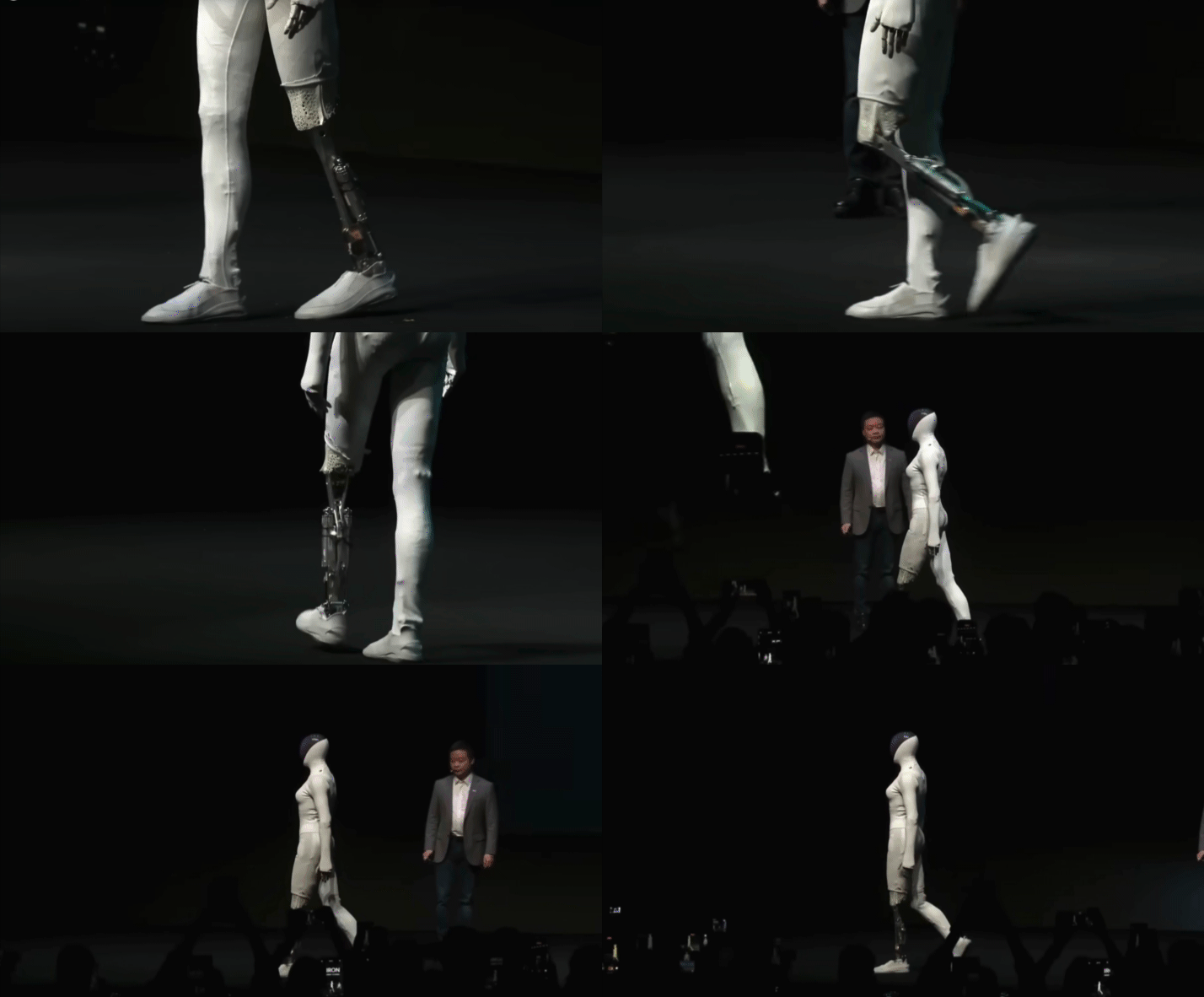
Guangzhou-based XPeng's AI Day last week unveiled a curvy second-gen IRON humanoid robot powered by solid-state batteries, not one but two flying cars, and three driverless robotaxi models that are each under 200,000 yuan ($28,000) and slated for 2026 trials.
The robotaxis tap four in-house Turing chips and a Vision Language Action (VLA) 2.0 model, which, in internal tests, needed just one human intervention on a 49-minute city loop, compared to seven for Tesla's Full Self-Driving model. |
IRON walks with 82 degrees of freedom, sports customizable "synthetic skin," and will start work as a tour guide before scaling to 1,000 units in 2026. XPeng even unzipped the bot onstage to prove no human lurked inside (hashtags on Douyin exploded).
Upstairs, the Land Aircraft Carrier, a modular van that carries its own two-seat flying pod, enters mass production next year with 10,000 planned units. Meanwhile, a separate, six-seat A868 tilt-rotor prototype promises cruise speeds of 360 km/h (224 mph) and a range of 500 km (310 miles).
Volkswagen will license XPeng's VLA stack, and Alibaba's Amap will hail the robotaxis, evidence that China's EV makers are now mobility platforms.
Why it matters: If XPeng hits these timelines, Musk's $1 trillion "robot army" ambitions just got a major new rival, and bots like Figure 03 and the $20K NEO suddenly have stiff competition—plus a reminder that the next mobility war may be fought on three fronts: road, air, and your office lobby.
|
|
|
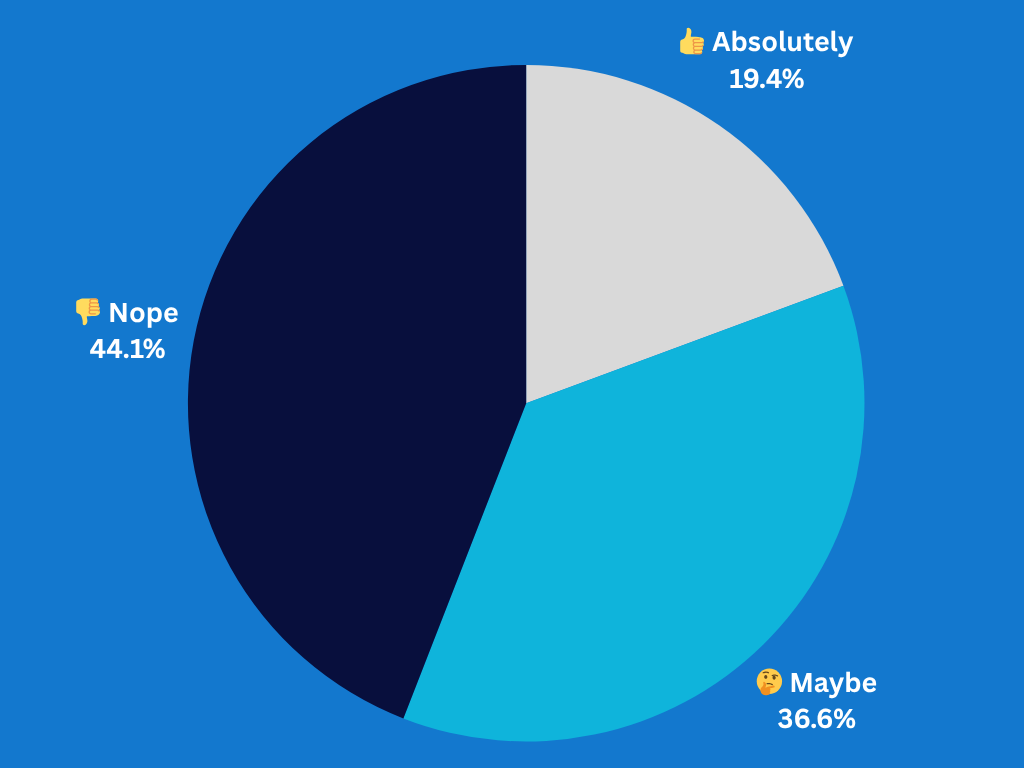
Which XPeng toy would you test-drive first? |
|
|
Results from Yesterday's Pulse Check |
Will a Google-powered Siri win your trust? |
|
|
Google Flexes Ironwood to Power AI's Inference Age |
Turns out XPeng's IRON has a leafy cousin named Ironwood.
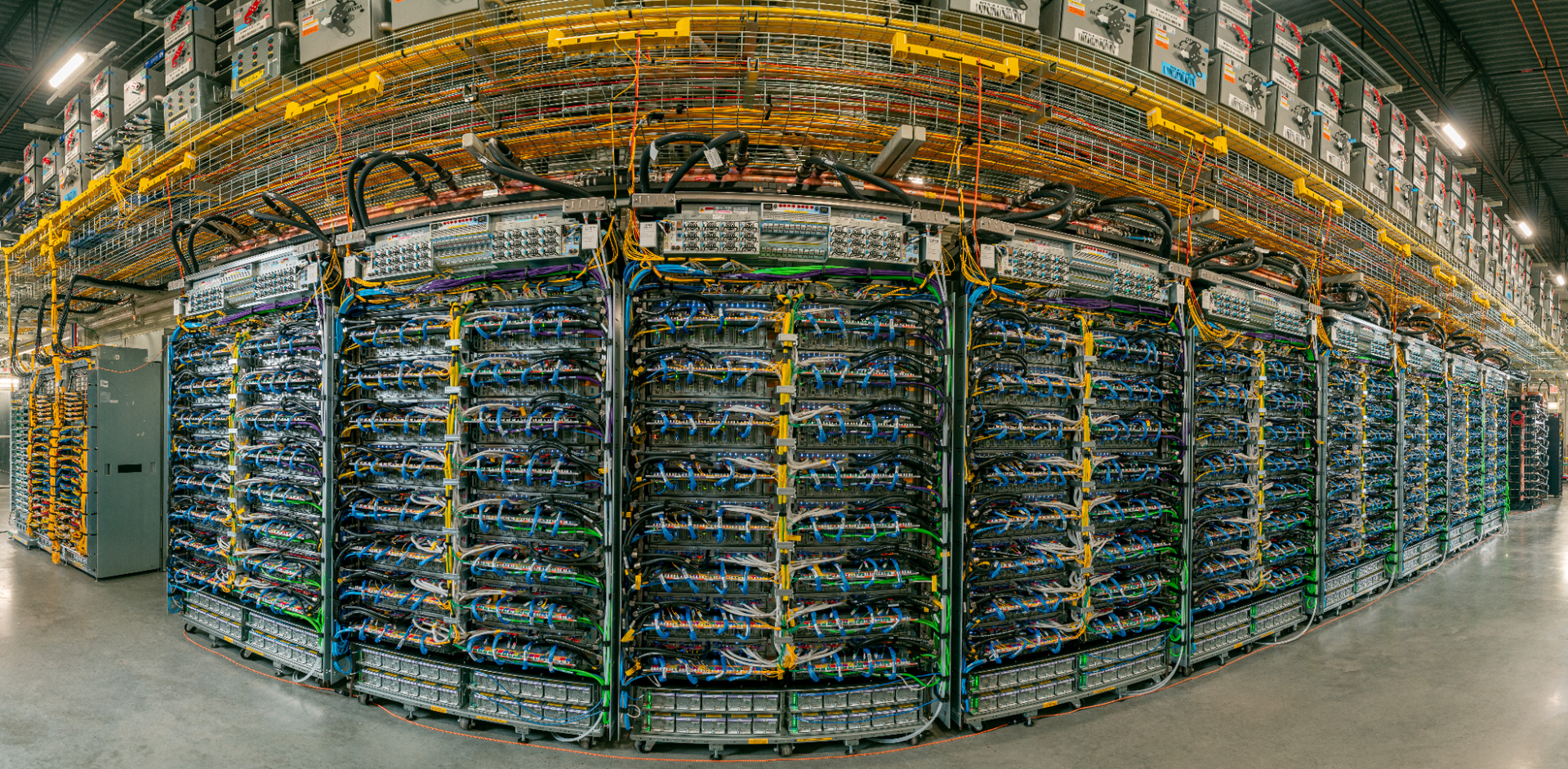
Fresh off the robot buzz, Google introduced Ironwood, its 7th-gen Tensor Processing Unit (TPU) built for the "age of inference." That's Google's new buzzword for AI's shift from just training models to running nonstop agentic workflows (AI that actually does stuff).
One liquid-cooled superpod stitches up to 9,216 chips over a 9.6 terabit-per-second (Tbps) fabric, sharing 1.77 petabytes of blazingly fast high-bandwidth memory. This setup delivers 42.5 exaflops of FP8 (the speedy 8-bit math that AI craves) for 4× the punch of its v6e predecessor (Trillium) and 10× the peak of the older v5p chip. |
AI darling Anthropic booked access to a cool million chips. The deal, which will provide over a gigawatt of capacity by 2026, bets the new silicon will feed Claude's skyrocketing appetite without melting the power bill.
Supporting cast: new Axion Arm virtual machines (N4A preview) claim 2× price-performance over x86 for prep workloads, while C4A Metal offers bare-metal Arm (a dedicated physical server for you and you alone) for auto and Android devs. Together, they form Google's AI Hypercomputer, a stack the company says has delivered 353% three-year ROI for early adopters.
And about that rooftop: Project Suncatcher plans to loft solar-powered TPU clusters into orbit by 2027, chasing eight-times-higher solar yield and freeing terrestrial grids for, well, everything else.
Next stop: Satellite-powered chips beaming down AI so your phone can finally nap. |
|
|
🎤 Upgrade Client Rooms With Shure Kits AV for IT Providers shows how Shure's IntelliMix Room Kits bridge the gap between all-in-ones and full custom builds—explore case studies and unlock scalable audio perfection.
🤖 Hire a Vision Pro, Minus the Guesswork
The Computer Vision Engineer Hiring Kit packs a job spec, interview Qs, and advert template—saving you 20 hours of recruiting legwork.
🔍 Audit Your Endpoints in One Dashboard
Snag the Best Remote Monitoring and Management Software 2025 list to automate patches and keep remote fleets hacker-free in 2025.
💻 This section contains sponsored tech insights. Advertise with us! |
|
|
Hyundai Breach Risks Drivers' IDs, SSNs |
Hyundai AutoEver America says intruders lurked in its IT network from Feb. 22 to Mar. 2 before the hack was detected on Mar. 1. Stolen data includes names, social security numbers, and driver's license details, all of which could allow scammers to open lines of credit.
The IT affiliate supplies connected-car services for 2.7 million Hyundai, Kia, and Genesis vehicles; however, it's unclear whether the victims are exclusively from that pool of drivers or also include company employees. The total number of victims is unknown, though state filings suggest it's currently small. |
Image created with Gemini |
Victims, who were finally notified eight months later in October, are getting two years of free three-bureau monitoring (with 90 days to enroll) while investigators try to pin down the culprit.
Pro tip: If your SUV emails asking for your SSN, hit delete and park the panic. |
Suspected Nation-State Hacks Congress's Budget Scorekeeper |
The nonpartisan Congressional Budget Office, responsible for "scoring" every bill, has confirmed a "security incident" that lawmakers are tracing to a foreign actor.
Officials say the breach was caught quickly but warn emails, internal chat logs, and draft cost projections could be in hostile hands. The Senate Sergeant at Arms is now warning of "highly targeted phishing emails" spoofing the CBO.
The timing is brutal because federal cyberteams are thinly staffed during the record 41-day-and-counting government shutdown, delaying routine patching and forensics.
Extra monitoring is in place, yet some Hill offices have paused email with CBO until the all-clear is given. Congress wanted fewer leaks... just not like this. |
AI Wave Helps Push 2025 Layoffs Above 1 Million |
Employers announced 153,074 job cuts in October, the worst October since 2003, bringing 2025's year-to-date total to 1,099,500, says Challenger, Gray & Christmas. That's up 65% from the same period last year.
AI-driven restructuring was the second most common reason for October layoffs, cited in 31,039 cuts, trailing only "cost-cutting" (50,437). Tech shed 33,281 roles last month (nearly six times its September number of 5,639), while warehousing axed nearly 48,000 as automation takes hold (a staggering jump from just 984 in September). |
Image created with Gemini |
The government remains the single largest source of layoffs, but big corporate rounds keep piling up. Amazon's late-October plan targeting 14,000 roles is already baked into the nearly 1.1 million total. Other October layoffs include those from UPS, Meta, Paramount Skydance, and GM.
Add in IBM's early-November AI pivot—up to 5,000 roles—and the headline number swells to roughly 1.104 million. Oracle, Salesforce, Microsoft, and Wells Fargo have also announced job cuts in November, and Verizon is also expected to announce cuts.
Meanwhile, seasonal hiring plans (just 372,520 announced so far) sit at their lowest level since Challenger began tracking in 2012, a warning sign for a frosty winter ahead. Résumé tip: Sprinkle keywords... and maybe "plays nice with robots." |
|
|
|
Writer at TechnologyAdvice |
Justin Meyers is an investigative writer and editor who draws on over a decade of meticulous hands-on research to deliver the full, trustworthy story behind consumer and enterprise tech, including cybersecurity. |
|
|
Curious about where AI is really headed? |
The Neuron cuts through the noise to bring you smart, hype-free takes on the latest AI trends, tools, and breakthroughs. Join 500,000+ professionals from top companies like Microsoft, Apple, Salesforce and more.
|
|
|
Advertise in Daily Tech Insider! Daily Tech Insider is a TechnologyAdvice business
© 2025 TechnologyAdvice, LLC. All rights reserved. TechnologyAdvice, 3343 Perimeter Hill Dr., Suite 215, Nashville, TN 37211, USA. |
|
|
|