






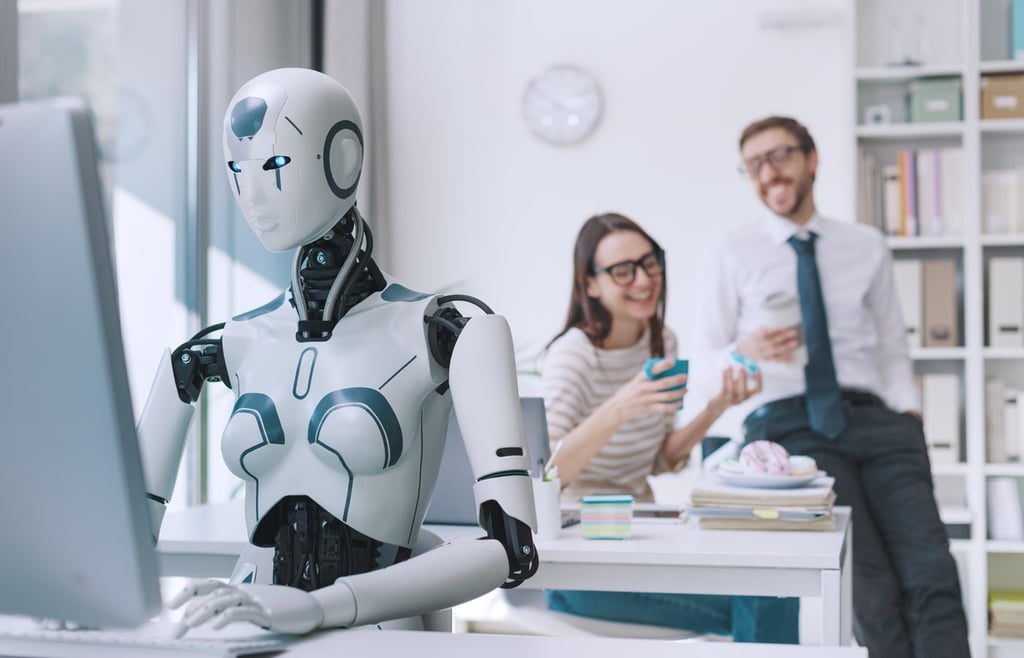


Long a staple of science fiction, humanoid robots are no longer just figments of imagination—the future came sharply into focus at the 2025 Consumer Electronics Show (CES) as robots of all kinds took center stage. From bartenders mixing cocktails and cleaners tidying up spaces to factory robots collaborating with employees, robots are increasingly able to perform sophisticated human tasks as companies like NVIDIA, Boston Dynamics, and Tesla incorporate AI technology to increase and enhance their capabilities.
AI is helping robots see, learn, and adapt to dynamic environments. It’s no exaggeration to say we’re at the dawn of a robotic revolution. By 2050, the implementation of humanoid robots is projected to increase by 61 percent, with more than 648 million in operation. These robots will be smarter, faster, and more intuitive, but challenges remain before they can fully integrate into everyday life.
What’s Holding AI Robotics Back?
Current robots struggle to truly engage with their surroundings. For instance, processing visual information in real-time is a significant hurdle for simple tasks like picking up a fallen object. Humans can quickly react to the object, but robots face latency issues due to cloud computing dependencies. AI robots are further challenged by unexpected changes in their environments and have difficulty interpreting subtle cues of human behavior, such as reading body language or understanding social norms.
These limitations slow down their ability to interact effectively. The solution? AI world models. AI world models empower robots to process information in real-time, react quickly to changes, and even learn like humans. By incorporating these advancements, robots can work faster and better understand our world, paving the way for a future where they seamlessly interact with people and their surroundings.
The Fear of Robots Replacing Human Workers
The rise of AI robotics sparks a debate: will robots replace human workers? Industries like banking have already felt the impact of AI, with predictions of 200,000 positions being eliminated over the next three to five years. The implementation of humanoid robots could have the same effect. While the fear of job displacement is valid, experts argue that AI robots could improve workers’ lives rather than replace them.
By taking over repetitive tasks, robots can free up employees for more creative and meaningful roles. Additionally, the limitations of current robotics make the human element indispensable. The age of humanoid robots is here, and it’s only getting more dynamic. While hurdles remain, the integration of robots promises to revolutionize industries and redefine how we work and live.
Read about the top AI-proof jobs to protect your career from the coming surge of chatbots, agents, and robots, or explore AI jobs to see what they require and how much they pay.