




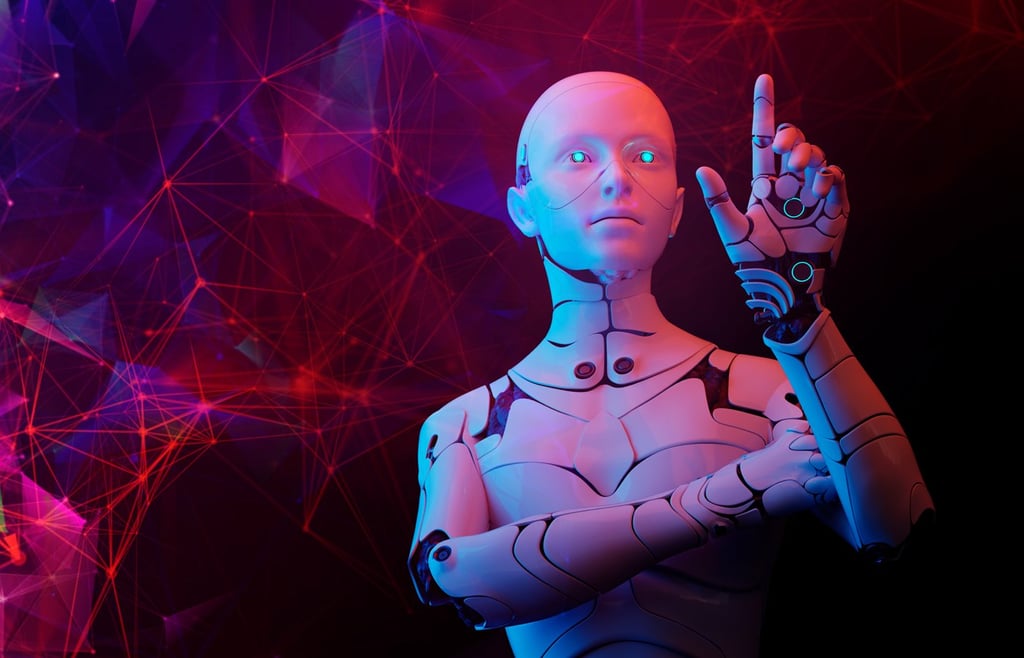
They may not be able to pass the Turing Test, but the robots competing in the first World Humanoid Robot Games in Beijing from August 15-17 will be making history. There will be more than 100 international teams competing in 22 events, which include 100-meter sprints, obstacle races, standing jumps, and even three-on-three football matches.
Athletic competitions reveal real-world readiness
This will not be the first time sports are being used as a stress test for humanoid robots’ capabilities. During a recent robot football match, robots demonstrated fully autonomous AI-driven strategies with no human intervention, and autonomous fall recovery. After three hours of competition, Tsinghua University’s team claimed victory by proving that robots can adapt strategy mid-game.
In April, 21 robots competed in a half marathon in Beijing — and six even crossed the finish line, proving that humanoid robotics has sprinted far beyond the lab. The Tien Kung Ultra robot completed the race in 2 hours and 40 minutes; that’s well behind the pace of elite human runners, but even the robots that failed to finish demonstrated capabilities that would have seemed impossible just months prior.
What a DARPA challenge taught us about robot success
The most valuable insights about humanoid robot capabilities came from the DARPA Robotics Challenge a decade ago where just one robot — built by the Worcester Polytechnic Institute and Carnegie Mellon University team — attempted all tasks, never fell, and required no physical human intervention.
The team’s victory showed that reducing operator errors is the most cost-effective way to improve robot performance. While other teams focused on flashy capabilities, the WPI-CMU approach prioritized reliability over cutting-edge features, a lesson that still drives successful humanoid development today.
The WPI-CMU team also discovered that fall recovery must be designed from the start, not retrofitted, a design flaw that continues to challenge engineers. Their Atlas robot was too top-heavy and had arms too weak to reliably get up from falls, a limitation modern humanoid designers are finally solving.
Most importantly, the team learned that building reliable systems relative to simulations and theoretical results matters more than laboratory perfection. Understanding why current hardware and software approaches remain unreliable became the foundation for today’s breakthrough robots.
Industry giants are deploying real solutions
Humanoid robots have already moved from the lab to being used in the real world. For example:
- Tesla’s 5’8″ tall Optimus — which weighs 125 pounds and features hands with 11 degrees of freedom for delicate manipulation — will be deployed in Tesla’s manufacturing facilities before commercial availability.
- Agility Robotics’ Digit has clocked shifts at Amazon facilities, handling logistics tasks with human-like gait and a four-hour battery life. The robot weighs approximately 30 kg with a payload capacity up to 15 kg, perfect for the repetitive tasks that drain human workers.
- Figure AI’s robots are already working factory shifts at BMW, performing industrial tasks four times faster and seven times more accurately than initial trials.
Market disruption accelerated when China-based Unitree Robotics shocked everyone with its $16,000 G1 humanoid, which became the likely record holder for the longest standing jump achieved by a humanoid robot its size, proving that affordability doesn’t mean compromising performance.
Major obstacles still blocking mass adoption
Power limitations create the biggest bottleneck for extended operations. Most humanoid robots currently operate for around two hours because of battery energy density constraints. Long-term improvements in battery technology, such as solid-state batteries, are expected to bolster energy capacity for extended industrial operations.
Economics present another serious hurdle for widespread deployment. Market bottlenecks include unresolved cost structures, generational intelligence gaps, and insufficient data supply. Most full-size humanoids in 2025 cost between $50,000 and $150,000, depending on use case. Mass market penetration requires significant price reductions beyond the handful of budget models entering the market.
Industrial deployment is accelerating faster than predicted
Market analysts are scrambling to update their forecasts about humanoid robots as deployment timelines compress. This year marks the onset of mass production of robots focusing on industrial scenarios; early applications center on manufacturing, logistics, and specialized service environments where controlled conditions maximize robot effectiveness.
Industry projections keep expanding as capabilities prove themselves in real-world conditions. Experts predict tens of millions of humanoid robots will be deployed globally over the next decade. Economic disruption is expected in labor markets, with significant challenges persisting in achieving versatile, cost-effective autonomous systems.
The question isn’t whether humanoid robots will transform industries — it’s how quickly companies can solve the remaining technical and economic challenges before competitors sprint ahead.
Read eWeek’s guide on the top robotics companies in 2025.