




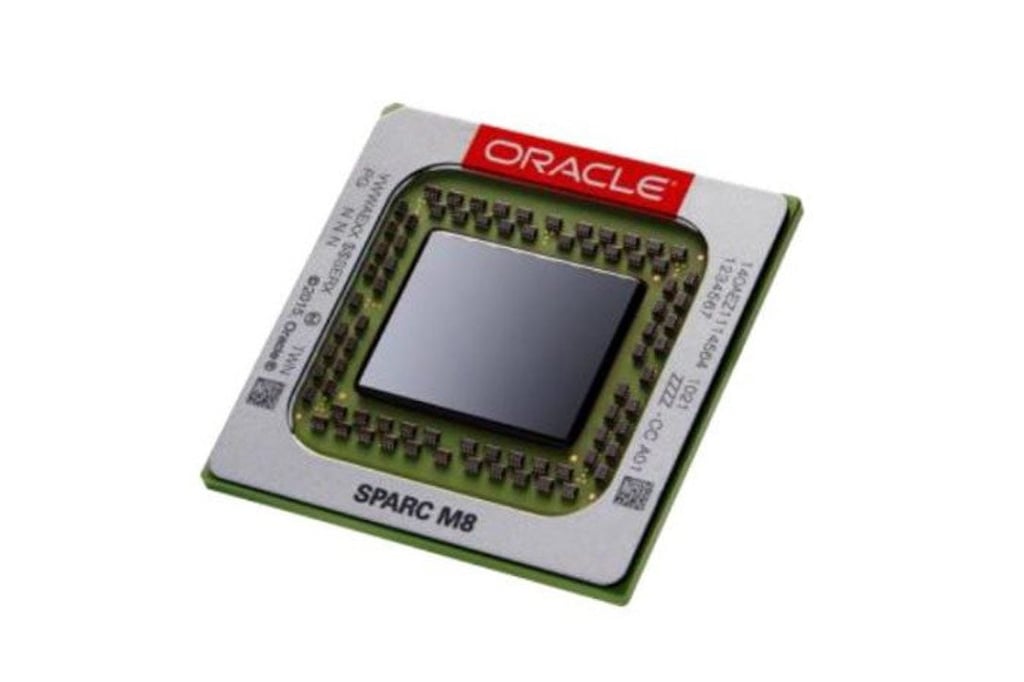
Oracle is rolling out the latest generation of its SPARC platform and unveiling systems powered by the new processors and aimed at such workloads as databases, Java and in-memory analytics.
Company officials are boasting significant performance improvements, not only over the previous generation of SPARC chips but also Intel x86-based Xeon processors.
They also touted new innovations in Oracle’s Software in Silicon effort that expands what the company offers in Silicon Secured Memory, which includes always-on hardware-based memory protection and end-to-end encryption as well as performance and efficiency enhancements through Data Analytics Accelerators (DAX).
Oracle “has long been a pioneer in engineering software and hardware together to secure high-performance infrastructure for any workload of any size,” Edward Screven, chief corporate architect at Oracle, said in a statement. The SPARC M8 chip extends the platform’s superiority in running Oracle Database and Java workloads, Screven said.
However, the announcement of the eighth-generation SPARC platform comes about two weeks after reports of about 2,500 job cuts that focused on the SPARC and Solaris divisions that Oracle inherited when it bought Sun Microsystems for $7.4 billion in 2009.
At the time of the acquisition, software assets such as Java and Solaris were seen as the real prizes for the deal, but Oracle executives also said they wanted to use the RISC-based SPARC architecture to create tightly-integrated computer systems that would run Oracle business applications better than other servers.
Oracle’s hardware business has struggled in the past—hardware revenue in the most recent quarter declined 6 percent, to $943 million—and the company now is putting its efforts into competing against rival Salesforce.com in the fast-growing cloud software and services space.
Oracle officials reiterated their plan to support Solaris through 2034. But the cloud is where the company is heading and that is where the investments should go, according to Patrick Moorhead, principal analyst with Moor Insights and Strategy.
“Oracle is moving as quickly as they can to get out of anything that is proprietary and not supported by open source,” Moorhead told eWEEK.
The company doesn’t have the scale or ecosystem necessary compete with Intel or IBM and its OpenPower Foundation group, and it would be expensive for Oracle to try to grow in any of those areas, he said. It faces a similar challenge in the enterprise operating system space, which is dominated by Linux distributions and includes Windows and cloud APIs. Not many organizations are using Solaris, Moorhead said.
“Oracle’s biggest threat right now is more the cloud and open-source databases … than it is hardware platforms,” he said.
The recent layoff reports weren’t the first indication of Oracle moving away from hardware. The company in January cut about 1,800 jobs, with most coming from the hardware business. John Fowler, the ex-Sun executive who took over the Oracle hardware business after the deal, resigned in early August.
Company officials are positioning the new SPARC M8 chips and systems powered by it—including the SuperCluster M8 engineered system and SPARC T8 and M8 servers—as keys to running business applications and scale-out environments both on-premises and in the Oracle Cloud. They include integrated virtualization and management for private clouds. Oracle also will update its Oracle Cloud SPARC Dedicated Compute service with the SPARC M8 chips.
Security enhancements in the chip bring twice the encryption and hashing speeds of x86 chips and is twice as fast as the SPARC M7 processors. The security features come as part of Oracle Software in Silicon V2, building on the Silicon Secured Memory capabilities that include the always-on hardware-based memory for advanced intrusion protection, the encryption features and DAX.
The Software in Silicon feature was introduced two years ago in the SPARC M7 chips, the first that were completely designed by Oracle engineers. The idea is to integrate software features in the chips that can improve security and database performance.
According to Oracle, the SPARC M8 is twice as fast as Intel chips in online transaction processing (OLTP) and seven times faster running database analytics. In addition, it’s twice as fast running Java and delivers seven times the queries-per-minute per-core than x86 chips.