









A humanoid robot is only as useful as its hands… and 1X Technologies believes it has just solved one of the biggest challenges in robotics.
Norwegian robotics company 1X has introduced a new 25-degree-of-freedom (DoF), tendon-driven robotic hand for its NEO humanoid robot, describing it as a breakthrough in dexterity, precision, safety, and durability. The company says the redesigned hands remove a key hardware limitation that has long held back humanoid robots.
Rather than being constrained by mechanical capability, NEO's future performance will depend primarily on improvements in artificial intelligence and training data.
How NEO’s touch-sensing hands work
According to 1X, each hand uses 22 actuated joints across the fingers and palm, while three additional joints control the wrist. All 25 joints are force-controlled and backdrivable, meaning the fingers can respond to outside pressure rather than simply following preset movement commands.
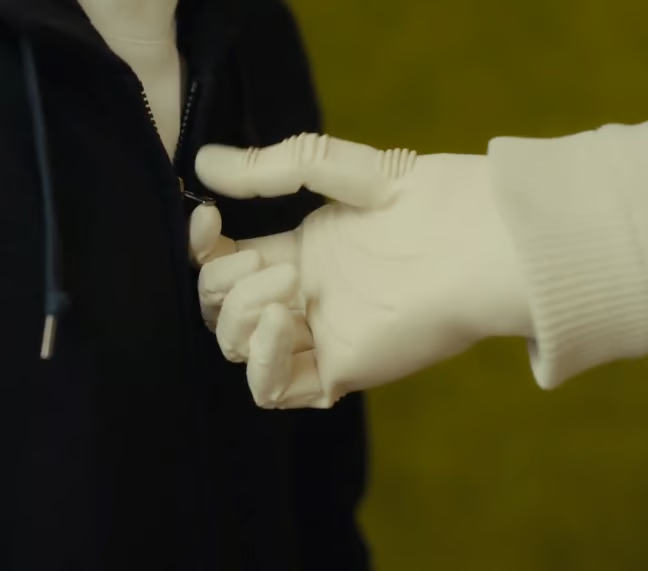
High-resolution tactile sensors detect pressure, contact location, and sideways shear forces. Built-in proprioception also tracks the position of each joint, allowing NEO to monitor its hand movements without depending entirely on cameras.
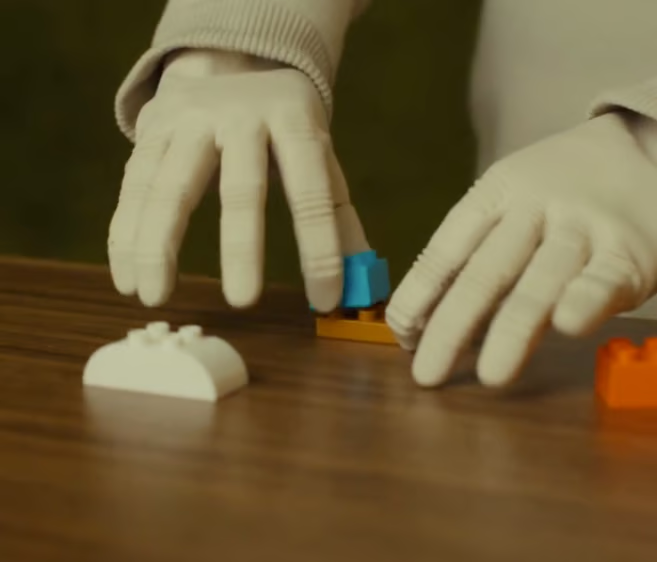
In demonstrations shared by 1X, the hands assembled LEGO models, handled screws and coins, used tools, connected USB-C cables, zipped clothing, and caught soft balls. Those demonstrations show range, although performance in unscripted household settings remains the more important test.
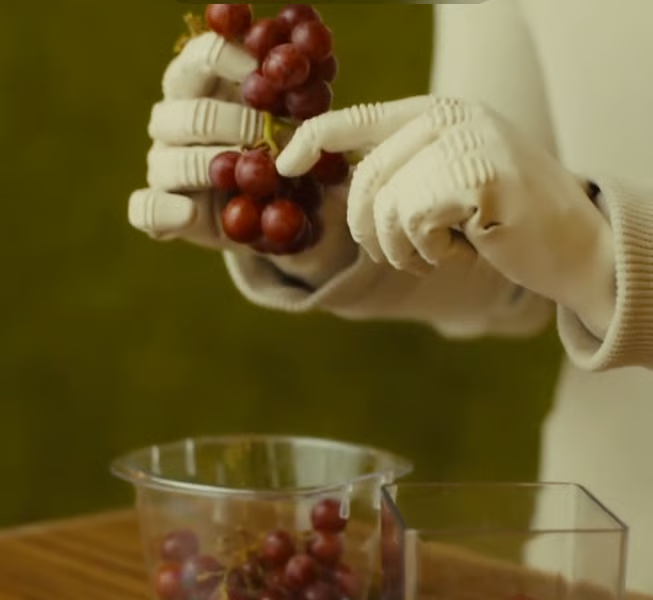
The hardware is also IP68-rated for water resistance and built with food-safe materials, allowing the robot to wash its own hands after completing household tasks.
"Our goal was never a hand that just looks impressive on paper. These hands are the culmination of intensive engineering focused on making humanoids truly useful," Bernt Børnich, CEO and founder of 1X, said on its website. "With these hands, NEO crosses a critical threshold. The robot can now do the things humans do with their hands, every day. This is what the industry has been waiting for."
Built for large-scale production
Beyond the hardware, 1X says manufacturing is a major part of its strategy.
The company manufactures the motors, tendons, electronics, tactile sensors, and soft polymer skin in-house and says a dedicated production line can produce up to 10,000 robotic hands this year. According to 1X, scaling production is essential for collecting the real-world interaction data needed to improve embodied AI systems.
Why this matters for home robots
While many humanoid robots can already walk, navigate rooms, and understand spoken commands, manipulating everyday objects remains one of the industry's hardest problems.
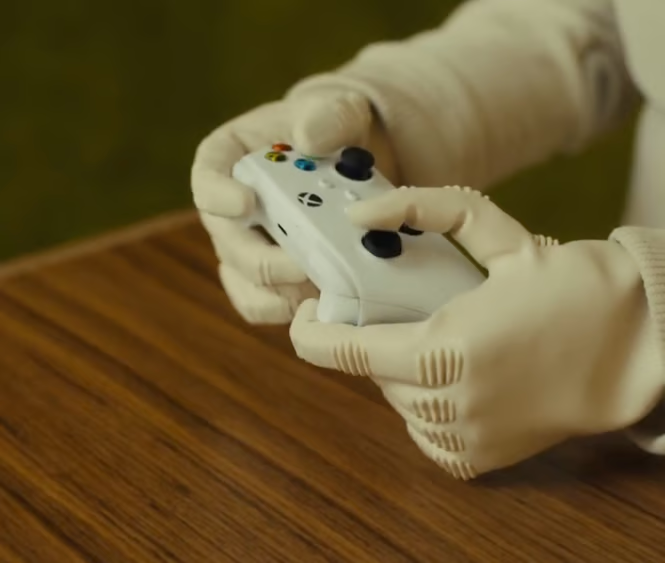
Fine motor skills are essential for chores such as folding laundry, preparing meals, cleaning kitchens, organizing household items, and safely handling fragile objects. By giving NEO hands that can both act and sense touch, 1X is betting that future software updates can unlock new capabilities without redesigning the robot's hardware.
The race is shifting from movement to manipulation
The latest announcement reflects a shift in humanoid robotics. Walking has become a more mature problem, but reliable hand manipulation is increasingly emerging as the next competitive battleground.
If 1X's hardware performs consistently outside carefully controlled demonstrations, it could give the company an advantage in the race to build practical home robots. At the same time, the announcement highlights an important tradeoff. Advanced hardware alone does not guarantee useful robots.
NEO's real-world success will still depend on how quickly its AI learns to make full use of its new hands in unpredictable home environments, where safety, reliability, and consistency matter as much as dexterity.
Continue reading: See how AGIBOT's humanoid robots completed a six-day livestream on a live factory production line, offering another glimpse at how robots are moving from demonstrations to real-world deployment.