








Your public Instagram photos can now become someone else's AI creation.
Meta’s new AI image generator, Muse Image, prompted Hollywood groups and privacy advocates to demand an opt-in system after the company enabled it by default for eligible public Instagram accounts. Adults with public accounts are also eligible unless they turn off the feature.
What appears to be a playful way to remix photos reopened a difficult debate over consent. Should people object after their likeness becomes available, or approve the use before it starts?
Hollywood and privacy groups reject Meta’s opt-out rule
Creative Artists Agency urged the social media giant to make “protection the default on Muse Image, not the exception.”
In a statement reported by Variety, CAA said artists should control how their likeness and work are used, be able to track misuse, and prevent unauthorized endorsements. SAG-AFTRA reinforced the demand for prior consent, calling the rollout an “utter miscalculation of public sentiment” and a “clear and conspicuous OPT-IN” from Instagram users.
Privacy concerns also apply to ordinary account holders. Electronic Frontier Foundation senior security and privacy activist Thorin Klosowski told The Guardian the setting “should absolutely be opt-in.” People who posted public photos years ago could not have expected them to be used in an AI image generator, he said.
Public posts can also include children. Meta excludes accounts belonging to users under 18 but did not explain how Muse Image handles a child shown in an adult’s public post.
How Muse Image uses public Instagram profiles
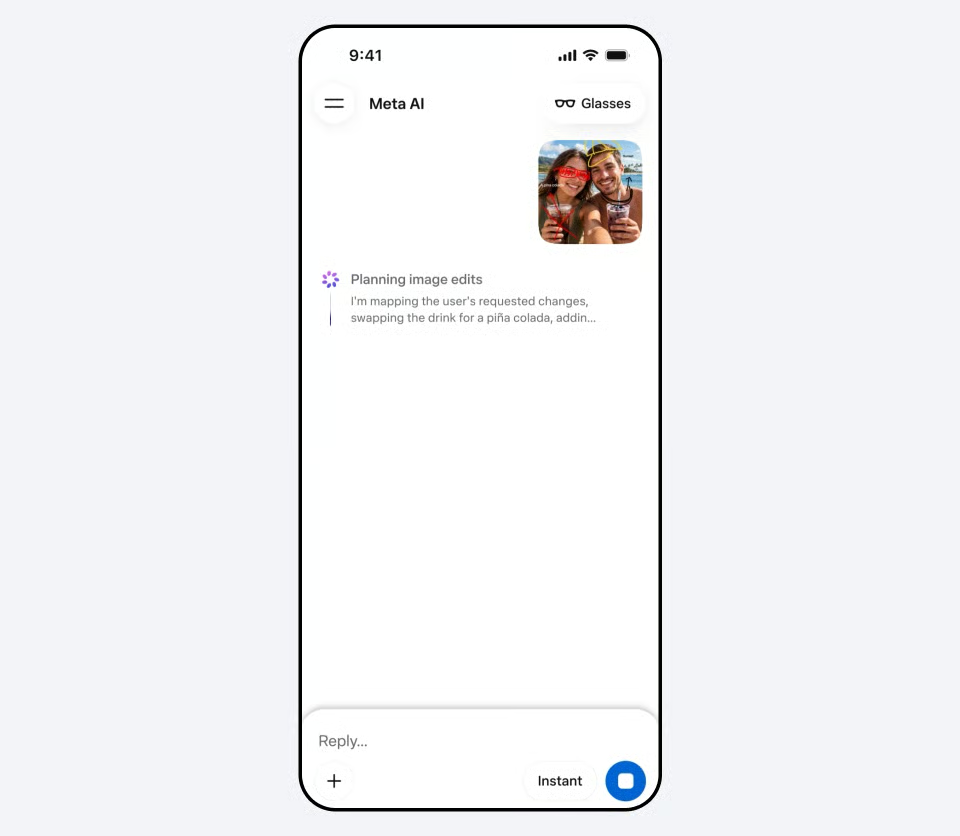
Muse Image lets someone tag a public Instagram account in a prompt and place a person from its posts into an AI-generated scene. Prompts can combine several references, including a person in a particular outfit or a specific setting. Account holders receive no notification when someone uses their posts.
A company spokesperson told The Guardian that the tool was developed with “strong controls and safety guardrails” and said policy-violating content could be reported.
“Private accounts and those belonging to users under 18 are automatically excluded, and adult users with public accounts can opt out with easy-to-use controls,” the spokesperson told The Guardian.
OpenAI faced similar criticism after Sora users generated videos featuring celebrities and copyrighted characters. OpenAI later promised more detailed controls and shut Sora down months afterward.
Public profiles can put work and reputation at risk
Creators and small-business owners may face added risk because public profiles often support income or professional credibility. A fabricated image could falsely suggest an endorsement or involvement in an event. Unwanted creations can be copied or reposted without the depicted person ever seeing the original.
Instagram users can open Settings and Activity, select Sharing and Reuse, and turn off the switches for Posts and Reels under Allow people to use your content on Instagram and with AI features at Meta. The Posts control also covers the profile photo.
Turning off the switches blocks future use, but images already generated remain available. Switching to a private account offers broader protection, though it may not suit people who rely on public visibility.
More news: Muse Spark 1.1 brings Meta deeper into the coding-agent race with a model aimed at affordability and developer adoption.