






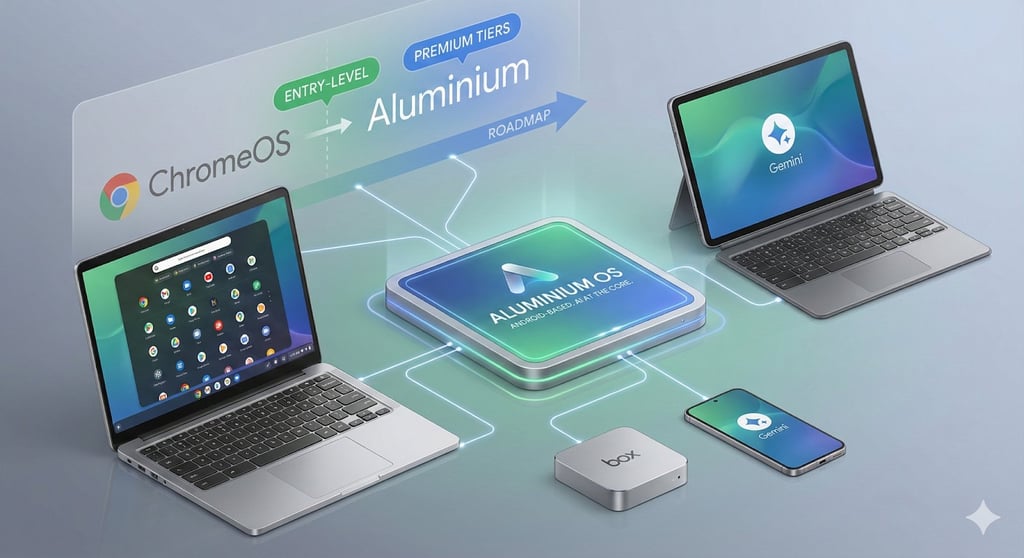


A new Google job listing has revealed “Aluminium,” an Android-based operating system (OS) designed for laptops, tablets, and other PC-class devices. The posting describes Aluminium as built with artificial intelligence “at the core” and outlines a roadmap spanning entry-level through premium hardware tiers.
The role also referenced a gradual transition from today’s ChromeOS devices to Aluminium systems, a sign that Google intends to unify its device platforms around Android technology.
Job ad spells out Aluminium as Android-based, AI-first
The listing, for a senior product manager in Taipei, places Aluminium within Google’s Devices & Services organization. It said the team “is working on a new Aluminium, Android-based, operating system and a new focus on premium devices and experiences.”
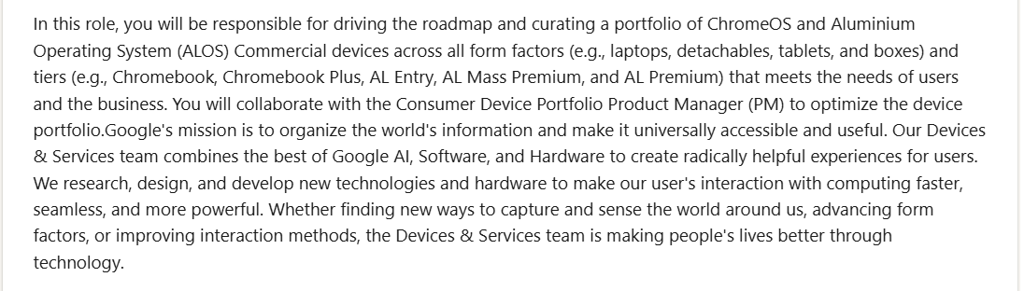
Google job posting on LinkedIn. Source: Google/LinkedIn
The post added that this leader would oversee both ChromeOS and Aluminium programs, collaborating with OEMs, SoC vendors, and marketing teams. It mentioned products such as laptops, tablets, detachables, and “boxes” — shorthand for Chromebox-style mini PCs — organized under tiers including Chromebook, Chromebook Plus, “AL Entry,” and “AL Premium.”
One requirement stood out: to “develop and maintain a product/portfolio roadmap that addresses deliverables and strategy that transit Google from ChromeOS to Aluminium with business continuity in the future.” The language suggests a managed handoff between the two operating systems rather than an abrupt replacement.
Android Authority and 9to5Google reported that Google internally refers to the effort as “Aluminium OS” or “ALOS,” identifying it as a distinct platform rather than a ChromeOS branch.
Android PCs and the unified platform timeline
The Aluminium project follows Google’s public confirmation that ChromeOS and Android will merge into a single foundation. Reports in 2024 said ChromeOS was migrating to the Android Linux kernel and frameworks to simplify updates and add modern AI features.
In mid-2025, Android ecosystem chief Sameer Samat said Google aimed to deliver “one platform” for phones, tablets, and laptops while preserving the ChromeOS experience for education and enterprise customers.
At Qualcomm’s 2025 Snapdragon Summit, executives from both companies confirmed joint work on Android-powered PCs targeting a 2026 launch. Aluminium appears to name that unified platform, supporting both a ChromeOS-style interface and a more traditional Android desktop mode. 9to5Google found references to Aluminium in internal ChromeOS bug reports linked to MediaTek and Intel boards, connecting it with existing Chromebook hardware.
For enterprise buyers, this points to a gradual evolution rather than a disruptive OS switch, positioning Android as the long-term base for Google’s computing ecosystem.
What ‘AI at the core’ could mean for enterprise PCs
Aside from its AI-centric design language, the listing provided few details on features. Android Authority noted that Google already calls Android XR an “AI-powered operating system” and suggested Aluminium will embed Gemini, Google’s large language model, deeply into the user environment.
At the Snapdragon Summit, Google’s Rick Osterloh said Gemini and Assistant would come to PCs, ensuring Android participates fully in the AI PC category. On Android phones, Gemini already powers summarization and generative tools; on Aluminium systems, similar capabilities could enable local assistants, contextual help, and document synthesis for managed fleets.
Google has not disclosed how Aluminium will align with existing ChromeOS administration tools or whether certain AI functions will require dedicated hardware. Aluminium will cover both budget and premium hardware, implying that on-device AI support could vary by configuration.
Context: A Unified Future for Google’s Client OS
Over the last two years, Google has consistently moved toward merging its operating systems under one Android-based foundation. ChromeOS and Android already share a codebase through the Android Runtime for Chrome (ARC) and a common security architecture. Aluminium extends that convergence to PCs, giving Google a single adaptable OS from phones to laptops.
For enterprises, the shift could streamline app compatibility, security policy management, and AI-enabled productivity tools on different device types. It also positions Android as Google’s primary OS brand across categories, consolidating its ecosystem in competition with Windows on Arm and Apple’s AI-driven macOS initiatives.
India’s growing AI ecosystem gained momentum this week as Google and Accel teamed up on a new program to accelerate early-stage AI founders across the country.