






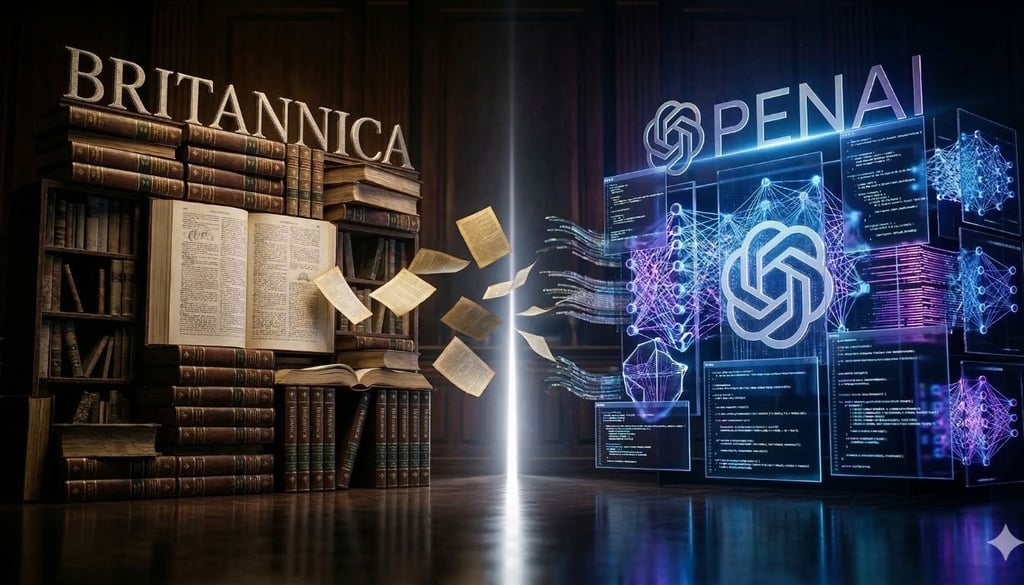


Britannica is coming for OpenAI. In a new lawsuit, the publisher accuses the company of taking its copyrighted content to build and improve ChatGPT, then sending that material back out in responses that allegedly borrowed too much and sometimes got attribution wrong.
Filed in federal court in New York, the complaint says the problem goes beyond training data. Britannica and Merriam-Webster claim ChatGPT’s outputs can act as substitutes for their work while also attaching their names to incomplete or inaccurate material, setting up a broader fight over both copying and brand harm.
From broad accusations to pointed examples
The complaint does not stay broad for long. It quickly shifts to examples that Britannica and Merriam-Webster say show ChatGPT getting uncomfortably close to their work.
The filing points to Britannica’s “Education” and “Tourism” articles, where GPT-4 allegedly produced near-verbatim text, and to Merriam-Webster’s definition of “plagiarize,” which the publishers say ChatGPT reproduced exactly from the print dictionary.
Britannica also cites its Hamilton-Burr duel piece, arguing that ChatGPT mirrored the same quotes in the same order, not just the same subject matter.
Fewer clicks, higher stakes
Aside from questions of copying, Britannica and Merriam-Webster present ChatGPT as a product that can intercept users before they reach the source, weakening traffic tied to subscriptions and ad revenue.
The lawsuit zeroes in on lost licensing value, alleging OpenAI used content in a market where publishers are already striking paid AI deals. And when inaccurate or incomplete material appears under those trusted names, the filing presents it as damage to brand authority, not just a factual mistake.
Clear asks on shaky ground
Britannica and Merriam-Webster close with a direct ask, seeking statutory and actual damages, restitution of profits, attorneys’ fees, costs, and a permanent injunction to stop the alleged conduct.
So the goal is not only to recover money but also to secure a court order blocking the conduct described in the suit going forward.
Britannica and Merriam-Webster have been here before. In 2025, the publishers sued Perplexity in a case that remains ongoing over claims that its AI answer engine copied their material, siphoned traffic from their sites, and attached their names to flawed responses.
Britannica’s latest suit is part of an AI copyright fight with no settled outcome yet. Last year, a federal judge in California ruled that Anthropic’s use of books for AI training was fair use, showing that OpenAI could press a similar defense here.
That leaves the new complaint in a messier reality than the headlines suggest. The disputes may rhyme, but the outcomes are not moving in lockstep.
Apple’s decision to lower App Store fees in mainland China could hint at broader pressure on platform commissions.