






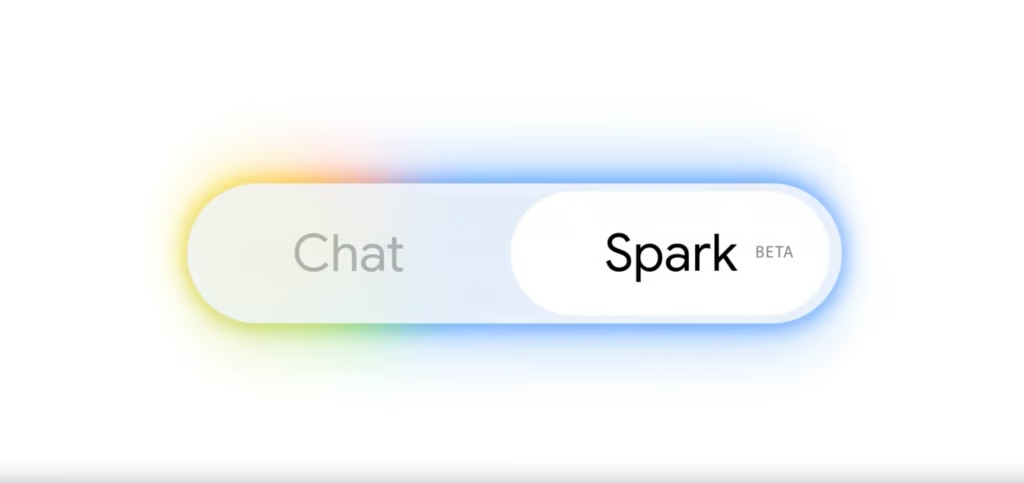


Google is rolling out Gemini Spark, a cloud-based AI agent that can complete recurring digital tasks across Google Workspace, marking the company's latest push beyond chatbot conversations and into autonomous task automation.
The feature is expanding to Google AI Pro subscribers in India over the next few weeks and is also becoming available to Pro subscribers in more than 160 additional countries.
Google said Spark is already available to Google AI Ultra subscribers, while new Chrome-powered web browsing features are initially launching in the US.
Unlike a traditional chatbot that waits for prompts, Gemini Spark is designed to keep working in the background even when a user's phone is locked or their computer is turned off.
Powered by Gemini 3.6 Flash, Spark runs on Google's cloud infrastructure and connects directly with Workspace apps including Gmail, Docs, Sheets, and Calendar without requiring additional setup.
Google described the product as a move "from a reactive assistant that answers your questions into an active partner that gets real work done for you, even while you're sleeping."
Users can assign ongoing jobs such as organizing travel bookings, monitoring subscriptions, summarizing inbox activity, managing customer inquiries, or creating recurring reports. Spark can also analyze a user's previous emails to build a personalized writing style that can be reused when drafting future messages.
Google said users remain in control of the service by choosing which apps Spark can access. The company added that the AI is designed to ask for approval before carrying out sensitive actions such as sending emails or making payments.
Chrome integration expands Spark's reach
Google is also extending Spark beyond Workspace by integrating it with Chrome. With permission, Spark can use a person's logged-in accounts and saved passwords to complete web-based tasks such as researching flights, scheduling apartment viewings, or starting online bookings.
The company said the feature includes protections against prompt injection attacks and will hand control back to users before completing sensitive actions like purchases.
Gemini Spark arrives as major AI companies increasingly focus on agentic AI. Google's approach centers on deep integration with its own ecosystem. Because Spark works natively with Gmail, Docs, Sheets, Calendar, and other Google services, users can automate workflows without relying on third-party connectors or custom scripts.
What this means for users and businesses
For consumers, Spark could reduce the time spent on repetitive digital chores by automating email management, travel planning, calendar updates, and document organization. Small businesses may also benefit by using it to track customer inquiries, organize leads, and prepare responses before human review.
That convenience, however, comes with tradeoffs. Spark's usefulness depends heavily on users trusting Google with access to their emails, documents, calendars, and other personal data. While Google says users control permissions and approve high-risk actions, widespread adoption will likely depend on whether users are comfortable delegating more day-to-day work to an AI that operates continuously in the background.
The rollout also strengthens Google's position in the fast-growing AI assistant market, where companies including OpenAI, Microsoft, and Anthropic are racing to build agents capable of completing increasingly complex workflows rather than simply answering questions.
Also read: Gemini computer use lets developers build agents that can interact with browsers, mobile apps, and desktop software without using a separate computer-control model.