






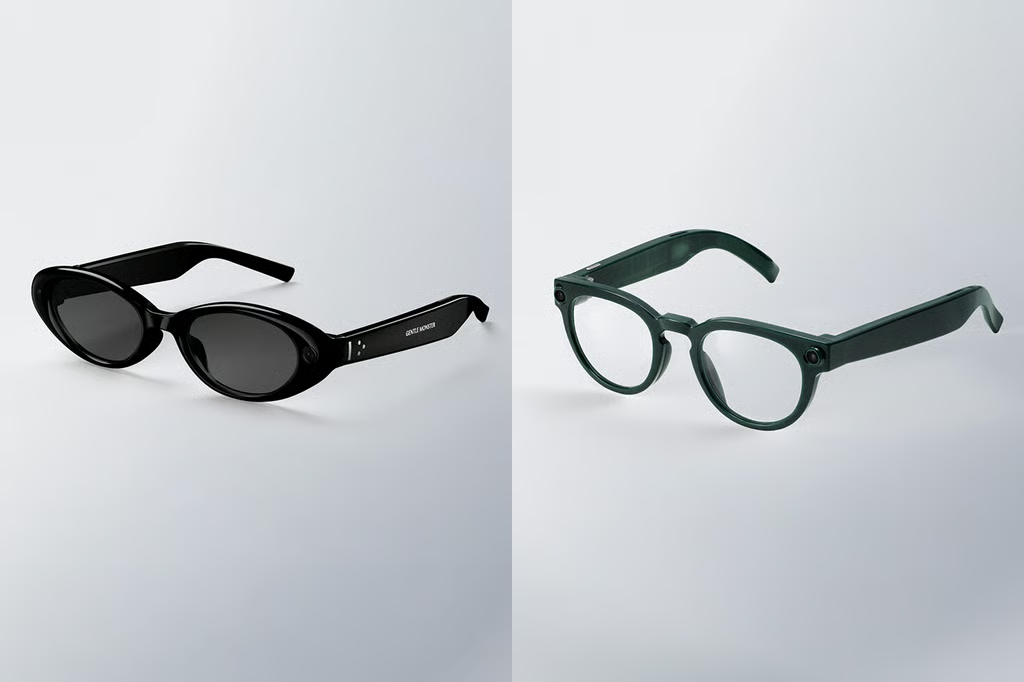


Samsung has named the United States and South Korea among the initial markets expected to receive its AI-powered intelligent eyewear in fall 2026. The company has not released a complete launch-country list or provided a timetable for wider availability.
Kylie Mason, head of wearables and accessories at Samsung Australia, told News.com.au that the glasses would be offered in select markets, including the US and South Korea. Australia does not yet have a confirmed release window, while Samsung has also withheld the product’s final name, price and exact launch date.
Limited rollout leaves other markets waiting
Samsung introduced new details about the eyewear at Galaxy Unpacked in London on July 22. Its official product announcement says the first collections will launch in select markets in the fall but does not identify individual countries.
The News.com.au interview identifies the US and South Korea among those markets. Mason did not provide a full country list.
Developed with Google, Gentle Monster and Warby Parker, the display-free glasses use cameras, microphones and speakers to give Gemini information about the wearer’s surroundings. They support navigation, translation, messages, calls, photography and other hands-free tasks.
Samsung rates the glasses for up to nine hours on one charge, with the case providing up to seven additional full charges. A broader overview of the hardware and Gemini features is available in eWeek’s first look at Samsung’s Android XR glasses.
Samsung is entering a category in which Meta has expanded its smart-glasses lineup with models starting at $299. Meta accounted for an estimated 69.2% of display-free smart-glasses shipments during the first quarter of 2026, according to IDC.
Neither Samsung nor Google has explained how the opening markets were chosen. Wider availability will also depend on retail partnerships, language support, prescription-lens services and local regulations.
Privacy controls face an early test
The glasses include an external indicator light intended to show when the camera is recording. Wear detection is designed to stop recording when the device is removed, while Samsung says recording will also stop if the indicator is covered.
Samsung also said customers’ audio, video and screen-sharing data from the glasses will not be used to train AI models, according to reporting on its privacy safeguards.
Google has separately outlined tamper-detection safeguards for Android XR eyewear, but detailed technical questions remain. Google has not fully explained which camera functions activate the indicator, whether applications can bypass it or how administrators could verify enforcement.
Camera-equipped glasses could expose confidential meetings, computer screens or customer information. Organizations will need policies defining where the devices may be worn, which features may be used and how suspected recording violations should be handled.
Samsung and Google have not announced enterprise-management controls specifically for the glasses. Workplace adoption will depend on documented camera restrictions, account policies, data handling, software support and administrative oversight.
The initial rollout will test Samsung’s privacy approach in two major markets while the company prepares for a broader release.
Read more: Compare the major vendors, product categories and privacy trade-offs in the complete smart-glasses market guide.