






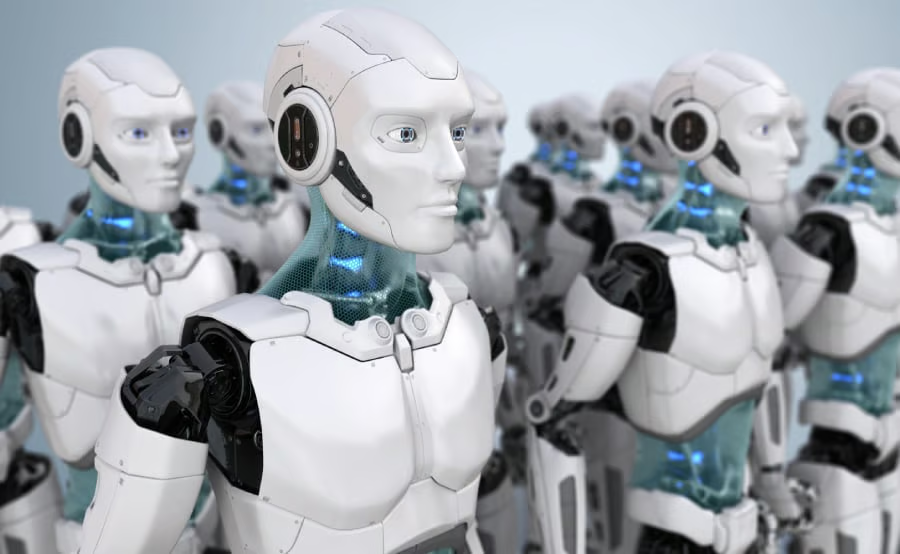


Look around your day and think about the tasks you’d happily hand off: the repetitive ones, the heavy ones, the ones that take more time than they should.
A new class of humanoid robots is being built to take exactly those jobs off your plate. And depending on where you work, you may see one joining your warehouse crew, helping your factory team, greeting your customers, or even tidying your home long before the decade is over.
Here’s a lineup of the humanoid robots leading that shift today.
- Ameca: Best for customer interaction, hospitality, and public-facing roles
- Atlas: Best for high-risk, high-movement industrial and field work
- Figure 03: Best for multi-step household tasks and reasoning-heavy jobs
- Optimus (Tesla Bot): Best for factory automation and repetitive work
- NEO: Best for home service and personal assistance
- Unitree H2: Best for research teams, robotics developers, and early industrial pilots
- Walker S2: Best for factories that want humanoids now, not later
- Bottom line: This is only the first chapter of the humanoid era
Ameca: Best for customer interaction, hospitality, and public-facing roles
If you’ve ever wished a robot could actually hold a conversation instead of sounding like a customer-service phone tree, Ameca is the one you’d want to meet. Created by the UK-based robotics company Engineered Arts, this humanoid is built to talk to you, to look you in the eye, read your reaction, and adjust how it speaks so the exchange feels natural instead of mechanical.
You can put Ameca in a lobby, at an event booth, in a museum, or even in a showroom, and it instantly becomes the face of your brand. It gestures, nods, reacts, and engages in more than 50 languages. And because companies can customize their personality and knowledge, Ameca can greet visitors, explain exhibits, give directions, or simply spark curiosity.
If your goal is to make people feel welcomed, informed, or entertained, this is the humanoid designed for that moment.

Ameca. Source: Engineered Arts
Atlas: Best for high-risk, high-movement industrial and field work
Some jobs call for a robot with real physical confidence, the kind of agility you’d need if you had to climb, twist, balance, or move through unpredictable terrain. That’s exactly the domain Atlas was built for. Boston Dynamics designed Atlas to move like a trained athlete rather than a machine, giving it the coordination, balance, and whole-body control needed to handle chaotic or uneven environments.
Atlas uses every part of its body to move with purpose. It can leap, pivot, brace itself, and recover mid-motion, actions that hint at future roles in disaster response, emergency support, and physically demanding industrial work where mobility matters as much as strength. When you see it navigating cluttered spaces or executing complex movements with fluid precision, you’re watching a preview of the kind of robot that could eventually operate where people face high risk or harsh conditions.
If your work involves hazardous areas, heavy mobility, or environments where a single misstep could be costly, Atlas shows what becomes possible when a robot can move with humanlike awareness… and superhuman stability.
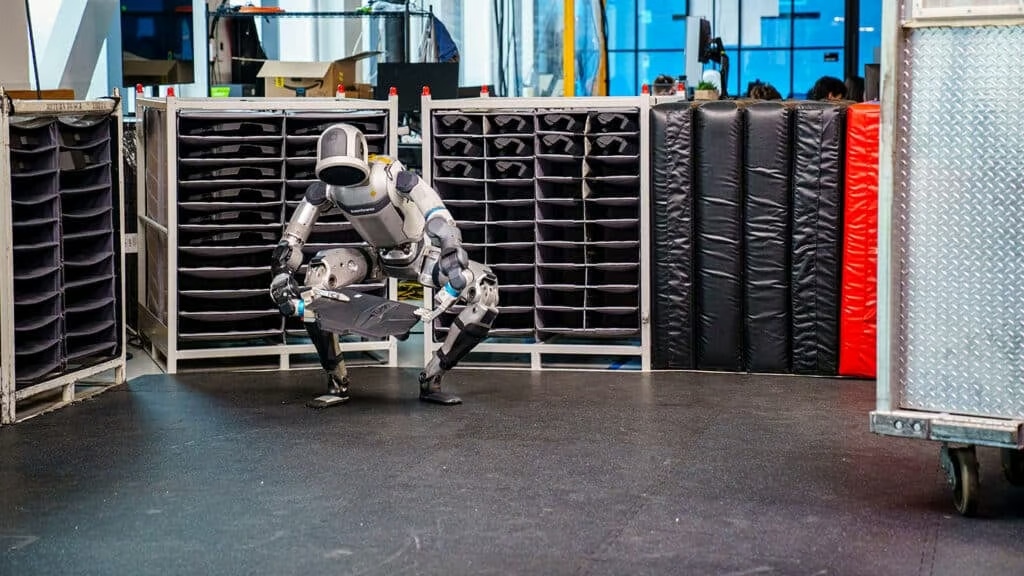
Atlas. Source: Boston Dynamics
Figure 03: Best for multi-step household tasks and reasoning-heavy jobs
Figure 03 is the robot for tasks that require muscle and understanding. This is the humanoid designed to watch how you do something, learn from it, and then repeat the process. Whether it’s folding laundry, loading a dishwasher, or carrying a box from one room to another, Figure 03 focuses on the logic behind the task rather than just the motions.
Built around Figure’s Helix AI system, the newest version adds a redesigned camera suite with a wider field of view, faster frame rates, and lower latency, so it can understand cluttered spaces the way you do.
Its updated hands use soft, tactile fingertips that can feel tiny changes in pressure, making tasks like gripping dishes, handling groceries, or picking up small objects far more stable and controlled. And because the entire robot was rebuilt for home use with softer materials, wireless charging, and quieter audio, it’s the first Figure robot that feels as if it actually belongs in your living space rather than a lab.
Figure wants these robots in homes and workplaces, pushing toward real-world usefulness. So if you imagine a future where a robot can look at a messy counter and plan the best way to clean it, Figure 03 is the closest thing to an early version of that dream.
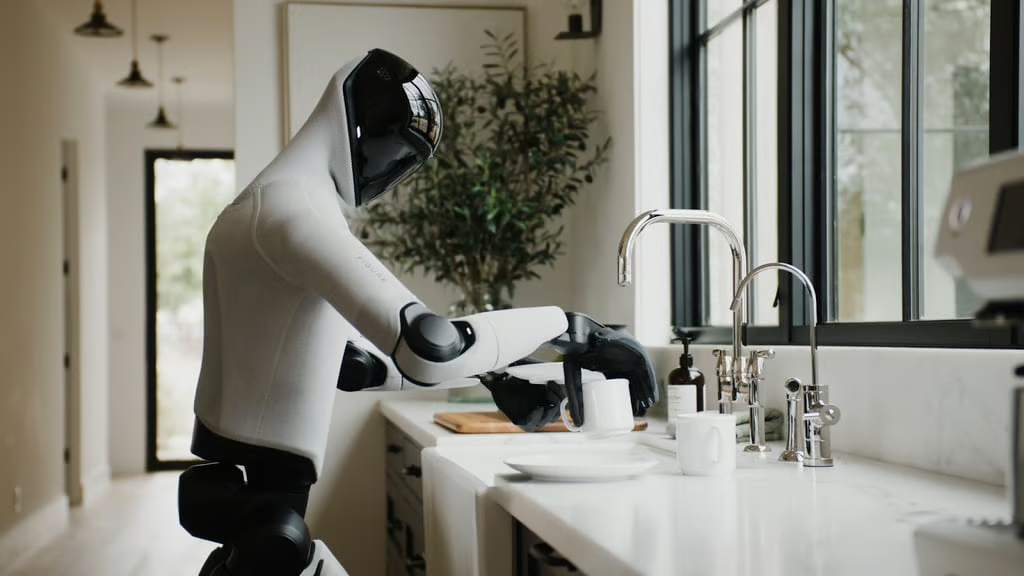
Figure 03. Source: Figure
Optimus (Tesla Bot): Best for factory automation and repetitive work
Factories run on thousands of small, repetitive actions, and Optimus is built to take over exactly those tasks. Tesla’s robot is trained for the kind of steady, predictable movement that makes production lines efficient. It can lift parts, move items across floors, sort components, or handle materials that workers don’t have the time or energy to deal with all day.
Because Tesla is training Optimus inside its own facilities, the robot is learning real workflows rather than staged demos. It’s already navigating around humans, recognizing objects, and performing basic autonomous jobs. Over time, it’s meant to become a reliable extra set of hands that doesn’t tire, lose focus, or slow down on the night shift.
Optimus represents a future where some of the most draining work gets handed to a tireless mechanical teammate.
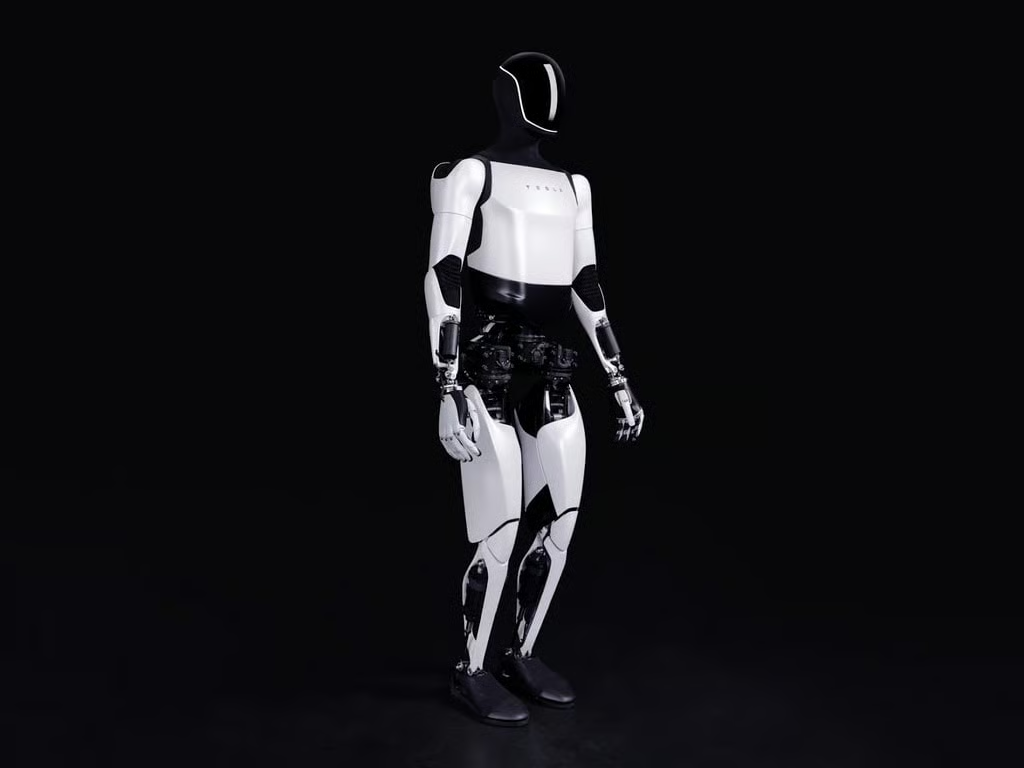
Optimus. Source: Tesla
NEO: Best for home service and personal assistance
Daily life is full of chores that chip away at your time, and 1X’s NEO steps in exactly at that pain point. Built with soft edges and gentle motion, this humanoid fits into a home in a way industrial robots can’t — taking out the trash, watering plants, or tidying up without feeling intrusive or mechanical.
NEO is strong enough to lift heavy items but careful enough to operate safely around pets, children, and crowded rooms. Early units are supported by remote oversight, which helps the robot learn how people actually live and what “help” looks like in a real household. Every task becomes practice, shaping a robot that’s meant to eventually handle daily routines on its own.
For anyone juggling work, family, and the chaos of home life, NEO previews a world where a robot covers the background tasks so you don’t have to.
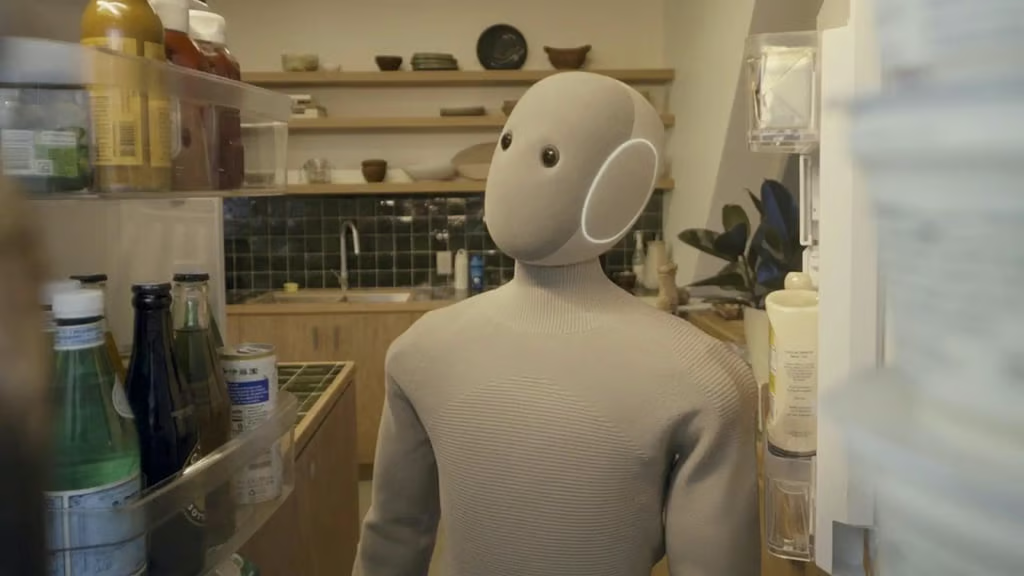
NEO.Source: 1X
Unitree H2: Best for research teams, robotics developers, and early industrial pilots
Agile, expressive, and far more affordable than most full-size humanoids, Unitree’s H2 is built with developers, researchers, and startups in mind, the teams eager to try ambitious ideas without needing a moonshot budget.
In Unitree’s own demos, the H2 spins through ballet-like turns, lands precise kicks, and walks shoulder-to-shoulder with a human model, all powered by joints strong enough to keep it steady and balanced as you push its abilities. It’s tall, lightweight, and expressive, making it easy to imagine in lab tests, warehouse trials, or early-stage industrial experiments where you need a robot that can react and flow rather than just follow rigid motions.
Because it’s flexible and built for modification, you can use the H2 to prototype new behaviors, train AI systems, or test out unusual scenarios that traditional robots simply can’t handle. Add in its decent battery life and onboard compute, and you get a platform that encourages you to push boundaries without worrying that every experiment comes with a giant price tag.
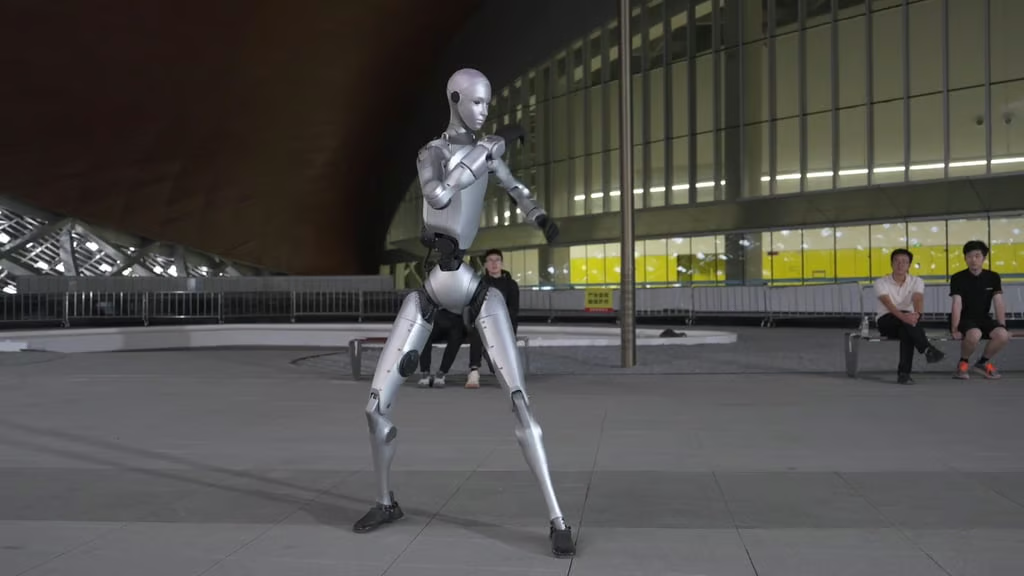
The H2. Source: Unitree
Walker S2: Best for factories that want humanoids now, not later
In China’s newest factories, Walker S2 is already clocking in for work. UBTECH has moved past pilot programs and straight into real deployment, delivering hundreds of these humanoids into automotive plants, logistics centers, and smart-manufacturing sites that operate at full speed.
Walker S2 is built for toughness and endurance. It moves through crowded factory floors, handles tools, carries parts, and even swaps its own battery so it can jump back into action with minimal downtime. Its vision and reasoning systems let it operate safely around forklifts, pallets, and human workers, a critical requirement for real-world environments that never fully pause.
For companies ready to integrate humanoids into their operations today, Walker S2 demonstrates that large-scale deployment is already underway.
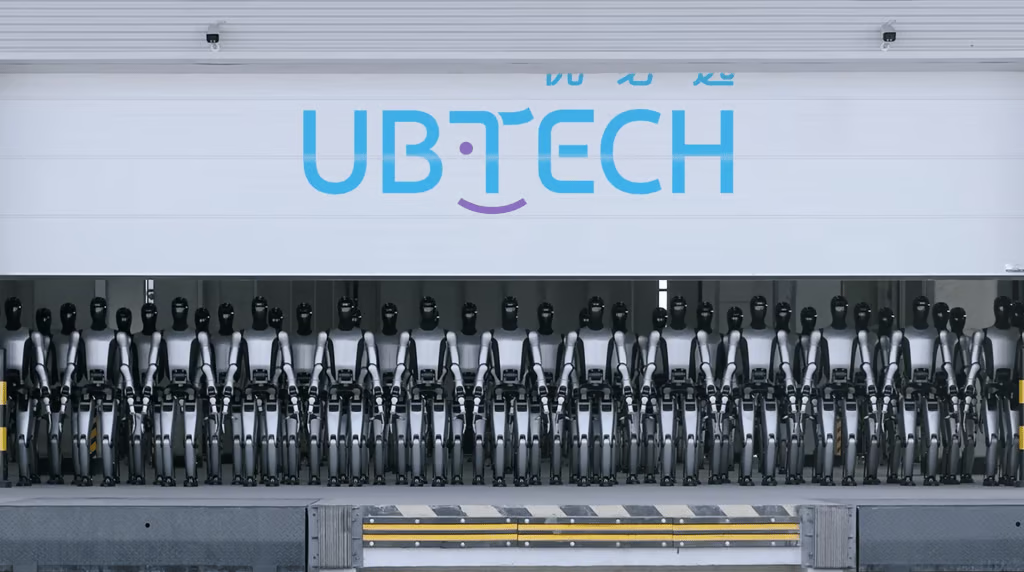
Walker S2 units. Source: UBTECH Robotics/YouTube
Bottom line: This is only the first chapter of the humanoid era
This is only the first chapter of the humanoid era, and we’re watching it unfold from the front row. The robots entering factories, homes, research labs, and public spaces today are early signs of something much bigger: a future where machines work alongside you, learn from you, and take on the jobs that drain your time, energy, or safety.
As costs fall, AI improves, and deployment ramps up, these seven humanoids give a preview of a world where your workday looks different, your home life feels lighter, and whole industries rethink what people and machines can do together.
Humanoids may be getting their first jobs, but Elon Musk is busy plotting their afterlife, a world where an Optimus robot becomes a long-term home for your consciousness.