






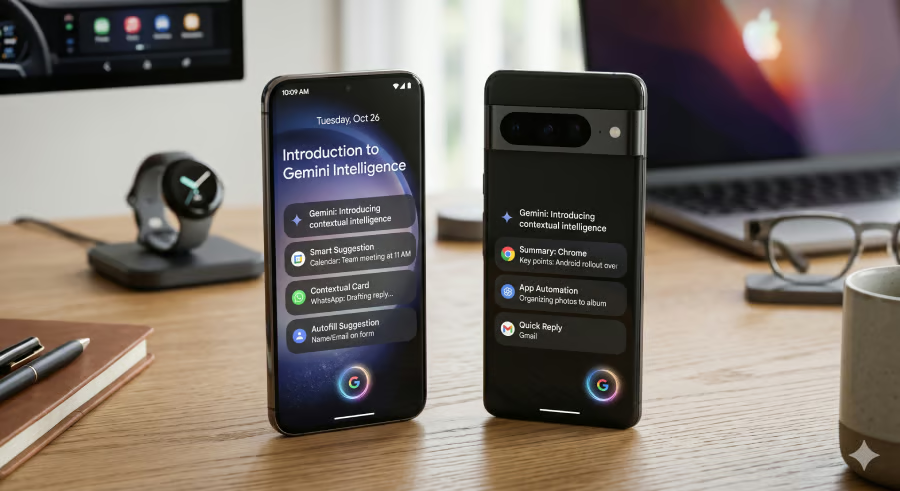


Google wants Android to get better at handling the small digital chores people usually do themselves.
With Gemini Intelligence, the company is rolling out a new set of AI features meant to make Android devices more proactive in daily use. The first features arrive this summer, with a broader Android rollout planned for later in the year.
The catch is trust. Gemini can save time only if users are comfortable letting it read context and move across services without making their phones feel too autonomous.
Android’s AI moves from answering to acting
Gemini Intelligence is part of Android’s transition “from an operating system into an intelligence system.” That change begins with Gemini turning what is already on the screen into the starting point for a task.
A grocery list on your phone usually just sits there until you do the work.
The tech titan is trying to hand some of that slog to Gemini.
Google has spent months fine-tuning multi-step automation on the Galaxy S26 and Pixel 10, particularly across popular food and rideshare apps. In one example, a user can long press the power button over a grocery list and ask the AI tool to build a delivery cart from it.
In another, Gemini can find a class syllabus in Gmail, identify the required books, and place them in a shopping cart. It can also use a photo from a travel brochure to search Expedia for a similar tour.
The update uses screen and image context, so Gemini can start from whatever the user is already looking at. Users can track progress through notifications, and the AI assistant stops once the task is done, leaving the final confirmation to them.
Pixel and Galaxy phones get the first wave
The first wave starts on the latest Samsung Galaxy and Google Pixel phones, with Google bringing Gemini Intelligence into several everyday Android tools:
- Chrome: Starting in late June, Gemini in Chrome can help users research, summarize, and compare information across the web. Chrome auto browse can also handle tasks such as booking appointments or reserving parking.
- Autofill: Autofill with Google can use Gemini’s Personal Intelligence to complete more complex forms with details from connected apps. The Gemini connection is opt-in and can be turned off in settings.
- Gboard: Rambler turns loose speech into cleaner text, trimming verbal clutter and shaping spoken thoughts into a more polished message. It can also handle multiple languages in one draft. Audio is used only for real-time transcription and “is not stored or saved.”
- Widgets: Create My Widget lets users describe the tool they want, then builds a custom widget for the home screen or Wear OS.
After phones, Gemini Intelligence will be rolled out to more Android devices, including watches, cars, glasses, and laptops. Google will then have to prove proactive AI can feel valuable beyond the phone screen.
Google’s rumored Remy agent could move Gemini closer to a true always-on assistant.