






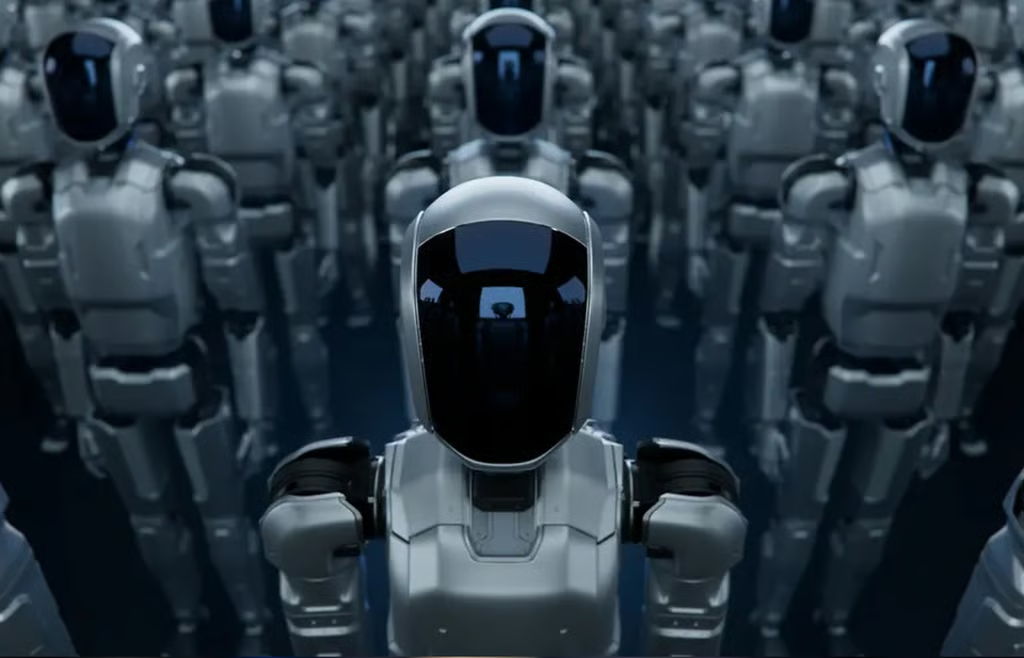


Humanoid robots have entered their power-ranking era.
After years of staged demos, viral stunts, and prototypes walking carefully across spotless floors, the category is starting to split into real contenders, flashy hopefuls, and machines that mostly exist to make trade-show crowds reach for their phones.
This ranking looks at the humanoid robots with the most momentum right now, based on real-world deployments, technical progress, commercial traction, pricing, and cultural visibility. The goal is not to crown the coolest robot, but to identify which machines are moving closest to practical relevance.
We’re counting down from promising wild cards to the humanoid robot with the most influence.
How we chose and ranked the robots
This list focuses on humanoid robots with real momentum, not just polished demos. We assessed various reports and evaluated each entry based on:
- Real-world deployments
- Technical capability
- Commercial traction
- Price and accessibility
- Viral visibility
- Hype-to-reality ratio
We prioritized robots showing signs of repeatable use, partnerships, or production scale. Viral clips and demos helped inform visibility, but they did not outweigh real-world progress.
10. Fourier GR Series
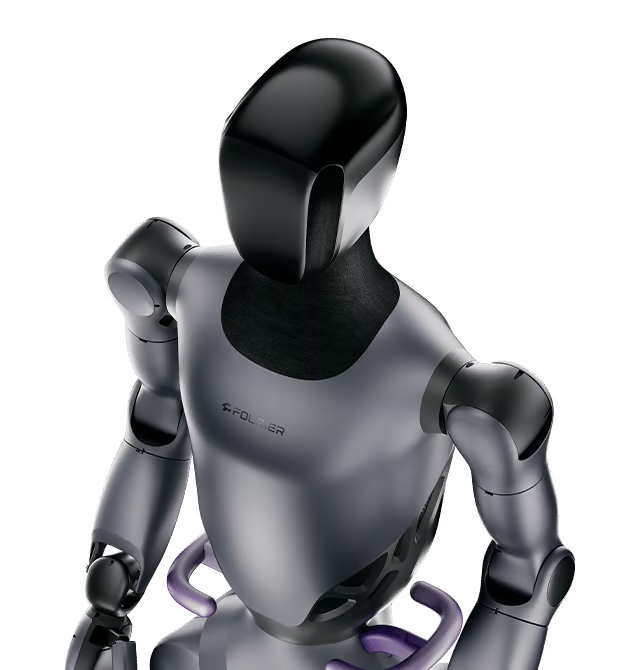
Image: Fourier
Best for: Healthcare and service robotics
Fourier’s humanoids stand out for their practical positioning in healthcare, rehabilitation, and service environments. That gives them a clearer near-term use case than many general-purpose humanoids.
The tradeoff is visibility. Fourier lacks the viral reach of higher-ranked competitors, but its real-world applications could prove more durable over time.
Power ranking verdict: Quietly practical, with strong niche potential.
9. Sanctuary AI (Phoenix)
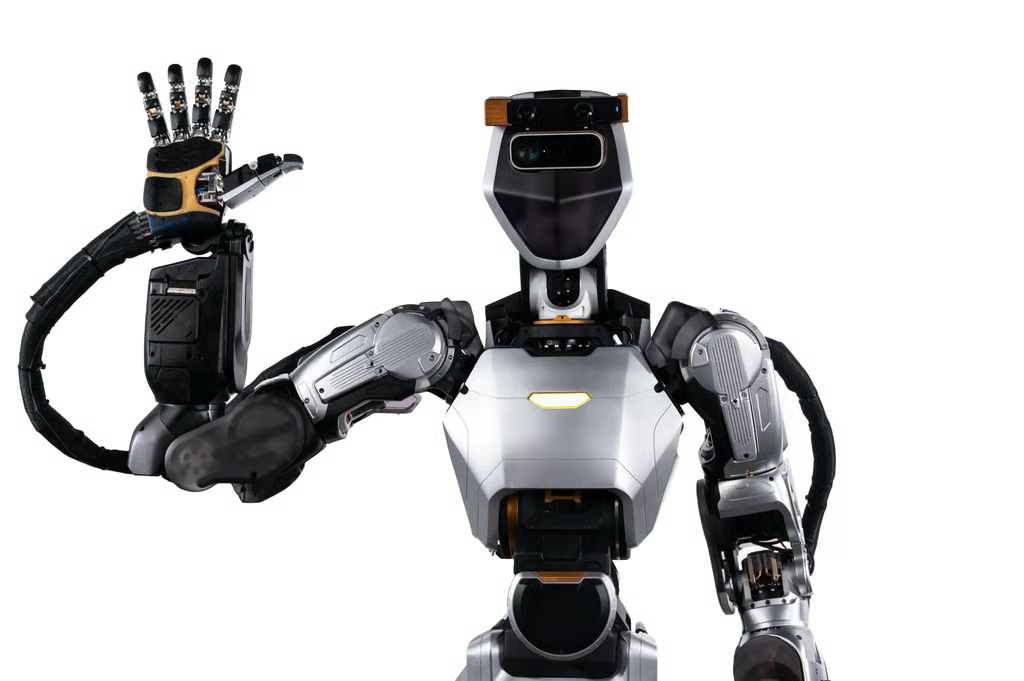
Image: Sanctuary AI
Best for: General-purpose task execution
Sanctuary AI is focused on building humanoids capable of performing a wide range of tasks using advanced AI systems. Its long-term vision aligns closely with the idea of a general-purpose robot worker.
The challenge is execution at scale. The concept is compelling, but widespread deployment is still developing.
Power ranking verdict: Big vision, still proving it can scale.
8. 1X (NEO)
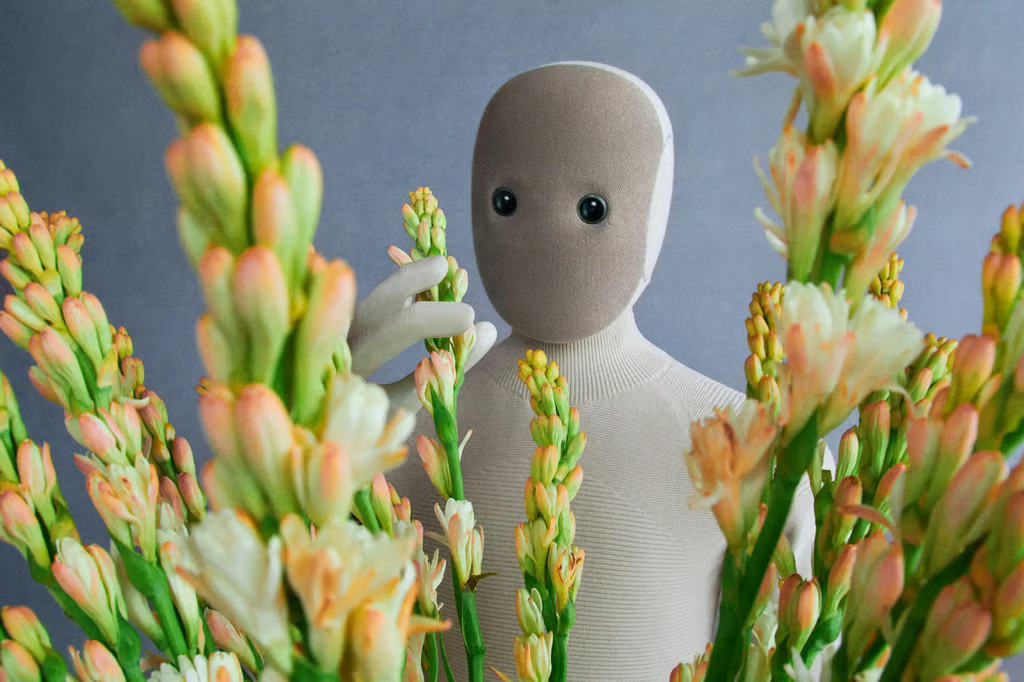
Image: 1X Technologies
Best for: Home and service environments
1X is taking a different approach by targeting home and service use cases. Its humanoids are designed to operate in human-centered environments rather than factories.
That opens a different path to adoption, but also introduces higher expectations for safety, reliability, and autonomy.
Power ranking verdict: The home-first bet in a factory-first race.
7. AgiBot / Zhiyuan Robotics
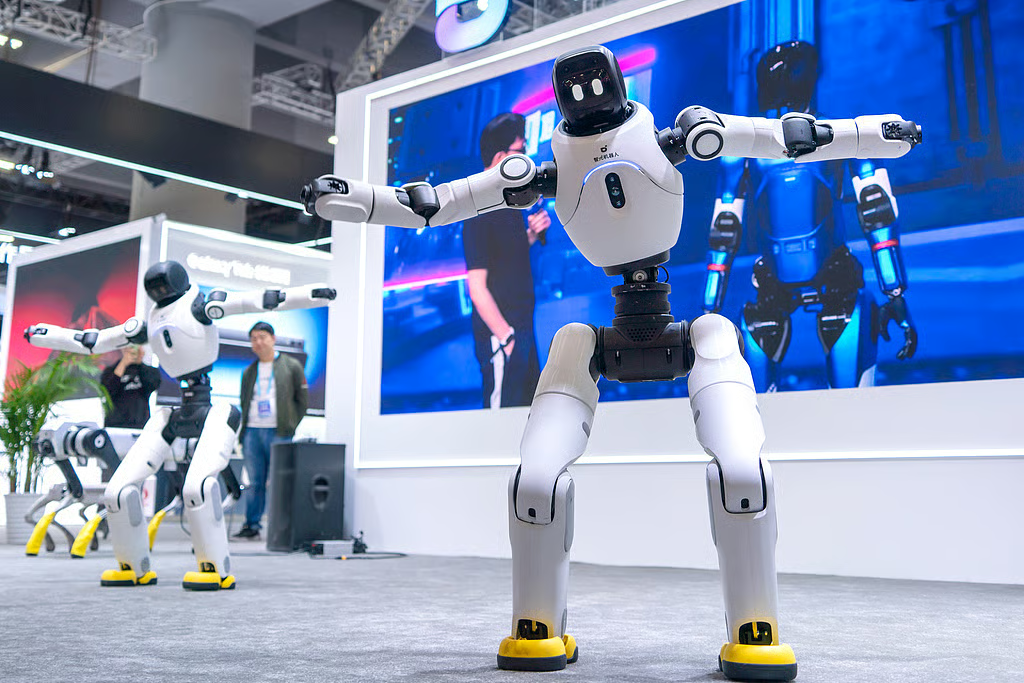
Image: VCG
Best for: Scale and production potential
AgiBot is emerging as a major force in China’s humanoid ecosystem, with a focus on building general-purpose robots for industrial use.
While it lacks global name recognition, its emphasis on production and deployment suggests it could become one of the market’s most important players.
Power ranking verdict: The quiet heavyweight with long-term upside.
6. Boston Dynamics (Atlas)
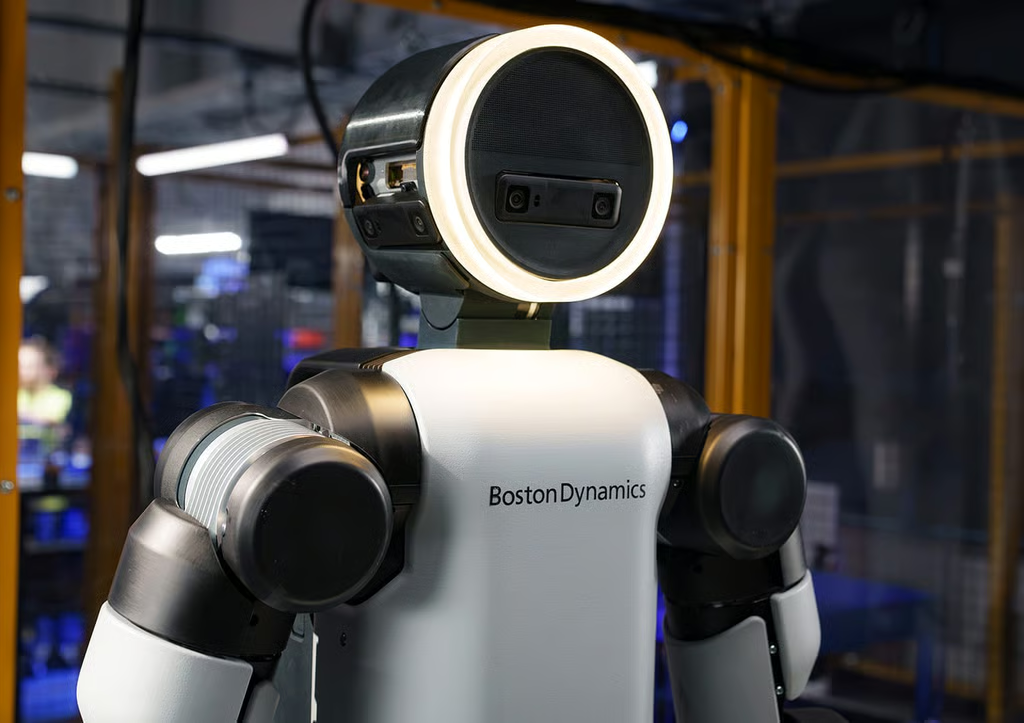
Image: Boston Dynamics
Best for: Technical capability
Boston Dynamics is renowned for its cutting-edge innovation. Atlas remains one of the most advanced humanoid robots in terms of movement, balance, and control. Its demos consistently push the limits of what robots can physically do.
The issue is commercialization. Atlas is still more of a technical showcase than a scalable workforce solution.
Power ranking verdict: The most impressive athlete, still waiting for a real job.
5. Apptronik (Apollo)
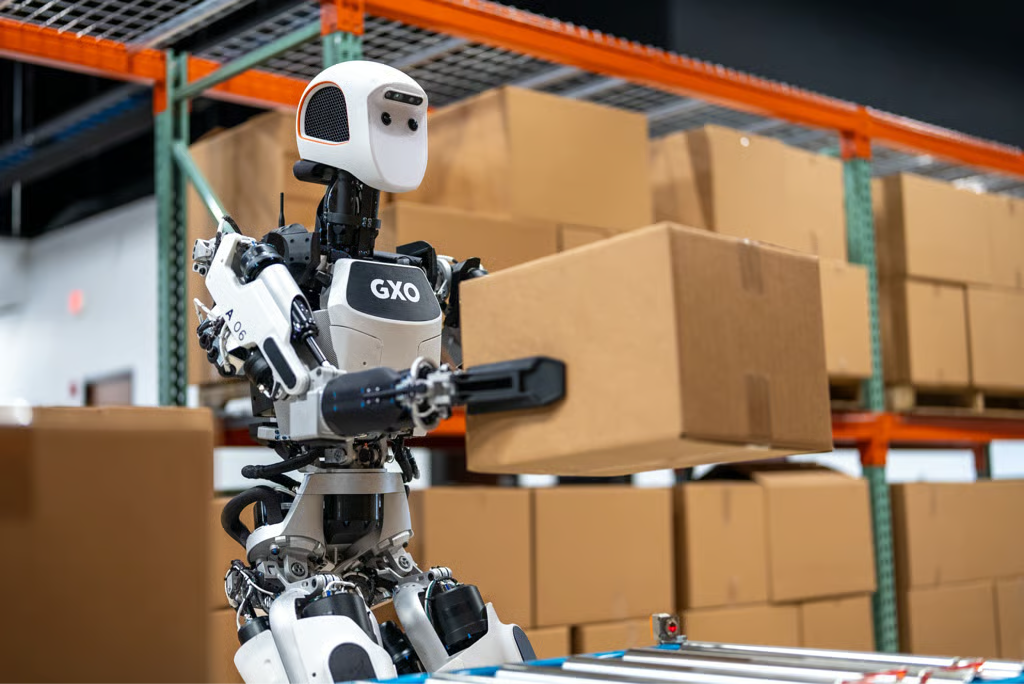
Image: Apptronik
Best for: Commercial humanoid design
Apptronik’s Apollo is designed with industrial and logistics environments in mind, signaling a clear path toward real-world use. The company is focused on practical deployment rather than spectacle, which could give it an edge as the market matures.
Power ranking verdict: Built for work, not for show.
4. UBTech Walker S Series
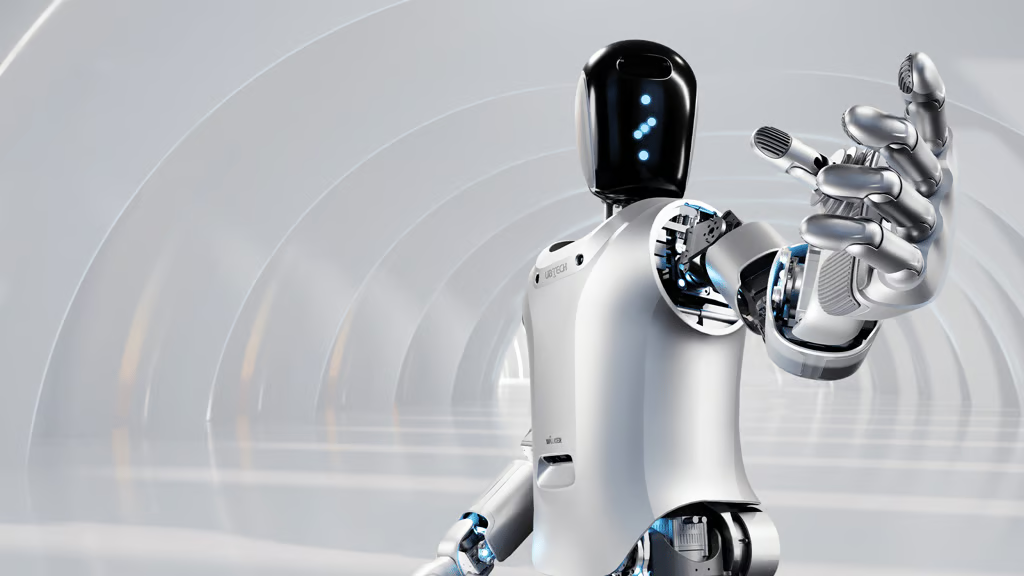
Image: UBTech
Best for: Industrial applications
China’s UBTech has one of the strongest industrial narratives in the humanoid space. Its Walker robots are being positioned for manufacturing roles, including inspection, logistics, and repetitive physical tasks.
That focus on structured environments gives UBTech a realistic path to adoption.
Power ranking verdict: A serious factory-floor contender.
3. Agility Robotics (Digit)
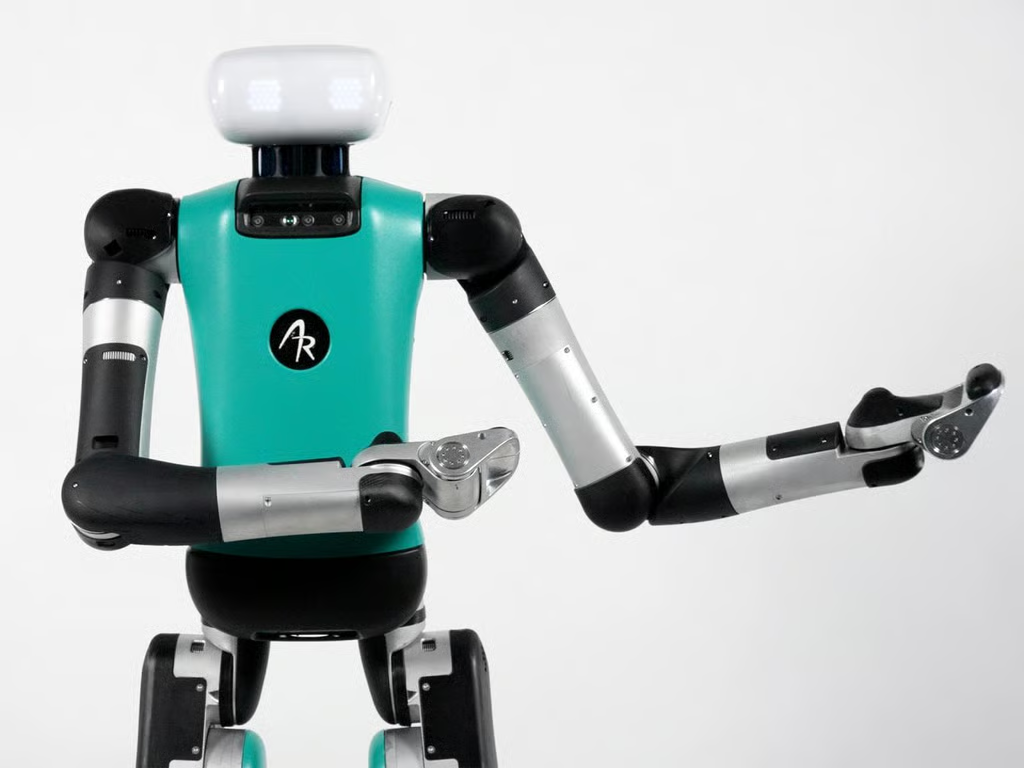
Image: Agility Robotics
Best for: Real-world deployments
Agility Robotics stands out because Digit is already being tested in warehouses and logistics operations. That gives it one of the clearest real-world use cases among humanoid systems.
Its design is less traditionally humanoid, but its functionality may ultimately matter more than appearance.
Power ranking verdict: One of the closest robots to doing actual jobs at scale.
2. Unitree G1 / H1
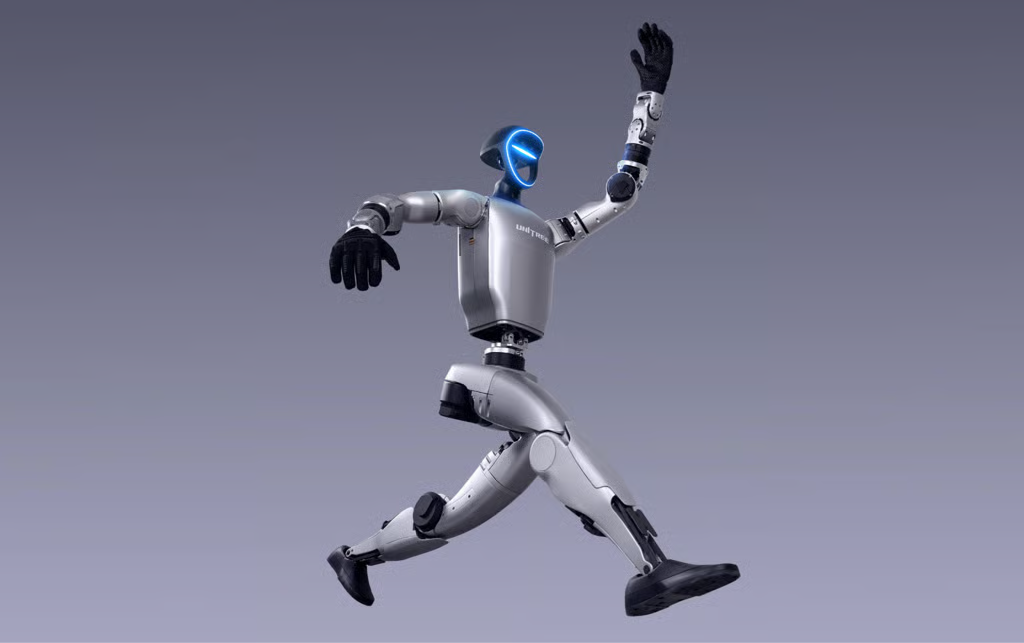
Image: Unitree
Best for: Accessibility and global visibility
Another Chinese company makes the list. Unitree has done something few robotics companies manage: it made humanoid robots feel real. Its machines are everywhere, from developer demos to viral clips, and its pricing strategy makes the category feel closer to a product than a prototype.
The company’s speed, visibility, and willingness to ship hardware give it a major momentum advantage.
Power ranking verdict: The company turning humanoid robots into something tangible.
1. Tesla Optimus
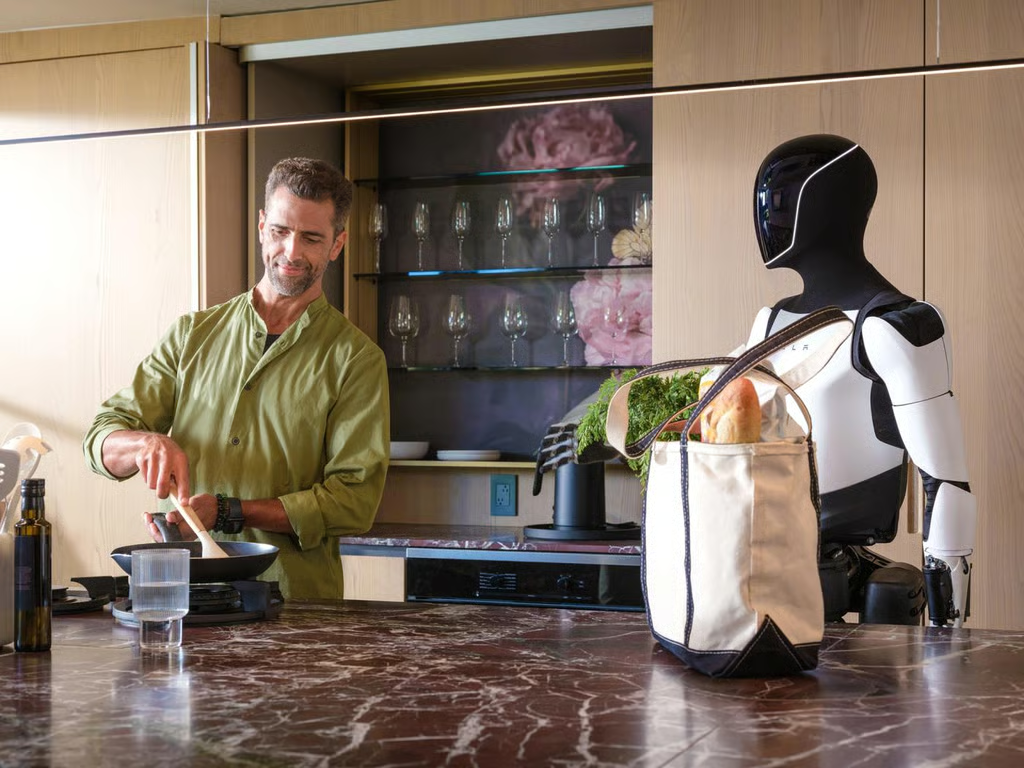
Image: Tesla
Best for: Attention, ambition, and long-term potential
Tesla’s Optimus takes the top spot not because it is the most proven, but because it is the most consequential.
No other humanoid robot combines this level of visibility, funding, AI ambition, and potential integration into a real manufacturing ecosystem. Elon Musk is positioning Optimus as a general-purpose labor platform, not just a robotics experiment.
If the company can deliver on that vision, it could reshape the entire category.
Power ranking verdict: The most important humanoid robot, even if it is still proving itself.
What comes next?
The humanoid robot race is still in its early stages, and these rankings will shift quickly as companies move from prototypes to production.
The next phase will be less about whether a robot can walk, wave, lift a box, or survive a viral demo. It will be about whether humanoids can perform useful work repeatedly, safely, and cheaply enough to justify their place in factories, warehouses, hospitals, homes, and public spaces.
That is where the category gets harder. A robot that looks impressive on stage still has to handle boring, messy reality: changing environments, awkward objects, human coworkers, maintenance costs, battery life, safety requirements, and the unforgiving math of return on investment.
The companies that lead from here will likely be the ones that solve three problems at once: capable hardware, reliable AI, and a business case strong enough to survive outside a demo room. Tesla has the manufacturing ambition. Unitree has pricing and visibility. Agility Robotics and UBTech have clearer near-term deployment stories. Figure, Apptronik, AgiBot, and others are trying to prove they can turn partnerships and prototypes into repeatable work.
For now, humanoid robots are caught between spectacle and utility. The winners will be the machines that can cross that gap without tripping over the economics.
For a deeper look at China’s rapidly evolving humanoid robot ecosystem, check out our breakdown of the next-gen machines moving from kung fu demos to real factory work.