






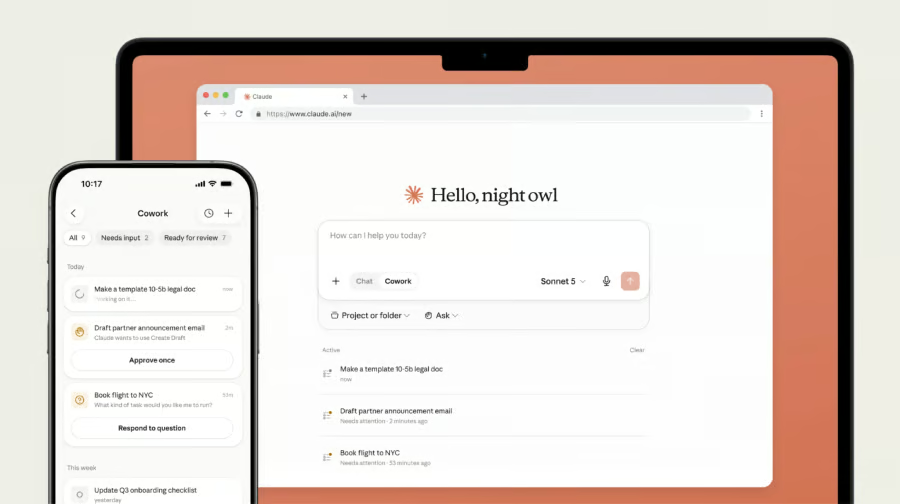


Claude Cowork is no longer stuck on one screen.
Anthropic is expanding Claude Cowork to the web and mobile, allowing users to start tasks on one device, monitor progress from another, and review completed work later. The rollout is beginning as a beta for Max subscribers, with wider availability planned for additional plans in the coming weeks.
Previously available through the Claude desktop app, Cowork is designed as an AI agent that can handle longer, multi-step assignments rather than simply answering questions. Anthropic describes it as a tool where users can hand Claude a task and let it work across connected files, calendars, email, messaging apps, the web, and other services until the job is complete.
The update also means Cowork tasks can continue running even after a user closes their laptop. Anthropic says scheduled tasks can operate without a device being online, allowing users to assign work and return later to review the results.
AI agents target everyday office work
While AI coding assistants have received much of the attention in recent years, Anthropic says Cowork usage shows that professionals are applying AI agents to a much wider range of tasks.
The company analyzed a sample of 1.2 million anonymized and aggregated Cowork sessions and found that more than 90% were unrelated to software development. Business operations and content creation made up about half of usage, including activities such as organizing reports, creating presentations, reviewing documents, and preparing communications.
Business process and operations represented the largest category at 33.4%, followed by content creation and copywriting at 16.4%. Software development accounted for 8.7% of usage, according to Anthropic’s analysis.
Anthropic said this reflects what it calls “the work around the work,” the administrative tasks that consume time but are often not part of an employee’s main responsibilities.
Users still get the final say
Although Cowork can now operate in the background, Anthropic is keeping humans involved in important decisions. If Claude reaches a point where it needs user input, the system can send a notification to the user’s phone. Drafts and other actions remain subject to approval before anything is sent or completed.
“Nothing ships until you’ve reviewed and approved it,” Anthropic said in its announcement.
The company also noted that the desktop remains the best option for intensive workflows because it provides access to local files and browser capabilities.
Claude’s agent push gets more practical
The expansion shows how AI companies are shifting their focus from chatbots that simply provide answers to agents that complete tasks.
For businesses, tools like Cowork could reduce time spent on repetitive administrative tasks, helping employees prepare reports, organize information, and manage workflows more quickly. For individual users, the ability to assign tasks and check progress from a phone could make AI assistants more useful in everyday situations.
However, wider adoption also raises questions about privacy, security, and oversight. Giving AI agents access to email, documents, calendars, and other work systems creates more opportunities for mistakes or unwanted actions if permissions are not carefully managed.
The bigger AI agent race
Anthropic’s move comes as major AI companies compete to make autonomous assistants part of daily digital life. Instead of requiring users to open separate tools, companies are increasingly integrating agents into existing chat apps and mobile experiences.
Claude Cowork’s expansion suggests the next phase of AI competition may be about not only which model produces the best answers but also which assistant can reliably manage the tasks people need completed.
For users already paying for Claude Max, the update offers a more flexible way to experiment with AI agents. But for businesses considering adoption, the key question remains whether these systems can deliver enough productivity gains while maintaining control over sensitive information and important decisions.
Also read: Anthropic’s $19 billion TeraWulf deal gives Claude dedicated AI infrastructure as demand for compute-heavy agent tools continues to rise.