






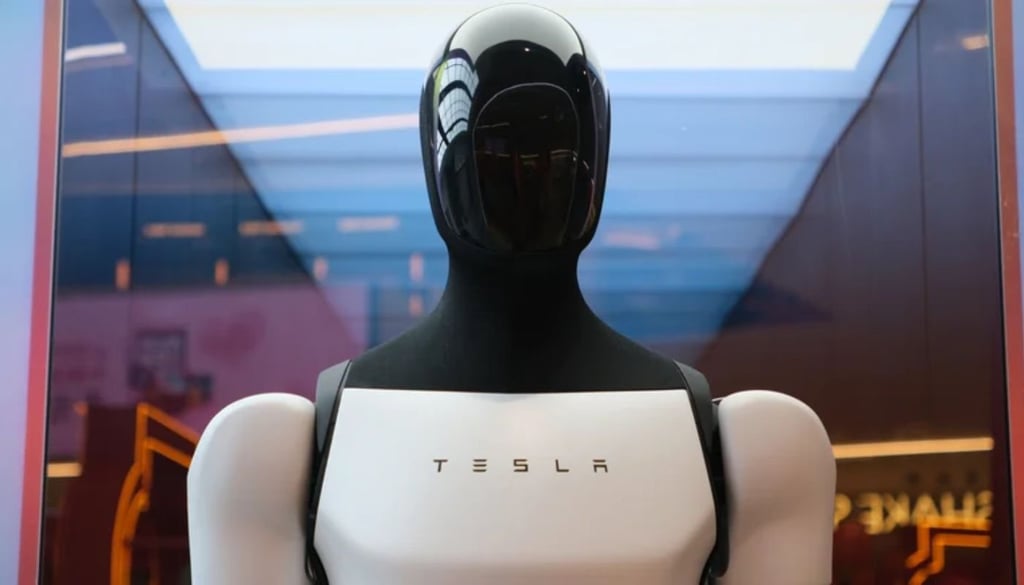


Tesla’s boss, Elon Musk, has made a bold claim: Tesla could deliver a robot surgeon that surpasses human surgeons within three years.
The Tesla CEO made this aggressive prediction in a recent Moonshot podcast interview, arguing that the Optimus robots will soon offer superior alternatives to human doctors. According to the interview, published on Jan. 6, Musk claimed that the persistent shortage of great surgeons, the time required to train them, and the simple fact that humans make mistakes and have limited time necessitate an automated solution for healthcare.
Speaking to Peter Diamandis, the podcast’s host, who is also a physician and engineer, Musk asserted that three years is enough for autonomous AI robots to take over surgery, but experts do not agree with him.
Optimus, at the forefront of Tesla’s robotic and AI exploration
Tesla initially unveiled Optimus in 2022 in California. It has since been the center of Tesla’s push to penetrate the physical AI industry, alongside its electric vehicles, which now incorporate AI.
The robot, Musk claims, would not only outnumber great surgeons after three years but also significantly outperform them.
AI-powered robots have defied expectations. We have seen prototypes perform aerobatic displays with other models now used in factories and even for home chores. However, a robot performing surgeries, and even doing it better than the best surgeons, feels like Hollywood coming to real life.
In two separate X posts, the billionaire CEO stated: “We have entered the Singularity,” and “2026 is the year of the Singularity.” The singularity is a point at which AI systems become smart enough to match, and even outperform, humans in intellect.
Where do medical experts stand on this matter?
According to this blog post by the Independent, Arthur Caplan, a professor of bioethics from New York University’s Grossman School of Medicine, dismissed Musk’s assertions, saying: “That claim isn’t credible.”
Though he confirmed that robotics is being used to advance medicine and that more of these technological advancements should be expected, he outrightly disagreed with Musk on this matter. Fields like radiology and pathology already use automation in some aspects, Caplan explained, but the idea of AI completely taking over an entire medical procedure soon is going to be very difficult.
According to Caplan, who is not all pessimistic about robotic AI, “Musk is too optimistic in my view. He predicts robot doctors will become common… in the distant future.
Further explaining his worry, Caplan said: “Some surgery borders on art — plastic, burn, and trauma repair — programming that will prove perhaps impossible for many, many years.” He further explained, “It is hardly likely that robots will be able to outperform humans in three years in all areas of surgery — cardiac, brain, orthopedics, plastic, pediatric, etc.”
Should we be worried about this?
In October 2025, Tesla approved a $1 trillion pay package for its boss, who holds significant voting power at the company. The news raised concerns bordering on why one man should hold such power over a company, especially one that develops AI-powered products.
Speaking to Wired in October last year, Musk addressed the concerns people have about these robots, which he calls “robot army.”
To him, the significant control over Tesla gives him greater control over deciding the fate of these robots in the long term, which makes his Optimus vision last longer.
According to the Wired publication, Musk said: “My fundamental concern with regard to how much voting control I have at Tesla is, if I go ahead and build this enormous robot army, can I just be ousted at some point in the future?”
While critics doubt his public good intentions for Optimus’s future, some argue that his significant control helps minimize the likelihood of Optimus robots going rogue.
Related reading: Brain tech is already changing lives. See how China’s brain implants are helping paralyzed patients regain control.