






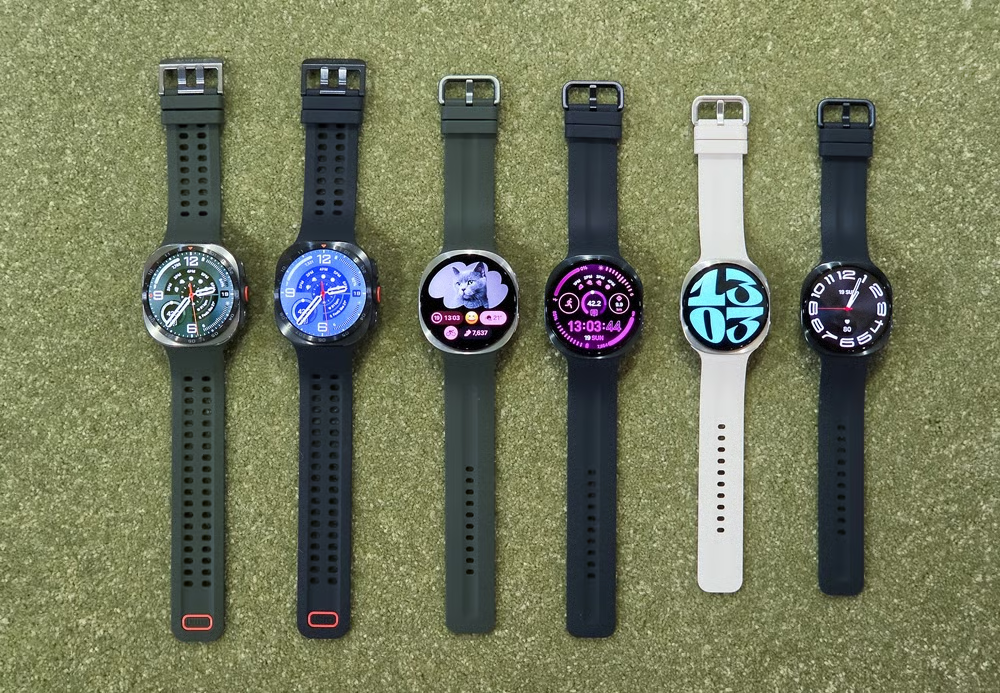


A Galaxy Watch health metric introduced barely a year ago is disappearing for US users — and Samsung has not said why. Vascular Load will be removed in late July 2026 with One UI Watch 9 and Samsung Health version 7.0, according to a notice shown to affected users.
Existing records will no longer appear in Samsung Health after the update, although users can download their data beforehand. Samsung’s notice says Blood Pressure Trend will replace the experimental feature, requiring organizations that use its data to review affected guidance, integrations and retention processes.
Vascular Load exits as Samsung expands its health platform
Samsung introduced Vascular Load in June 2025 as an experimental One UI 8 Watch Labs feature. It used optical readings collected during sleep to estimate changes in vascular stress against a personal baseline and was presented as a wellness tool, not a diagnostic feature.
Vascular Load debuted with the Galaxy Watch8 series and reached the Galaxy Watch Ultra through the One UI 8 Watch update in July 2025. Availability depended on the market, compatible software and device setup.
Its removal coincides with Samsung’s July 22 launch of the Galaxy Watch9 and Galaxy Watch Ultra2, which add new cardiovascular, fitness and overnight-baseline metrics. The launch follows previously previewed Galaxy Watch9 health upgrades and Samsung’s March 2026 rollout of Galaxy Watch blood pressure tracking in the US.
The current blood pressure feature requires calibration with a separately sold upper-arm cuff every 28 days. Samsung describes it as a general wellness tool rather than a substitute for diagnosis or treatment.
A July 2 report based on Samsung’s notice identified the late July removal window and said users would lose in-app access to earlier Vascular Load records. Users who want a copy should open Samsung Health, select More options, choose Settings and select Download personal data before updating.
Samsung has not tied the withdrawal to regulatory pressure, accuracy concerns, litigation or a technical defect. Any such explanation remains speculative.
The change exposes a support risk for health programs
Samsung’s ECG app provides a more durable comparison. The FDA granted 510(k) clearance to Samsung ECG App version 1.3 on Aug. 2, 2024, establishing a defined intended use and public regulatory record. Samsung’s Vascular Load materials did not identify an FDA authorization or publish feature-specific clinical performance figures.
Organizations evaluating wearable platforms should separate cleared medical software from general wellness tools and experimental features. Regional availability, supporting evidence and vendor support can change after deployment.
The issue extends beyond individual measurements as Samsung adds software that interprets wearable data. Its AI-powered Health Assistant beta converts sleep and wellness measurements into personalized guidance, but organizations still need to evaluate validation, privacy and data-governance limits before using those outputs in workplace programs.
WHOOP’s FDA history shows how labeling and intended use can alter regulatory treatment. The agency warned WHOOP in July 2025 that its original Blood Pressure Insights feature lacked required authorization.
After WHOOP changed the product and its labeling, the FDA closed the matter on June 17, 2026. The agency said it did not intend to enforce medical-device requirements against the modified version.
Organizations should remove Vascular Load from any guidance, integrations or retention processes that depend on continued access. Experimental metrics should not underpin clinical-adjacent workflows or long-term health programs without a fallback plan.
Read more: A newly published WHOOP wrist-based glucose patent illustrates why research filings should not be treated as validated, deployable health capabilities.