







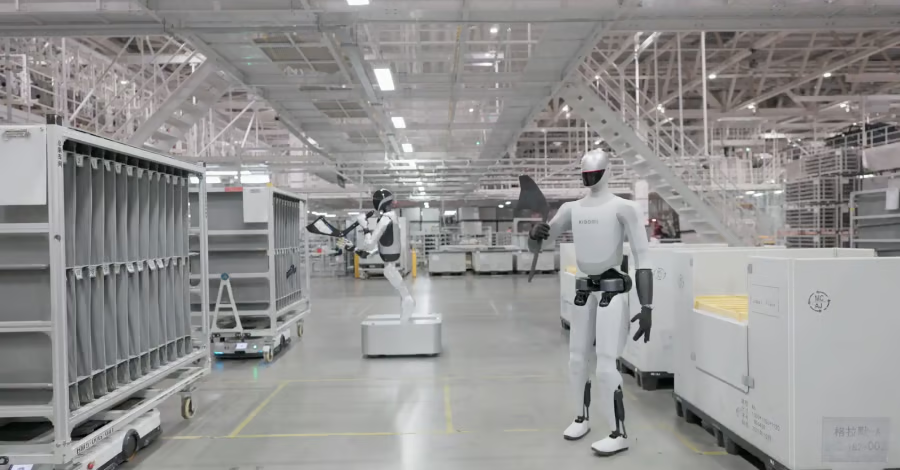
Xiaomi says its humanoid robot is getting closer to performing like an experienced factory worker.
Following a successful four-month "internship" at Xiaomi's EV factory, the humanoid robot achieved a 98% success rate at a self-piercing nut workstation—putting it one percentage point behind experienced human operators, according to Xiaomi.
The latest figure marks a significant improvement from the 90.2% success rate Xiaomi reported during earlier factory testing, following four months of software and system refinements.
Beyond fastening work, Xiaomi said the robot has started performing two additional manufacturing jobs: sorting center console side covers and folding returnable boxes. Both tasks have already achieved success rates above 90%.
Expanding beyond a single task
One of the new assignments stands out because it moves beyond repetitive fastening work into handling flexible parts.
According to the Chinese outlet Jiemian, the center console side-cover sorting station marks the first time a humanoid robot has demonstrated long-term, continuous operation involving flexible workpieces inside an automotive factory.
The company described each new assignment as another step toward deploying humanoid robots in real production environments rather than controlled demonstrations.
Progress since the first trial
The update builds on Xiaomi's initial factory trials reported earlier this year.
During those early tests, two humanoid robots completed roughly 90% of assigned work over a three-hour shift, performing tasks such as installing nuts and moving materials while keeping pace with the company's vehicle production line.
At the time, Xiaomi President Lu Weibing stressed that the robots were still learning rather than replacing employees, describing them as "interns" rather than full-time production workers. The latest results suggest the company is improving both reliability and the range of tasks its robots can perform inside an active manufacturing environment.
What it means for smart factories
The progress reflects a broader shift in automotive manufacturing, where companies are exploring humanoid robots that can transition between different jobs rather than relying solely on fixed industrial robotic arms.
Unlike traditional robots built for a single station, humanoid systems are designed to adapt to existing factory layouts and handle varied tasks that would otherwise require human workers.
If Xiaomi continues to improve reliability across more production processes, manufacturers may be able to introduce automation without extensively redesigning assembly lines. That could reduce deployment costs while making factories more flexible as production needs change.
The road ahead
Despite the higher success rates, important questions remain unanswered.
Xiaomi has not disclosed how often human workers still intervene during operations, whether the reported success rates were maintained over full production shifts across multiple robots, or how the machines perform when factory conditions change unexpectedly.
Those details will ultimately determine whether the robots remain promising factory interns or become dependable members of the production workforce.
Also read: Unitree’s robot combat teaser shows how China’s humanoid robot makers are testing balance, recovery, and control in increasingly public settings.