





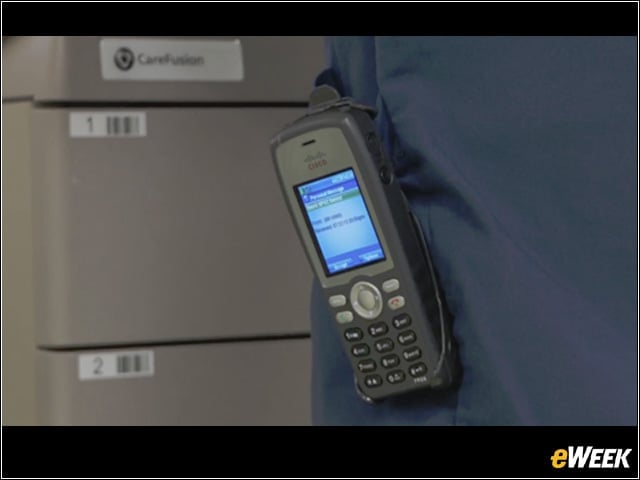

Cisco IP Phones
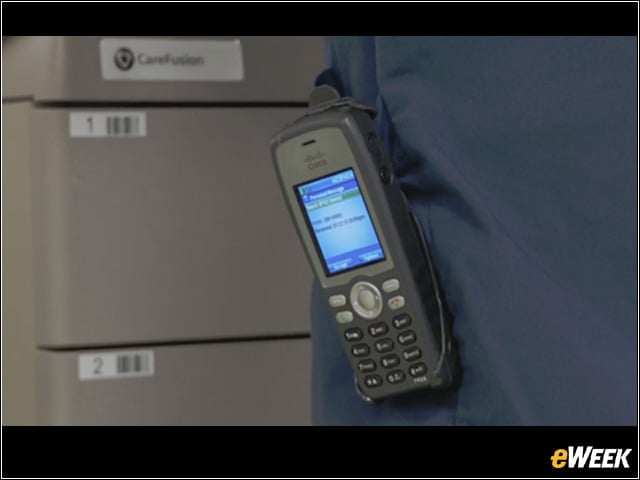
With the lack of central nursing stations like in traditional hospitals, nurses rely on Cisco 7925 IP Wireless Phones to keep patients and nurses connected in real time. Patients contact nurses or clinician assistants on the phones if they need water or pain medication or even the bed raised. “They can discuss a particular patient’s condition in real time without having to walk back to a nursing station or a meeting room,” said Portale. The hospital is able to reduce the amount of overhead from pagers, said Mike Haymaker, Cisco’s health care marketing leader for the Americas. Instead of five or six pagers, nurses can use one IP phone, Haymaker told eWEEK. In addition, the phones can be wiped down and survive being dropped, Haymaker said.
Medical Information, Anytime, Anywhere
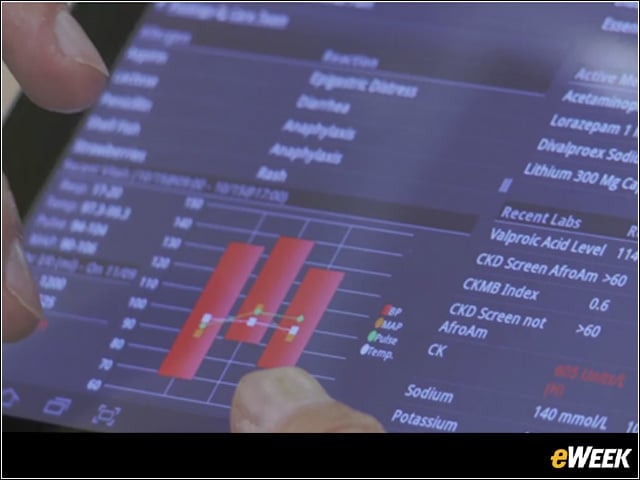
Palomar’s set of applications called Medical Information Anytime Anywhere (MIAA) allow physicians to track patient information and view electrocardiogram wave forms, heart rates and radiology images. It also allows doctors to view electronic health records. Doctors can conference in specialists to discuss patient conditions, according to Palomar.
Sotera Wireless ViSi Mobile
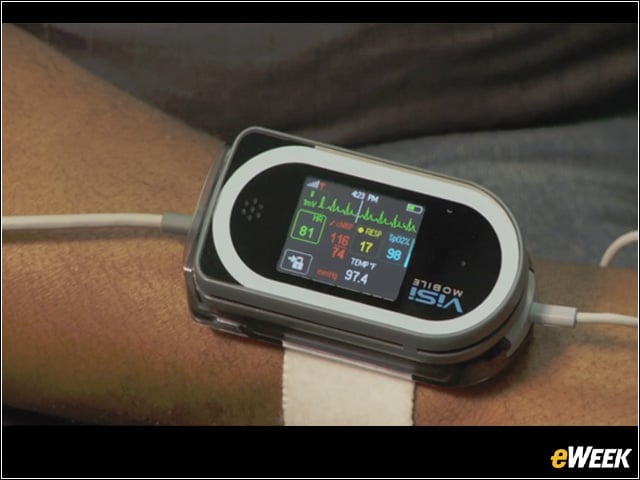
Palomar is employing Sotera Wireless’ WiFi-enabled ViSi Mobile, a next-generation body-worn physiological monitoring technology. It replaces the small old-style TV monitors that sit next to the patient, said Portale. Sotera is a startup company funded by Intel and Qualcomm. “We’ve been working with them on reinventing the way patients are going to be monitored in the future,” said Portale. Sotera announced on Aug. 21 that its body-area mapping technology had been approved by the U.S. Food and Drug Administration. “It’s a little wrist-worn device that collects all the vital signs from sensors on the body and broadcasts the vital signs over the wireless network,” said Portale. In addition, ViSi connects to EHRs.
IVCi VGo Robotic Telepresence
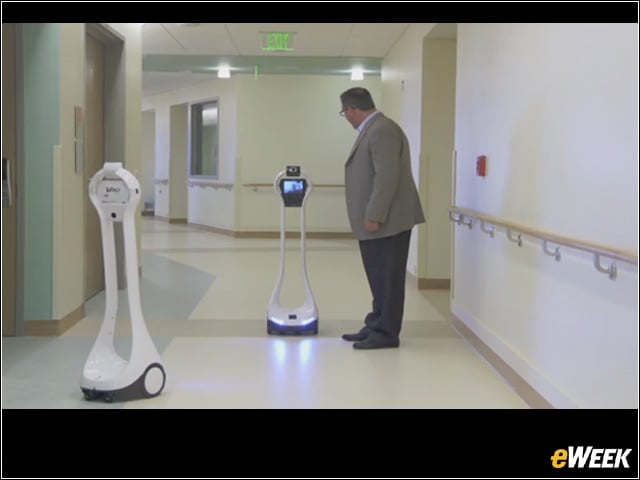
IVCi’s wireless VGo Remote Telepresence robots allow doctors, nurses and family members to communicate remotely with patients through video conferencing.
Cisco Medical-Grade Network
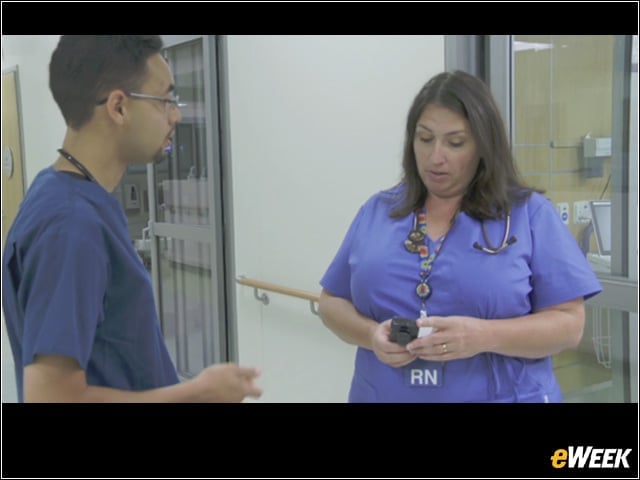
Cisco considers its tech infrastructure to be the “central nervous system for modern hospitals.” The converged network enables secure access to patients’ health information from smartphones or tablets in real time. “Through the Cisco Medical Grade Network, we feel like we’re in a position to build it all together,” said Haymaker.Â
Cisco TelePresence
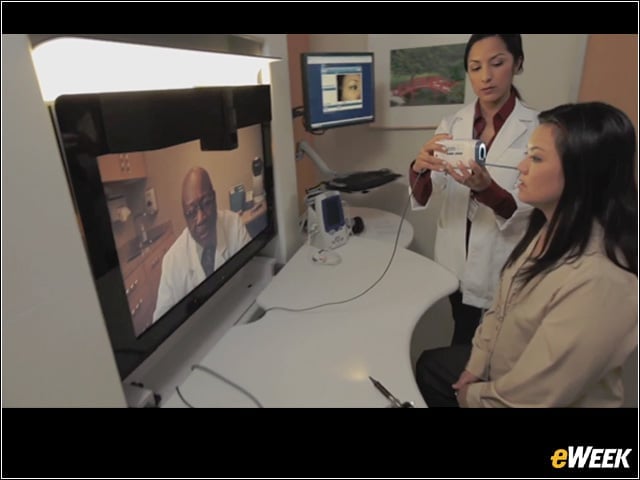
Cisco’s Medical Grade Network also allows Palomar to use the TelePresence platform for video sessions between doctors and patients. The TelePresence video-collaboration platform integrates with WebEx, Cisco’s Web-conferencing software also used at Palomar.
Cisco Unified Computing System
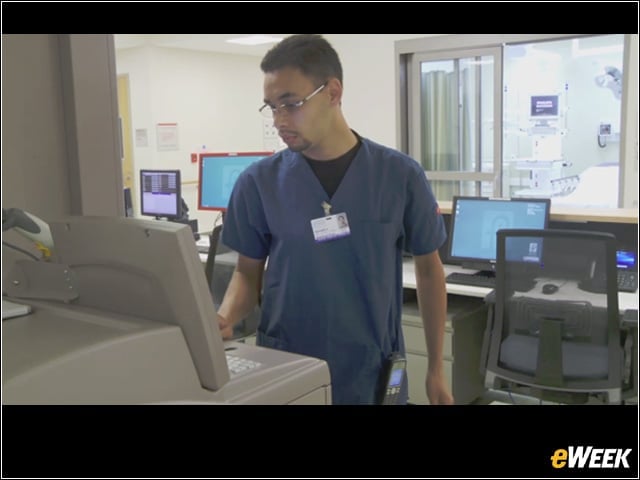
With Palomar located in an area with seismic activity, the Unified Computing System provides some backup as part of the health system’s disaster planning, said Haymaker. “Palomar is on kind of a seismic active area,” Haymaker noted. “So they wanted to make sure they had redundancy and an active backup plan in case they need to move computing power around.”
Cisco Jabber Messaging
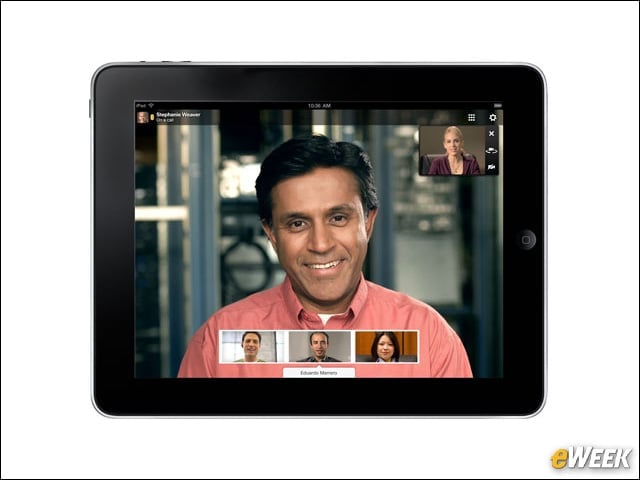
A unified communications application, Jabber integrates voice and video, instant messaging, desktop sharing and conferencing. It allows a doctor to communicate on mobile devices such as the iPad with other physicians.
A 10-Gigabit Backbone
Palomar incorporates a 10-gigabit network that can support video, messaging, voice and images all on one network, said Portale. “We can deliver medical images that require pretty high bandwidth,” he said. “With this high bandwidth, we can enable that and also do real-time video and support all of these applications on one converged network.”
Iris-Scanning Technology

Palomar uses next-generation iris-scanning technology at the registration desk to capture a snapshot of the patient’s eyeball, FierceHealthITÂ reported. The biometric technology uses the imprint of the eyeball’s vascular infrastructure to identify a patient.