







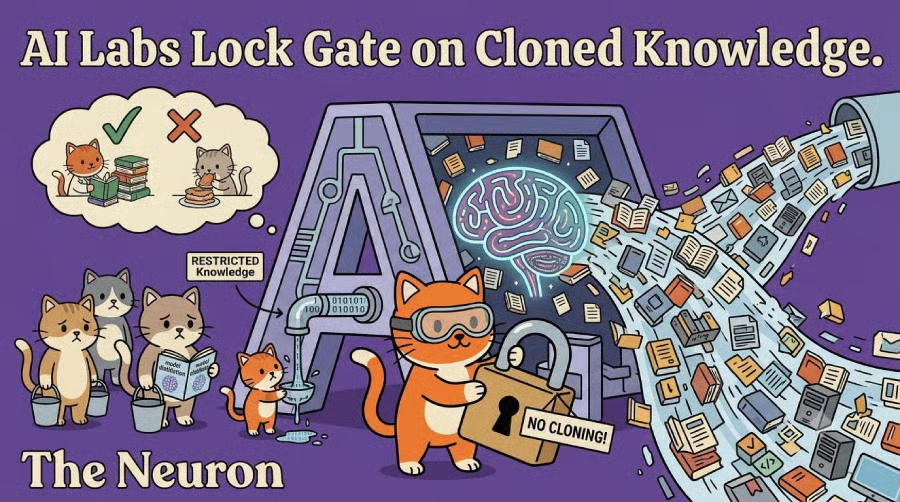
Microsoft CEO Satya Nadella has entered the growing fight over model distillation, arguing that frontier labs cannot champion broad rights to train on public information, then impose tight restrictions when competitors use their model outputs as training material.
Here's what happened
- Nadella criticized the one-way flow of knowledge between creators, customers, and AI companies.
- Distillation lets developers train a new model using answers generated by a more powerful one, often reproducing valuable capabilities much more cheaply.
- OpenAI and Anthropic warned Washington that Chinese companies are using distillation to clone advanced US models. They say foreign competitors have used the technique at an enormous scale, potentially converting billions of dollars in American research into a shortcut for rival labs.
- A separate Business Insider investigation found that distillation could threaten the profits supporting the frontier-model business altogether.
The allegations of theft deserve to be taken seriously. Anthropic says Alibaba used roughly 25,000 fraudulent accounts to collect nearly 29 million Claude interactions. That looks less like a curious researcher testing an idea and more like someone backing a data truck up to the loading dock.
But as we argued in our own report this morning, stopping illicit extraction and supporting open AI development are not mutually exclusive positions.
Why this matters
Frontier labs have spent staggering sums hiring researchers, buying computing power, and producing the datasets behind their best models. If another company can reproduce those capabilities for pennies on the dollar, the economic case for spending billions on the next model becomes much harder to defend.
The problem is that these same labs built their systems using books, articles, code, images, and other public material they frequently did not license individually. Their argument effectively becomes: learning from other people’s work drives innovation, while learning from ours threatens innovation. It’s simultaneously hypocritical and true.
Our take
Nadella has identified the principle the industry still needs to settle: who gets to learn from whom, under what conditions, and with what compensation?
Fraudulent accounts and industrial-scale extraction can reasonably cross a line. Broad restrictions on distillation could also lock meaningful AI research inside the handful of companies wealthy enough to build frontier models.
The labs may win stronger protections. They will have a much harder time convincing everyone that intelligence should flow freely toward them and then stop at their gates.
Editor’s note: This article originally appeared on our sister publication, The Neuron.